Minimalist Living Room Layout for Small Spaces: A Real Guide That Actually Works
Look, I've been there — standing in a small living room feeling like the walls are closing in, wondering how anyone expects you to fit a couch, a TV, and maybe a chair without it looking like a storage unit exploded. The truth? A minimalist approach isn't just trendy; it's genuinely transformative, especially in compact spaces. I'm not talking about living like a monk or getting rid of everything you love. Instead, it's about being intentional with what you bring into your room and creating a layout that actually breathes.
Here's the thing about minimalist design in small living rooms — it's less about sacrifice and more about smart choices. When you strip away unnecessary clutter and furniture, suddenly your space feels 30% larger. The light flows better. You can actually move around without doing a weird sideways shuffle. And honestly, it's way less stressful when your environment isn't constantly competing for your attention.
I've spent years helping people transform cramped living rooms into functional, beautiful spaces that don't feel like they're suffocating them. This guide walks you through exactly how to do it, from selecting the right furniture to arranging it in a way that maximizes both space and comfort.
What You'll Need
Before you dive into rearranging, let's talk about what actually matters. You don't need to buy everything at once — that would completely defeat the minimalist purpose. Focus on pieces that earn their place in your room.
- Streamlined sofa or loveseat — $300–$800 (opt for clean lines, no excess cushions)
- Low-profile coffee table or console table — $100–$400 (smaller footprint, less visual clutter)
- Single accent chair (optional) — $150–$500
- Floating shelves — $30–$150 (vertical storage saves floor space)
- Wall-mounted TV bracket — $25–$80
- Neutral area rug (6x9 or smaller) — $150–$400
- Floor lamp or single overhead fixture — $40–$200
- Storage ottoman or bench — $100–$350 (doubles as seating)
- Minimal décor pieces (3–5 curated items) — $100–$300
- Window treatments (sheer curtains or simple blinds) — $50–$200
Step-by-Step Guide
Step 1: Measure and Map Your Space
Don't skip this. Seriously. Grab a tape measure and write down your room's dimensions — length, width, and the locations of windows, doors, and outlets. Sketch a rough floor plan. I know it sounds tedious, but this is your foundation. You can use graph paper or even a simple note app. The goal here is understanding what you're actually working with before you move a single piece of furniture.
Step 2: Identify Your Focal Point
Every room needs a visual anchor. Usually, it's the TV, a window with natural light, or a feature wall. In minimalist design, your focal point should be relatively uncluttered. If it's a TV, mount it on the wall — this immediately frees up floor space and creates visual order. If it's a window, make sure your seating arrangement lets you actually enjoy that view without fighting for it.
Step 3: Choose Your Anchor Furniture Piece
In a small space, your sofa is usually the hero. Pick something appropriately sized — a standard couch in a 10x12 room will swallow the space whole. Look for sectionals with fewer pieces, loveseats, or even a sleeper sofa that pulls double duty. Check out options on The The Home Depot's furniture section or specialty minimalist retailers. The color matters too. Neutral tones like gray, beige, or off-white visually expand the room.
Step 4: Position Furniture to Create a Conversation Zone
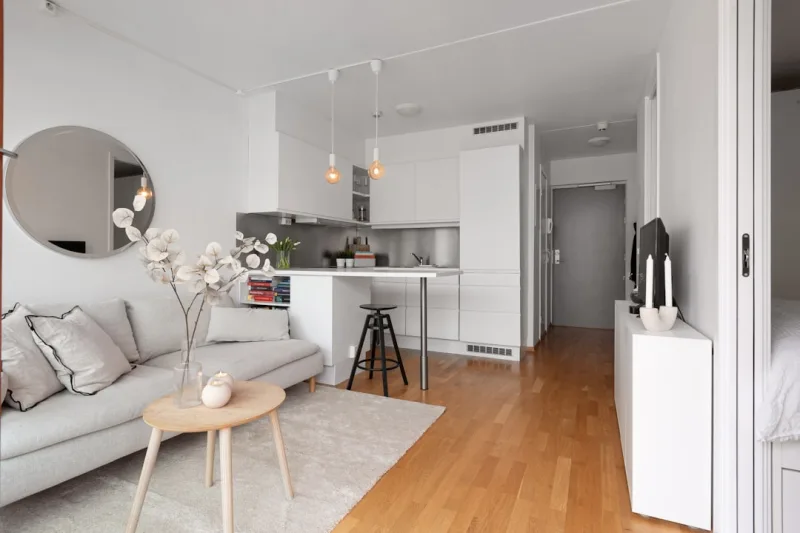
Push your sofa against the longest wall — this anchors the space and leaves the center open. If you have room for a single chair or ottoman, float it perpendicular to the sofa, creating an L-shape. This arrangement feels intimate without choking the room. Leave at least 18 inches between your sofa and coffee table. I learned this the hard way after stubbing my toe approximately 8,000 times.
Step 5: Implement Vertical Storage
This is where minimalism gets clever. Instead of a large entertainment center taking up wall space, install floating shelves above your TV or along an empty wall. Keep them spaced out — don't cram them like a library. Each shelf should hold maybe 5-7 items maximum, and they should all serve a purpose or genuinely spark joy. Books, a few decorative pieces, a small plant. That's it.
Step 6: Add One Statement Element
 Budget Apartment Renovation: DIY Hacks That Actually Work
Minimalism doesn't mean boring. Pick one piece that brings personality — maybe a gallery wall with 3-5 framed prints, a large piece of art, or a single sculptural object. This gives the room character without overwhelming it. Think of it as seasoning: you need just enough to make things interesting, but not so much that you can't taste anything else.
Step 7: Optimize Lighting
Avoid multiple competing light sources. Choose one primary light source — a ceiling fixture or wall sconce — and supplement with a single floor lamp in a corner. Layered lighting works, but it also creates visual clutter in small spaces. Aim for clean, modern fixtures with minimal embellishment.
Step 8: Finalize Your Décor Strategy
This is crucial: every item in your room should either be functional or genuinely beautiful. No exceptions. That decorative basket that's mostly empty? Either use it for storage or remove it. Those throw pillows? Keep two — maybe three if you're feeling wild. One throw blanket, neatly folded. This restraint is what actually makes minimalist spaces feel calm instead of cold.
Pro Tips
Use mirrors strategically. A large mirror opposite a window bounces natural light around and makes the space feel twice as big. It's like visual magic, but with actual physics backing it up.
Go vertical with your décor. Tall plants, floating shelves, and wall art draw the eye upward, which creates the illusion of higher ceilings. This is a game-changer in cramped rooms.
Invest in multipurpose furniture. An ottoman with storage, a nesting table set, or a sleeper sofa. Every piece should earn its place by doing more than one job. Better Homes & Gardens & Gardens has some solid options here.
Keep the color palette tight. Stick to 2-3 main colors plus neutrals. I'd recommend one neutral for large pieces (your sofa, rug), one accent color for smaller items, and white or light gray as a base. This visual cohesion makes spaces feel larger.
Clear the floor intentionally. Minimalist design thrives when you can actually see your floor. Avoid low storage pieces that sit on the ground — choose items with legs instead. This creates visual flow and makes cleaning way easier.
Edit before you decorate. Before you hang a single piece of art or set out a single decorative item, make sure every functional element is perfect. Decoration comes last, not first. Check out HGTV for inspiration on what restraint actually looks like.
Cost Breakdown
← Scroll to see full table →