Minimalist Living Room Makeover for Modern Homes: A Complete DIY Transformation Guide
There's something deeply calming about walking into a room that feels intentionally designed, peaceful, and completely yours. If you're tired of clutter, overwhelmed by too many choices, and yearning for a space that makes you actually want to relax, a minimalist living room makeover might be exactly what your home needs. I understand how daunting this can feel—you've probably pinned a hundred beautiful minimalist living rooms on Pinterest, wondering how those spaces stay so serene while your living room feels chaotic. The truth is, creating a minimalist living room isn't about deprivation or living in an empty box. It's about curating what you genuinely love, eliminating what doesn't serve you, and building a sanctuary that reflects your best self. This transformation can happen without breaking the bank or requiring a complete overhaul, and I'm here to walk you through every single step.

In this comprehensive guide, you'll discover exactly what minimalist living room design means for modern homes like yours, how to plan your makeover strategically, and where to invest your budget for maximum impact. We'll break down the step-by-step process into manageable phases, explore styles that work with contemporary architecture, and share insider tips that professional designers use when creating peaceful, functional spaces. Whether you're starting from scratch or refining an existing design, this article gives you all the tools, inspiration, and practical advice you need to create a living room that feels both modern and inviting.
Understanding Minimalist Living Room Makeover for Modern Homes
Minimalist living room design is fundamentally about intentionality. It's not about having the least amount of stuff or creating a cold, sterile environment where nobody feels comfortable. Instead, it's a thoughtful approach to curating your space so that every piece—from furniture to artwork to that special lamp—serves a purpose and brings you genuine joy. In modern homes, minimalism works beautifully because it complements clean architectural lines, large windows, and open floor plans that contemporary design celebrates.
The philosophy behind minimalist living rooms centers on several core principles: functionality, quality over quantity, intentional design, and negative space. When you apply these principles, your living room becomes more than just a place to watch TV. It transforms into a breathing space that supports relaxation, conversation, and genuine connection with the people you love. Your eyes have less to process, your mind feels calmer, and you actually want to spend time there.
Why does this matter? Because modern life is overwhelming. We're constantly bombarded with choices, notifications, and stimuli. Our homes should be our refuge—one place where we control what we see and experience. A minimalist living room makeover addresses this directly. It's not a trendy design choice; it's a response to how we actually want to live.
However, people often make critical mistakes when attempting this style. The biggest misconception is that minimalism means your room should look empty or unwelcoming. You might strip out all color, all personality, and all warmth in the name of "minimalism," only to end up with a space that feels cold and uninviting. Others overcompensate by keeping too many sentimental items or pieces they "might use someday." The key is finding your personal balance—minimalism looks different for everyone. Someone who loves books might have more on display than someone who prefers blank shelves. The difference is that whatever you keep is deliberate and loved. Another common mistake is ignoring storage solutions. A minimalist room still needs places for the things you use regularly. Good storage just hides it intentionally, maintaining that clean aesthetic while keeping your essentials accessible.
Planning Guide for Minimalist Living Room Makeover for Modern Homes
Before you move a single piece of furniture or purchase anything new, planning is essential. This is where many DIY projects falter—people dive in without a clear vision and end up frustrated or overspending. A thoughtful planning phase sets you up for success and ensures your minimalist living room actually reflects your lifestyle and aesthetic preferences.
Start by assessing what you have. This doesn't mean getting rid of everything immediately. Instead, look at each item with fresh eyes. Does it serve a function? Does it bring you happiness? Is it something you actually use or display intentionally? Be brutally honest. That decorative basket you've never filled? The throw pillows you rearrange monthly? The coffee table book collection that no one opens? These are prime candidates for removal.
Next, define your color palette. Minimalist doesn't mean all white and gray, though those are popular. Many people create stunning minimalist rooms with warm neutrals, soft blues, warm terracottas, or even gentle sage greens. Choose colors that make you feel calm and that work with your home's natural light. Take photos of your living room at different times of day. Notice how light changes the appearance of your walls. This visual information guides your color choices significantly.
Consider your lifestyle and daily routines. Do you work from home in your living room? Do you entertain frequently? Do you have pets or young children? A minimalist room for a young family looks different from one for an empty-nester couple who rarely has guests. Your design should support how you actually live, not how you think you should live.
Here's your essential planning checklist to keep you organized:
- Take measurements of your space – length, width, height, and note where windows, doors, and outlets are located
- Create a mood board – collect images from Pinterest, Instagram, and interior design sites that resonate with you
- List essential furniture pieces – what does your household absolutely need in this room?
- Identify items to remove – create three categories: donate, sell, and store in another room for now
- Plan storage solutions – decide where remote controls, throw blankets, books, and daily items will live
- Choose a color palette – select your wall color, accent colors, and neutrals that create cohesion
- Set your budget – determine how much you can realistically spend on this project
- Create a timeline – decide if you're doing this over a weekend, month, or season

Budget Breakdown
One beautiful aspect of minimalist design is that it doesn't have to be expensive. In fact, because you're purchasing less overall, you can often invest in higher-quality pieces that last longer. Let's break down where your money goes and how to make strategic investments.
← Scroll to see full table →
| Budget Category | Items | Estimated Price |
|---|---|---|
| Under $50 | Paint, throw pillows, small throw blanket, plants, floating shelves, picture frames, books | $15-$50 |
| $50-$200 | Coffee table, storage bench, wall art, floor lamp, area rug (small), side table, bookshelf, curtain rod and fabric | $60-$200 |
| $200+ | Quality sofa or sectional, media console, large area rug, quality lighting fixtures, new flooring or wallpaper, professional window treatments | $250-$2000+ |
 Budget Apartment Renovation: DIY Hacks That Actually Work
Smart budget allocation makes a huge difference in how successfully your minimalist living room comes together. Many people make the mistake of spending their entire budget on visible furniture, leaving nothing for those finishing touches that actually make a space feel designed and intentional. Instead, prioritize your investments strategically.
If you're on a tight budget—say, $500 total—invest most of it in quality seating since you'll use this daily. A comfortable, well-made sofa in a neutral color is worth the investment. Complement it with affordable accessories from IKEA or Target. If your budget is $1000-$2000, you can add a quality area rug, window treatments, and perhaps a media console. The The Home Depot has fantastic options for paint and any wall modifications you want to make, often with sales and discounts.
Money-saving tips: Paint is one of the most transformative budget-friendly changes you can make—a fresh coat in your chosen neutral color completely updates the space. Shop secondhand for furniture when possible; many beautiful minimalist pieces end up on Facebook Marketplace or local consignment shops. Use what you already own creatively; that vintage side table from your parents' house might be exactly the functional, aesthetic piece you need. Buy plants from small nurseries or propagate from friends' plants instead of purchasing large specimens. Use Amazon Prime for quick delivery on affordable basics, and watch Better Homes & Gardens and Gardens for seasonal sales and trend reports that guide smart purchases.
Step-by-Step Guide
Now let's walk through the actual transformation process. This is where your vision becomes reality. I'm breaking this into seven manageable steps so you don't feel overwhelmed. You can tackle this over a weekend or spread it across a few weeks—whatever works for your lifestyle.
Step 1: Declutter and Remove Unnecessary Items
This is the foundation of everything. Set aside time to go through every item in your living room. Pick up each piece and ask: Do I use this? Do I love this? Would I buy this again today? If the answer to all three is no, it goes. Create three piles: donate (items in good condition), sell (anything of value), and recycle (broken items). This step often feels emotional, especially if you're parting with inherited or sentimental pieces. It's okay to keep some sentimental items, but be selective. Perhaps you display one beloved photograph instead of twenty, or keep Grandma's vase but store the other decorative items.
Step 2: Choose and Prepare Your Wall Color
Visit The Home Depot with your photos and mood board. Most stores offer paint samples so you can see how colors look in your actual space. Paint large swatches on your walls and observe them throughout the day. Minimalist colors typically include warm whites, soft grays, warm beiges, or gentle earth tones. Once you've chosen, prep your walls (cleaning, filling holes, sanding if needed) and paint. This single step dramatically transforms your space and sets the tone for everything else.
Step 3: Plan Your Furniture Layout
Using your measurements, sketch your room on graph paper or use a free online tool like RoomSketcher. Place your essential furniture—sofa, coffee table, TV console if you have one. Minimalist rooms often feel more spacious when furniture is arranged to create conversation areas rather than everything facing the TV. Leave breathing room; furniture pushed against walls can sometimes make spaces feel smaller. Create a layout that supports how you actually use the space.
Step 4: Select and Arrange Core Furniture Pieces
If you're keeping your existing furniture, move it into your new arrangement. If you're replacing pieces, this is when you shop. Look for furniture with clean lines, quality construction, and neutrals or your chosen accent colors. IKEA's minimalist collection offers affordable quality pieces. A simple sofa in gray or cream, a simple wooden coffee table, and a floating media console create a strong foundation. Focus on durability and timeless design rather than trendy pieces that will feel dated quickly.
Step 5: Implement Smart Storage Solutions
This step is crucial and often overlooked. A minimalist room still needs to accommodate daily life—remote controls, books, blankets, kids' toys if applicable. The secret is intentional storage that maintains the clean aesthetic. Floating shelves from The Home Depot keep books and meaningful items visible while maintaining a light feel. A storage bench serves double duty as seating and conceals items. Baskets and boxes with lids hide remote controls and clickers. Wall-mounted cabinets keep items accessible but out of sight. The goal is that every daily-use item has a designated home.
Step 6: Add Lighting and Window Treatments
Good lighting is essential for minimalist spaces. Instead of multiple lamps competing for attention, choose one or two quality pieces that work with your natural light. A simple floor lamp in black, white, or wood complements minimalist design. Consider your window treatments—simple, clean-lined curtains or cellular shades in white or neutrals maintain the aesthetic while adding warmth. Avoid heavy drapes or busy patterns. Let natural light be a primary design element in your minimalist living room.
Step 7: Layer in Intentional Decor and Final Touches
Now comes the fun part—making it feel like home. Choose a few meaningful pieces: perhaps one large piece of wall art, a beautiful plant or two, quality throw blankets in natural textures, and a few books you genuinely love. If you display items on shelves, leave space between pieces so they feel intentional rather than cluttered. Add a quality rug that defines the seating area and adds warmth. The key word throughout this step is "intentional." Every item should earn its place through function or genuine aesthetic appeal. Step back frequently and ask if additions improve the space or just fill space.
Best Styles and Products
Minimalist design adapts beautifully to various aesthetic preferences. Let's explore four popular styles within the minimalist umbrella, along with specific product recommendations that work wonderfully in modern homes.
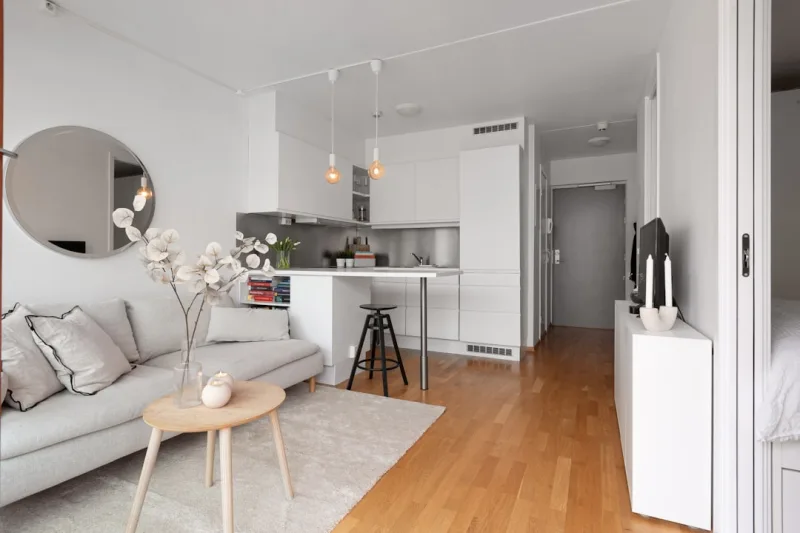
Scandinavian Minimalism emphasizes light woods, soft grays, whites, and the principle of "coziness." It's minimalist but warm—think IKEA's design ethos. This style works beautifully in homes with lots of natural light. The focus is on functionality with a Scandinavian-inspired sofa in light gray ($400-800 from IKEA), wooden side tables in light oak, and white or cream walls. Add texture with a natural fiber area rug and soft throw blankets. This style feels accessible and inviting while maintaining clean lines.
Modern Industrial Minimalism blends minimalist principles with industrial elements—exposed brick if you have it, metal accents, concrete, and darker neutrals. This style suits loft-style apartments or homes with industrial architecture. A dark gray sofa pairs with a steel-frame media console, concrete