How to Create a Luxury Studio Apartment in a Tiny Space
Look, I get it. You're living in a studio apartment and you want it to feel like a high-end hotel suite, not a college dorm. The challenge? About 400 square feet of space that needs to do everything — sleeping, working, entertaining, relaxing. Here's the thing though: it's absolutely doable, and I'm going to walk you through exactly how to make it happen without breaking the bank or losing your mind in the process.
The secret isn't about having more space. It's about being intentional with what you choose, where you place it, and how you layer textures and lighting. When I've helped clients transform cramped studios into sophisticated sanctuaries, the difference comes down to thoughtful planning and a few killer design moves. We're talking about creating zones, investing in multi-functional pieces, and understanding that sometimes less really is more.
I've learned that small spaces actually have an advantage — they force you to be selective. And selective = curated. And curated = expensive-looking, even when you're shopping smart.
What You'll Need
Before you start rearranging everything, here's what you'll actually want to invest in. These aren't just random purchases — each piece serves a purpose and elevates your space instantly.
- Quality bed frame and luxury bedding: This is where you sleep, so don't skimp. A solid wood or upholstered platform bed ($400-$800), Egyptian cotton sheets ($150-$300), and a weighted duvet ($200-$400).
- Area rug (large): Defines your sleeping area visually. Budget $200-$500 for something substantial in natural fibers like jute or wool.
- Sofa or sectional: A streamlined loveseat or compact sectional works better than a full-size couch. Plan on $600-$1,500 from retailers like West Elm or Article.
- Floating desk: Essential if you work from home. Wall-mounted saves floor space. $150-$400 depending on materials.
- Lighting fixtures: At least three sources. A bedside lamp ($80-$150), task lighting for your desk ($70-$120), and overhead or ambient lighting ($100-$250).
- Shelving system: Tall, narrow units maximize vertical space without eating into your square footage. $200-$500 installed.
- Window treatments: Good curtains or Roman shades make a massive difference. $100-$300 per window.
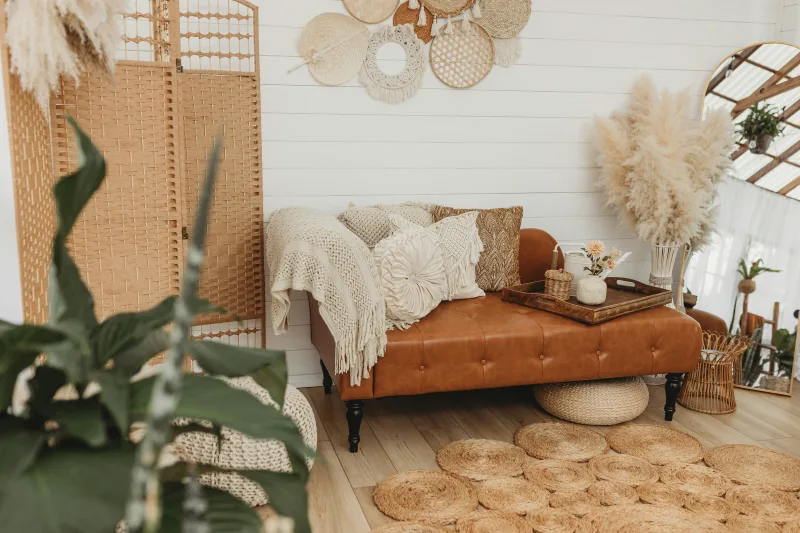
- Storage ottomans or benches: Functional and stylish. $150-$400 each.
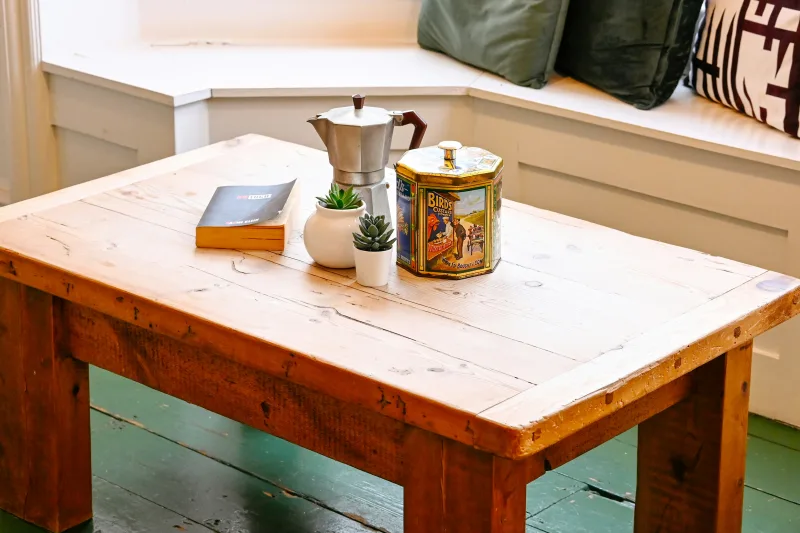
- Coffee table (compact): Something narrow that doesn't block sightlines. $150-$400.
- Paint and hardware: Fresh paint and new cabinet hardware feels custom. Budget $50-$150 for supplies from The The Home Depot.
- Artwork and mirrors: Creates depth and interest. $100-$400 for a curated collection.
- Plants and planters: Living elements make everything feel more expensive. $100-$250.
Step-by-Step Guide
Step 1: Assess Your Space and Create Zones
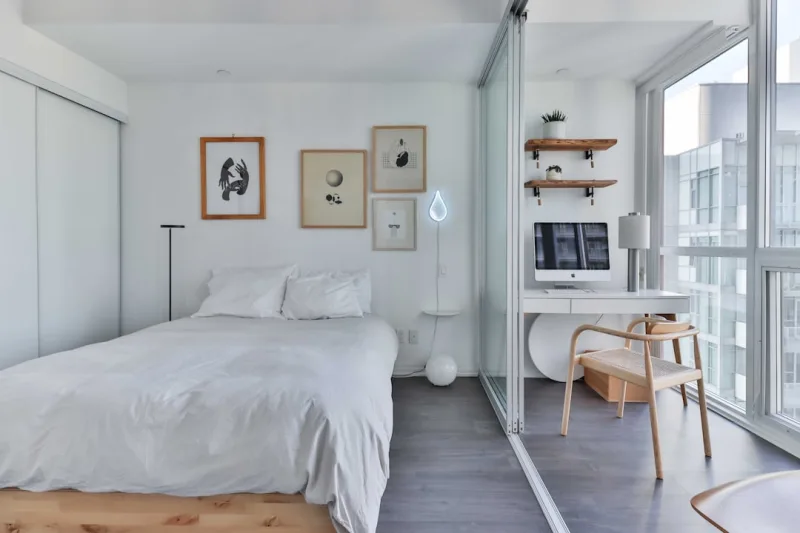
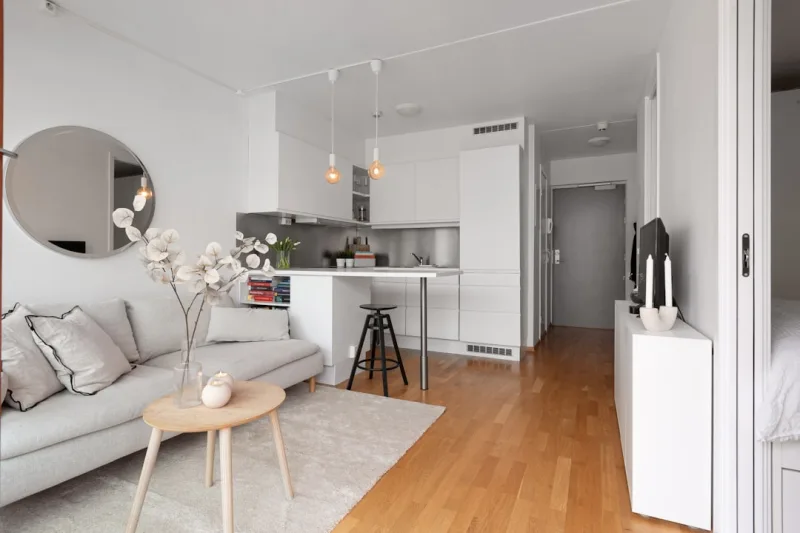
Walk around your studio and honestly evaluate what you're working with. Measure everything — seriously, pull out a tape measure. Figure out where natural light comes in, where your outlets are, and which walls can handle floating furniture. Here's my approach: I mentally divide the space into zones even if there are no walls. You need a sleeping zone, a working zone, and a living zone. Even in 400 square feet, these zones should feel separated visually.
Use different area rugs, lighting heights, and furniture angles to suggest these divisions. It sounds abstract, but it actually works. Your brain perceives the space as larger when different activities have their own visual real estate.
Step 2: Choose Your Color Palette and Paint Strategically
Honestly, this step matters more than most people realize. Going with a neutral, sophisticated base — think warm whites, soft grays, or muted taupes — gives you flexibility and makes the space feel more cohesive. I typically recommend keeping walls light and introducing deeper, richer colors through textiles and accessories.
If you want an accent wall, do it strategically. An accent wall behind your bed or above your sofa creates focal points and makes the space feel intentional. Deep emerald, charcoal, or even a textured wallpaper can elevate your entire aesthetic instantly. Just avoid painting all your walls dark — that shrinks the perception of space.
Step 3: Invest in Your Bed as Your Anchor
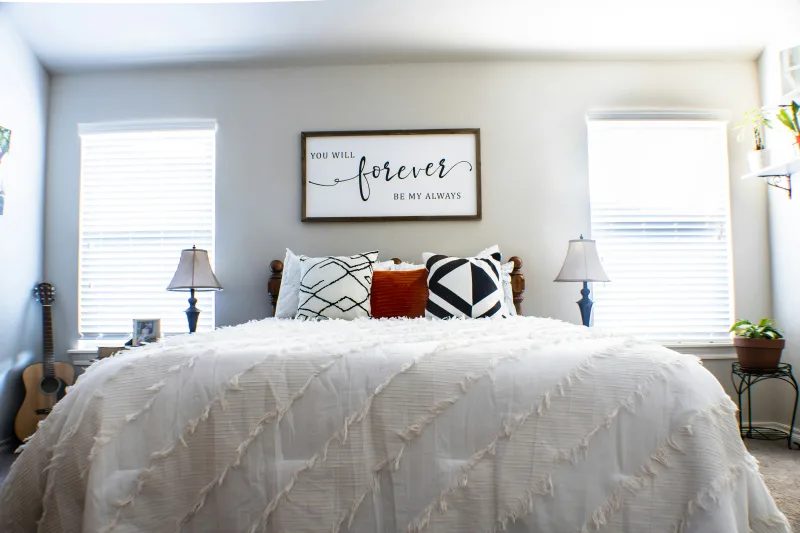
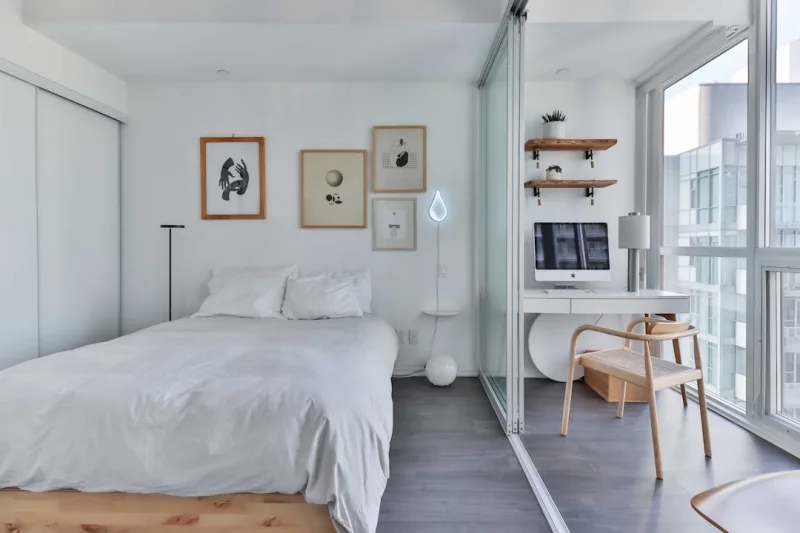
Your bed is going to take up a significant portion of your studio, so it needs to pull its weight aesthetically. Choose a bed frame that looks expensive but doesn't eat square footage with a bulky headboard. Platform beds in wood tones or upholstered styles work beautifully.
Layer it like a luxury hotel: quality mattress, premium sheets, a substantial comforter or duvet, and 3-4 pillows in varying sizes. Add throw blankets for texture. This creates visual richness and makes your sleeping area look intentional, not thrown-together. Better Homes & Gardens & Gardens has excellent styling guides on this.
Step 4: Establish a Working Zone
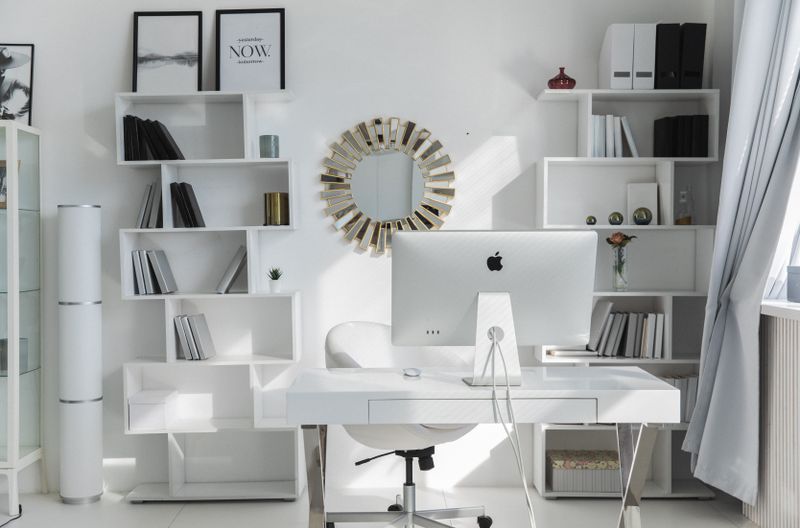
If you work from home, you need a dedicated desk — even if it's small. Float a wall-mounted desk on one wall, ideally near a window for natural light. Pair it with a comfortable task chair that can slide under the desk when not in use. Add a small shelving unit above for storage and visual interest. The key is making it feel separate from your living and sleeping areas, even if it's just a few feet away.
Step 5: Layer Your Lighting
This is where the magic happens. Bad lighting makes even an expensive studio look cheap. Install three types of lighting: ambient (overhead or track lighting), task (desk lamp, reading light), and accent (wall sconces, uplighting). Dimmer switches are your friend — they let you adjust the mood for different times of day.
 Budget Apartment Renovation: DIY Hacks That Actually Work
I'm obsessed with warm-toned LED bulbs that mimic incandescent light. They make everything look warmer, more inviting, and honestly, more expensive-looking than standard bright white LEDs.
Step 6: Use Vertical Space Aggressively
In small spaces, your walls are real estate. Install floating shelves, wall-mounted storage, and tall narrow bookcases. This keeps your floor space open and creates visual height, which makes ceilings feel higher. Arrange items on shelves thoughtfully — mix books, plants, art, and decorative objects. It should look curated, not cluttered.
Step 7: Choose Furniture That Works Overtime
Every single piece in your studio needs to be multi-functional. Your coffee table should have storage underneath. Your sofa should have drawers or a pull-out bed. Your ottomans are seating, storage, and a footrest. This isn't compromise — it's smart design that makes the space feel more open while actually giving you more functionality.
Step 8: Finish with Thoughtful Accessories
Once the bones are in place, accessorize with intention. Mirrors expand perception of space and reflect light. Artwork creates visual interest and personality. Plants bring life and warmth. Quality textiles — throw pillows, blankets, a nice area rug — add luxury and texture. These finishing touches are what make a studio feel curated and high-end versus generic and temporary.
Pro Tips
Keep it minimalist with intention: There's a difference between minimalist and empty. You want to be selective with what you display, not sparse. Every item should either be functional or beautiful — ideally both.
Use mirrors strategically: Place a large mirror opposite a window to bounce light around. Mirrors visually expand space and make it feel airier. I typically recommend one large statement mirror rather than multiple smaller ones.
Stick to a cohesive design style: Mixing styles randomly reads as confused. Choose one aesthetic — mid-century modern, Scandinavian, industrial, traditional — and stay committed. This creates visual cohesion and makes the space feel intentional.
Invest in quality textiles: This is where people see the luxury. High-thread-count sheets, a plush duvet, quality curtains, and a good area rug make a massive difference in how your space feels. You can find these deals at The Home Depot or higher-end retailers depending on your budget.
Hide the mess: Small spaces have nowhere for clutter to hide. Invest in storage solutions that look good — gorgeous baskets, closed shelving, filing cabinets that match your decor. Everything should have a home.
Create a focal point: Whether it's your bed, a accent wall, or a beautiful window treatment, give your eye somewhere to land when you walk in. This anchors the space and makes it feel designed.
Cost Breakdown
← Scroll to see full table →
| Item | Budget Range (USD) | Quality Tier |
|---|---|---|
| Bed Frame & Mattress | $600-$1,200 | Mid to High |
| Bedding Set (Sheets, Duvet, Pillows) | $300-$600 | Mid to High |
| Area Rug (Large) | $250-$500 | Mid |
| Sofa/Loveseat | $700-$1,500 | Mid to High |
| Floating Desk | $200-$400 | Mid |
| Desk Chair | $150-$400 | Mid |
| Lighting (3+ fixtures) | $300-$600 | Mid |
| Shelving/Storage |