Designer Studio Apartment Storage for Small Spaces: Smart Solutions That Look Beautiful
There's something magical about walking into a studio apartment that feels organized, intentional, and genuinely beautiful. If you're living in a studio or micro-apartment, you know the struggle is real—where on earth do you put everything? I get it. You want your space to feel like a calm, curated sanctuary, not a storage unit. The good news? Designer storage solutions for small spaces have come such a long way. With the right approach, you can create a home that's not just functional, but genuinely Instagram-worthy. This guide will show you exactly how to maximize every single inch of your studio without sacrificing style or your sanity. We're talking about smart vertical storage, multi-functional furniture, and those designer touches that make you actually want to spend time in your space. Let's make your studio apartment feel less cramped and more like the cozy designer home you deserve.

In this comprehensive guide, you'll discover everything you need to know about creating stunning storage solutions in your studio apartment. We'll walk you through understanding what designer storage really means, help you plan your unique space with a detailed checklist, break down budgets from super affordable to splurge-worthy, and provide you with step-by-step instructions for implementation. You'll also explore the best styles and products available right now, learn expert tips from interior design professionals, and get answers to all those questions you've been googling at midnight. Whether you're starting from scratch or refreshing your current setup, this guide will transform how you think about storage in your small space.
Understanding Designer Studio Apartment Storage for Small Spaces
Designer studio apartment storage isn't just about cramming things into closets and under beds—it's about creating a cohesive system that works as hard as it looks good. At its core, designer storage for small spaces means selecting pieces and solutions that are functional, aesthetically pleasing, and scaled appropriately for your square footage. Think of it as the intersection of form and function, where every storage solution doubles as décor.
Why does this matter so much? Because living in a studio apartment means your bedroom, living room, dining room, and office are all the same room. Everything shows. There's nowhere to hide a cluttered closet or shove things "out of sight." Your storage solutions need to be beautiful enough to live with 24/7 because, well, they literally are living with you constantly. This isn't about minimalism or having less stuff—it's about organizing what you have in a way that makes sense for your lifestyle while maintaining that designer aesthetic you're craving.
Common mistakes I see people make? First, they buy storage pieces that are too bulky for their space. That gorgeous entertainment unit from The The Home Depot might be stunning, but if it takes up half your studio, it's working against you. Second, they neglect vertical space—we're talking walls that could be holding floating shelves, hanging organizers, and wall-mounted cabinets. Third, they forget that storage can be beautiful. Just because something holds your winter sweaters doesn't mean it has to be ugly. Fourth, they don't measure anything before buying. Please, measure twice, buy once. Fifth, they ignore the power of containers and organization systems. Even the most beautiful vintage trunk won't help if your stuff inside is chaos. Sixth, they try to store everything. Sometimes the real solution is letting go of items that don't serve you. Finally, they treat storage as an afterthought instead of a design element from day one.
Planning Guide for Designer Studio Apartment Storage for Small Spaces
Before you buy a single shelf or basket, you need a solid plan. I know it's tempting to just start shopping—believe me, I'm right there with you—but spending 30 minutes planning now will save you money, time, and the headache of returns later. Start by measuring your studio apartment completely. Get the dimensions of every wall, every closet, every nook. Note where natural light comes in, where your furniture currently sits, and where you have dead space. Dead space is your secret weapon in small apartments—those corners, the wall above your door, the area under your sink, the backs of doors. All prime real estate for storage.
Next, categorize what you need to store. We're talking clothing, bedding, kitchen items, books, office supplies, seasonal décor, shoes, and everything else that makes up your life. Be honest about quantities. Do you really need 47 sweaters, or could that number be trimmed? Once you know what you're working with, you can choose storage solutions that actually fit your needs. Someone who has 200 books needs a different approach than someone with 20 books. The beauty of designer studio storage is that it's completely customizable to your lifestyle.
Think about your daily routine too. If you work from home, you need accessible office storage. If you entertain frequently, you might need attractive solutions for bar supplies and glassware. If you're a fashion person, your closet and clothing storage will be different from someone who has a minimal wardrobe. Your storage system should support how you actually live, not how you think you should live.
Studio Apartment Storage Planning Checklist:
- ☐ Measure every wall, closet, and potential storage space in your studio (including height, width, and depth)
- ☐ Create a list of everything you need to store and estimate quantities for each category
- ☐ Identify vertical space opportunities (walls, corners, above doorways, under windows)
- ☐ Assess your current furniture and decide what stays, what goes, and what multi-functional pieces you need
- ☐ Determine your design style (modern, farmhouse, minimalist, eclectic, etc.) and gather inspiration
- ☐ Set a realistic budget for your storage solutions and stick to it
- ☐ Plan storage by zone (sleeping area, living area, kitchen area, work area if applicable)
- ☐ Take photos of your space and reference them while shopping to visualize scale and placement

Budget Breakdown
← Scroll to see full table →
| Price Range | Storage Solutions | Typical Price |
|---|---|---|
| Under $50 | Over-door organizer, storage baskets (IKEA), plastic drawer organizers, tension rods for closets, shelf dividers, hooks and hardware | $10-$45 |
| $50-$200 | Floating shelves (set of 3), storage ottomans, under-bed storage containers, wall-mounted cabinets, ladder shelf, cube storage units, fabric storage bins with labels | $60-$180 |
| $200+ | Murphy bed with storage, custom closet systems (The Home Depot), wall-to-wall shelving units, quality wooden storage benches, built-in desk with storage, designer storage cabinets | $250-$1,500+ |
Let me be real with you: you don't need to spend a fortune to create gorgeous storage in your studio. Some of my favorite storage solutions came from IKEA and cost less than $40. That said, investing in a few quality pieces—like a beautiful wooden storage bench or a set of floating shelves in natural wood—can elevate your entire space. The trick is being strategic about where you splurge and where you save.
 Budget Apartment Renovation: DIY Hacks That Actually Work
If you're on a tight budget, start with what you can see. Invest in pretty baskets, attractive containers, and nice organizing systems for your visible storage. Then spend less on the things that live behind closed doors. A $20 plastic drawer organizer works just as well as a $60 one if nobody's looking at it. Conversely, if you have a studio apartment where everything shows, those visible storage pieces deserve some of your budget love. From Better Homes & Gardens and Gardens, you can find beautiful storage solutions at Target that bridge that gap between budget-friendly and designer-quality. The key is mixing high-low: splurge on statement pieces and invest in practical basics from Amazon or IKEA where things are hidden.
Step-by-Step Guide
Step 1: Declutter and Assess Your Current Items
Before you buy a single new storage solution, you've got to get honest about what you actually have and what you actually use. Go through your belongings category by category—clothing, books, kitchen items, everything. This is your moment to let go of things that don't serve you anymore. That blender you haven't used in two years? That stack of magazines? Those jeans that don't fit? They're taking up valuable real estate in your studio. Be thoughtful but also be realistic. You don't have to become a minimalist, but you do need to live intentionally in a small space. Keep what you love and what you use. Everything else is just clutter masquerading as potential.
Step 2: Map Out Your Zones
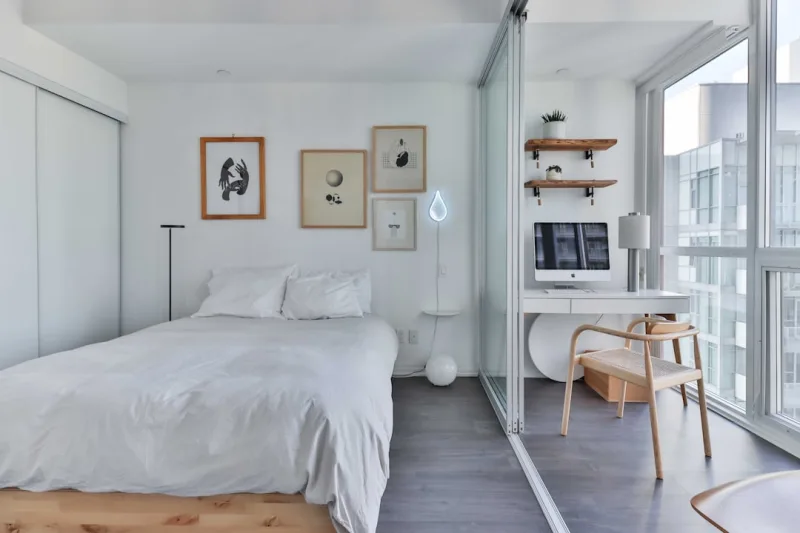
Divide your studio apartment into functional zones. Even though it's technically one room, you probably have a sleeping area, a living area, maybe a dining area, and hopefully a kitchen area. Each zone can have its own storage strategy. Your sleeping zone might have under-bed storage and a small nightstand with drawers. Your living zone might feature a storage ottoman and floating shelves. Your kitchen area needs accessible storage for daily dishes but beautiful containers for pantry items. By thinking in zones, you create a more organized and functional space that flows naturally. Plus, it prevents you from overwhelming yourself by trying to solve your entire studio's storage at once.
Step 3: Choose Your Vertical Storage Solutions
This is where small space magic happens. Walls are your best friend in a studio. Install floating shelves above your desk, your sofa, or your bed. Add wall-mounted cabinets in your kitchen or entryway. Hang hooks for bags, scarves, and frequently-worn jackets. Install a pegboard for organizing office supplies. The more you use your vertical space, the less clutter you'll have on your actual floor, and the larger your space will feel. Floating shelves from The Home Depot are affordable and come in tons of styles. IKEA's Lack shelves are budget-friendly classics. Whatever you choose, make sure it's securely mounted—you don't want a shelf full of your favorite things crashing down.
Step 4: Invest in Multi-Functional Furniture
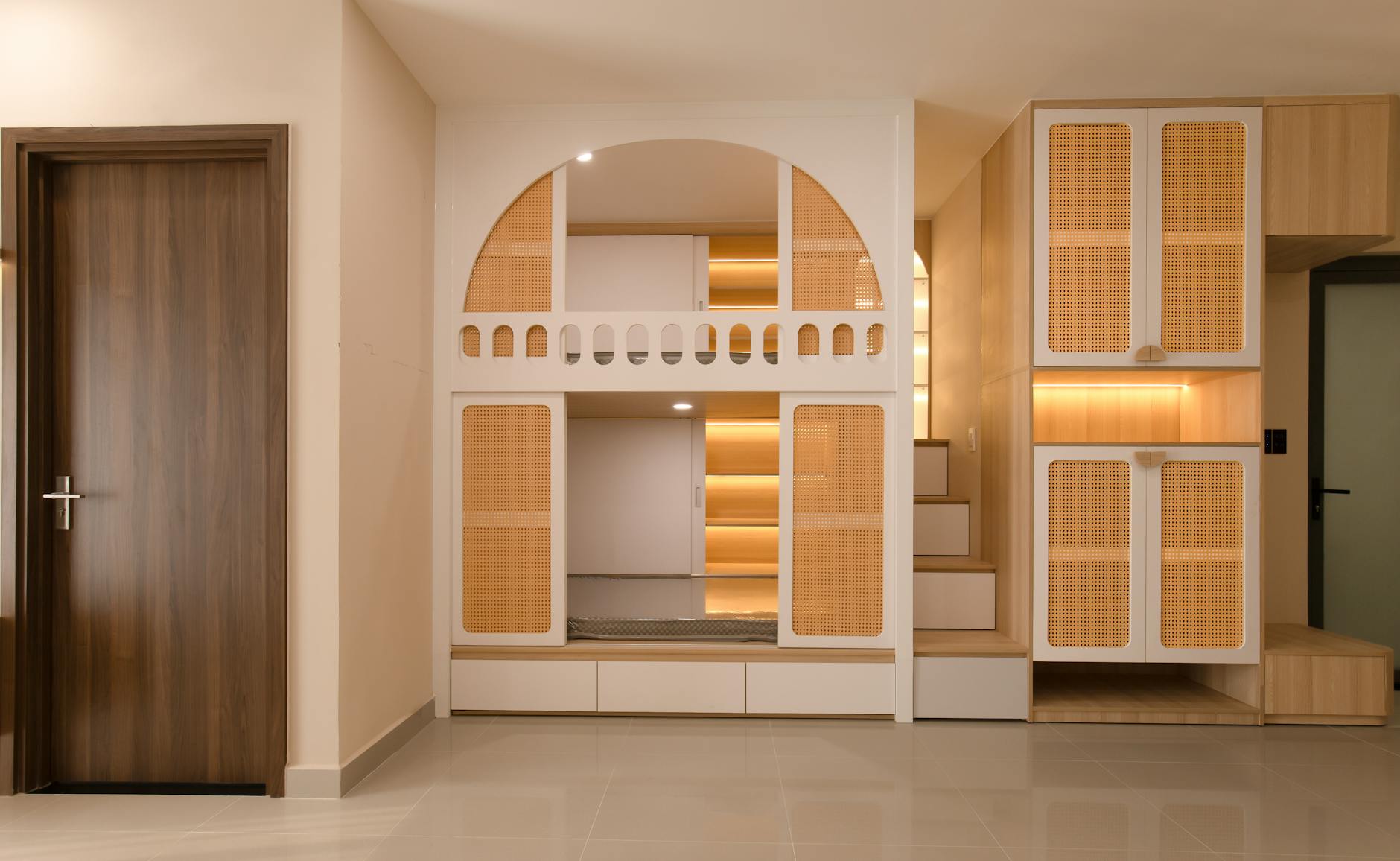
In a studio apartment, every piece of furniture needs to earn its spot by doing double duty. A storage ottoman serves as a footrest, extra seating, and hidden storage all at once. A bed frame with built-in drawers gives you sleeping space plus under-bed storage. A console table with shelves below works as an entryway, desk, or bar area while providing storage. A bookcase can divide your space visually while holding your books and displaying décor. The best multi-functional pieces are the ones that don't look like they're trying too hard—they should look intentional and beautiful, not like you crammed storage into furniture as an afterthought.
Step 5: Organize Your Closet Space Strategically
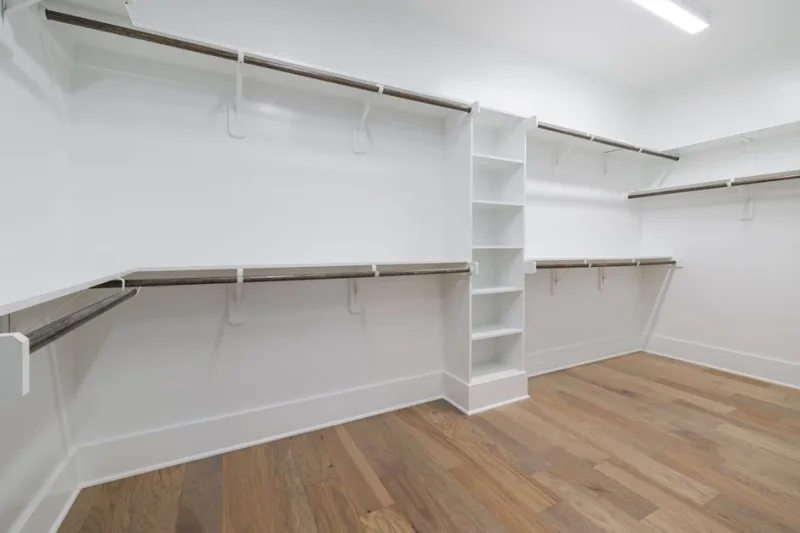
Your closet is probably your largest storage opportunity in a studio apartment, so make it count. Install double hanging rods to double your hanging space. Add shelves above your hanging clothes for sweaters, bags, and off-season items. Use slim velvet hangers to maximize hanging space. Add a shoe organizer behind your closet door. Use clear storage boxes for seasonal items so you can see what's inside without opening them. Label everything. Your closet should be just as thoughtfully organized as your visible storage because you'll be opening it multiple times a day, and a well-organized closet makes your entire life feel more manageable.
Step 6: Select Beautiful Containers and Organizing Systems
This is where your storage becomes décor. Invest in pretty baskets, attractive plastic bins, wooden crates, or fabric storage boxes that match your design style. Group similar items together and label containers clearly. A beautiful woven basket holds throw blankets while looking intentional. Clear glass jars organized on open shelves look curated and designer-quality. Matching storage bins stacked under your bed look clean and intentional. The container is often what people see, so make it beautiful. Brands like Container Store, IKEA, Target (Better Homes and Gardens line), and Amazon have fantastic options at every price point.
Step 7: Create a System and Maintain It
The most beautiful storage system in the world fails if you don't maintain it. Create a system that makes sense for your life and commit to it. Maybe everything has a home, and you spend five minutes every evening returning items to their places. Maybe you deep-organize once a month. Maybe you have a "one in, one out" rule for new items coming into your studio. Whatever your system, make it something you can actually stick with. Label your containers clearly so guests (and your future self) know where things belong. A functioning storage system is infinitely more important than a perfect-looking one, so prioritize systems that you'll actually use.
Best Styles and Products
Modern Minimalist Storage
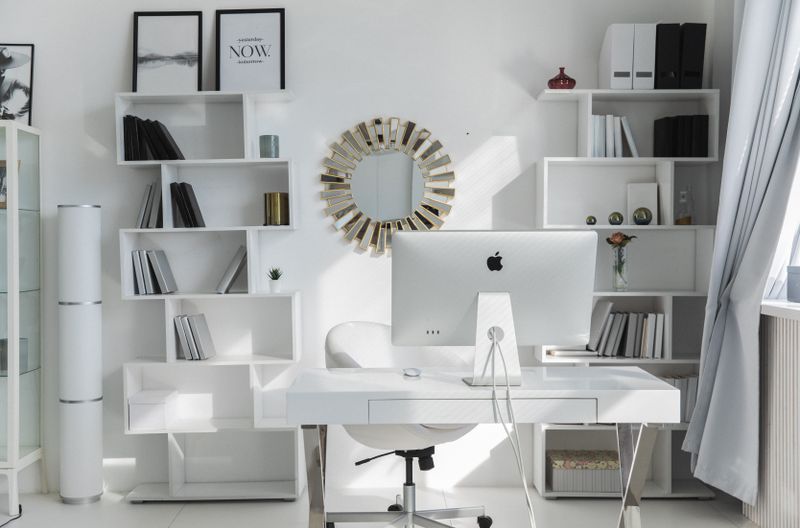
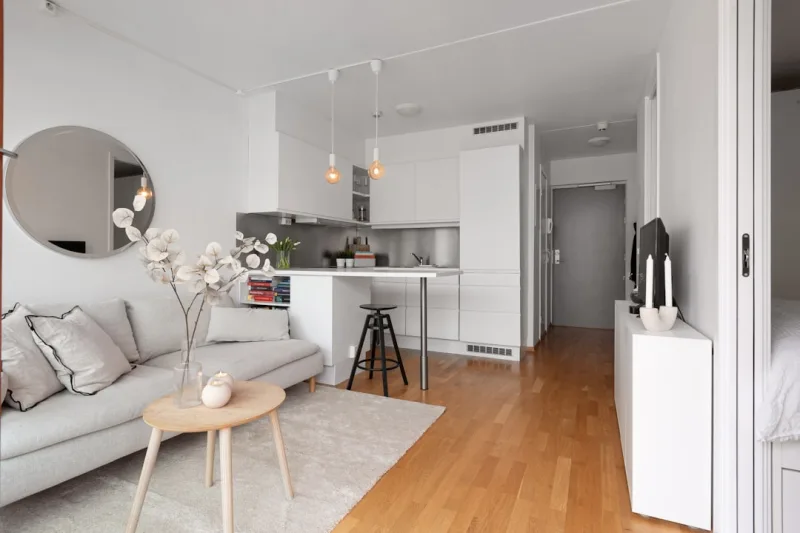
If you love clean lines and a pared-down aesthetic, modern minimalist storage is your jam. Think white floating shelves, sleek black metal frames, and plenty of negative space. The goal is to store what you need while maintaining a sense of calm and openness. This style works beautifully in small spaces because it doesn't feel cluttered or heavy. Choose storage pieces with simple geometric shapes and neutral colors. IKEA's Kallax and String shelving systems are perfect for this aesthetic. Floating shelves in matte black or white create a contemporary look without breaking the bank.
Scandinavian Storage with Warmth
Scandinavian design brings warmth to small spaces through natural materials, soft colors, and functional beauty. Natural wood, soft grays, and cozy textures make you feel like you're living in a hygge dream. Wooden shelving, woven baskets, and light-colored fabric bins create an aesthetic that's both organized and inviting. This style is perfect if you want your storage to feel like part of your home's design rather than separate from it. Combine natural wood shelving with soft, neutral containers.