You know that feeling when you step outside and just... sigh? Your patio could be so much more than a concrete slab with a couple chairs sitting on it. Honestly, I see this all the time — people spend thousands on patios that don't actually work for how they live. Here's the thing: a smart patio layout doesn't require a professional designer or a massive budget. It just requires thinking about flow, function, and actually using the space intentionally.
I've spent years helping friends and family reimagine their outdoor spaces, and the best transformations always start with a plan. Not some fancy architectural rendering — just real thinking about how people actually move through the space, where they want to relax, and where they'll actually gather. The DIY hacks I'm sharing today have saved people hundreds (sometimes thousands) while creating patios that look intentional and feel welcoming. Let's dive in.
What You'll Need
Before you start rearranging everything, grab these materials. Most of this stuff is standard hardware or thrifted, which keeps costs down:
- Spray Paint (Outdoor Grade) — $8-12 per can (Rust-Oleum, Krylon)
- Pallet Wood or Reclaimed Lumber — $20-50 (check local Facebook Marketplace or The The Home Depot)
- Landscape Fabric — $15-25 for a roll
- Gravel or Mulch — $30-60 for bags
- Solar Pathway Lights — $20-40 for a set of 8-10
- Rope or Twine — $5-10
- Outdoor Rugs (second-hand or budget option) — $40-80
- Paint Markers or Chalk — $5-8
- Level and Measuring Tape — $20-30 (if you don't have them)
- Neutral Paint for Concrete — $25-40 per gallon (Behr, Sherwin-Williams)
Total estimated budget: $168-325 depending on your existing furniture and what you already own.
Step-by-Step Guide
Step 1: Map Your Space (The Foundation)
Before you move a single thing, grab some graph paper or download a free design app like SketchUp or Canva. Measure your patio dimensions — seriously, just grab that tape measure. Jot down where the sun hits at different times, where shade naturally falls, and where utilities are located. I always sketch this out on paper first because it forces you to think spatially without the overwhelm of actually moving heavy furniture.
Mark out different zones. Are you a dinner-people or a lounging-people? Do you want a cozy conversation nook, a dining area, or both? I'm an advocate for multi-functional spaces — one area should be flexible enough to adapt. This planning phase takes maybe 30 minutes, and honestly, it saves you hours of rearranging later.
Step 2: Create Visual Boundaries with Paint or Rope
Here's a DIY hack that sounds too simple but actually works: use rope or landscape marking tape to lay out your zones on the ground before you commit. This helps you visualize traffic flow. You'll quickly see if your conversation area blocks the path to the grill, or if your dining table actually fits without cramping everything else.
Once you're happy with the layout, consider painting pathways or zone boundaries. Neutral concrete paint in light gray or cream ($25-40 per gallon) makes a huge difference. It defines spaces without making things feel cramped. Better Homes & Gardens & Gardens has some solid tutorials on this if you want to get fancy with stencils.
Step 3: Establish a Focal Point
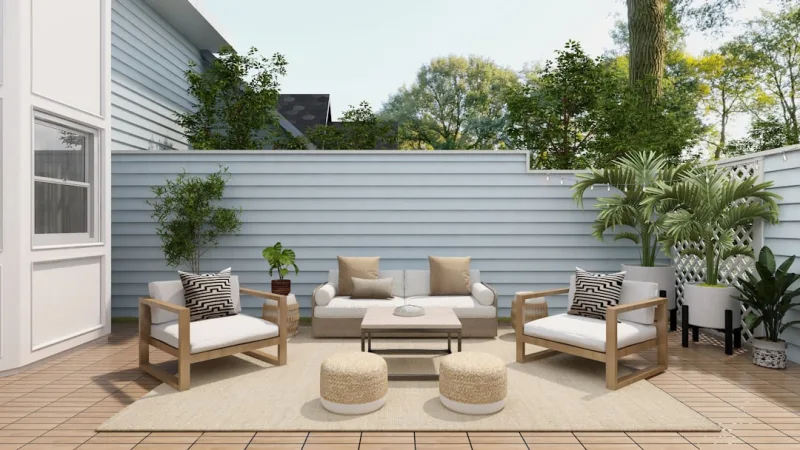
Every good patio needs visual anchor — whether that's a fire pit, a beautiful planter, a water feature, or even a well-placed piece of outdoor art. This gives your eye somewhere to rest and makes the space feel intentional. If budget is tight, create a focal point with plants. A tall, sculptural plant or a strategically placed potted tree creates vertical interest and draws attention naturally.
Arrange furniture to orient toward this focal point, similar to how you'd arrange a living room around a fireplace. Everything suddenly feels more cohesive.
Step 4: Define Zones with Outdoor Rugs and Furniture Grouping
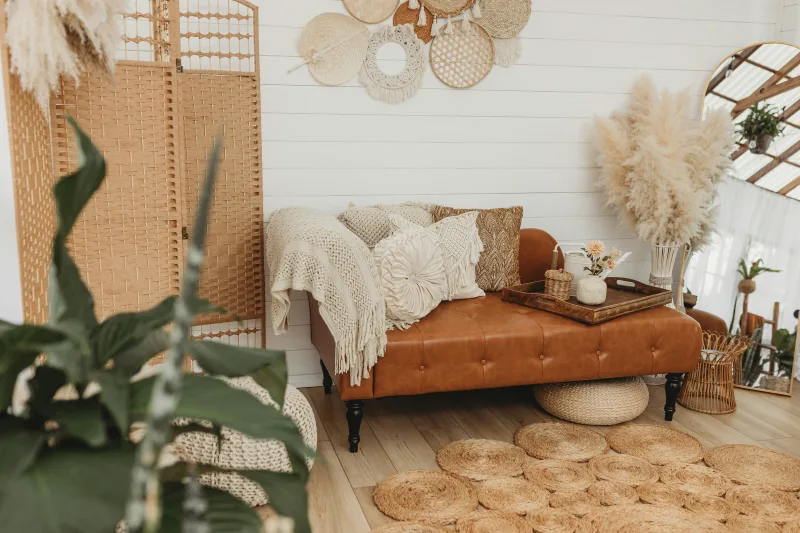
Outdoor rugs are honestly underrated. A $50-80 secondhand outdoor rug from Facebook Marketplace immediately grounds a seating area and makes it feel separate from the rest of the patio. Place your conversation furniture on the rug — a small sofa or bench, chairs, and a coffee table. Group things close enough for actual conversation, but not so tight that it feels awkward.
 Budget Apartment Renovation: DIY Hacks That Actually Work
For dining, keep it simple: table, chairs, maybe a bistro umbrella if you don't have shade. Leave walking space around it. HGTV's outdoor entertaining guides recommend at least 3 feet of space around tables for comfortable movement.
Step 5: Add Vertical Elements and Layered Lighting
This is where patios go from flat and boring to actually interesting. Use trellises, tall planters, or wall-mounted shelves to add height. This breaks up the visual monotony and creates depth — especially important for smaller patios.
For lighting, solar pathway lights ($20-40 for a set) are your friend. They mark walkways, create ambiance, and require zero wiring. String lights ($15-30 on sale) across the space soften everything up and make evening gatherings feel magical. Don't just rely on one light source — layer them for visual interest and functionality.
Step 6: Incorporate Planting Strategically
Instead of random pots scattered everywhere, create a planting scheme. Group plants in odd numbers (yes, there's actually design logic here — it just looks better). Use landscape fabric under gravel areas to minimize weeds without creating a maintenance nightmare. Plant screening plants if you want privacy from neighbors — tall ornamental grasses or evergreens work beautifully and make the space feel more intimate.
Pro Tips
Tip 1: Steal from Nature. If your patio has a natural shade pattern, work with it instead of fighting it. Place seating where shade naturally occurs, and use sunny spots for dining or gardens. You'll be outside more often if the comfort level is right.
Tip 2: Buy Quality Where It Matters. Skip the fancy patio furniture and invest in a really good outdoor cushion and a solid grill if you entertain. These items directly impact usability and longevity. Everything else can be budget-friendly.
Tip 3: Layer Your Hardscape. Mix textures — concrete, gravel, pavers, or mulch. Different materials define zones and add visual interest without costing much. The Home Depot carries bulk materials that are way cheaper than specialty garden centers.
Tip 4: Think Vertical Storage. Wall-mounted shelving, hanging planters, and pegboards keep the patio from feeling cluttered while storing grilling tools, cushions, and decor. Small patios especially need this kind of thinking.
Tip 5: Test Before You Buy. Borrow furniture from a friend or rent pieces before purchasing expensive outdoor items. Make sure the scale and function actually work for your space.
Cost Breakdown
← Scroll to see full table →
| Item | Estimated Cost | Budget Option | Splurge Option |
|---|---|---|---|
| Concrete Paint | $25-40 | $15 (basic store brand) | $50+ (premium finish) |
| Outdoor Rug | $40-80 | $20-30 (secondhand) | $150+ (high-end) |
| Patio Furniture (basic) | $150-300 | $50-100 (thrifted) | $800+ (designer) |
| Solar Lights | $20-40 | $15 (basic set) | $100+ (designer lights) |
| String Lights | $15-30 | $10 | $75+ (bistro lights) |
| Plants & Planters | $60-120 | $20-40 (start small) | $200+ (large containers) |
| Landscape Fabric & Mulch | $30-60 | $20 (less coverage) | $80+ (premium mulch) |
| TOTAL ESTIMATE | $340-670 | $150-305 | $1,400+ |
FAQ
Q: How do I figure out the right furniture scale for my patio?
A: This is the question I get asked most, honestly. Measure your patio and aim for furniture that takes up no more than 50-60% of the space. You want room to walk and breathe. A good rule of thumb — if you're struggling to move around seating or dining areas, the furniture is too large. Secondhand or rental options let you test scale before committing.