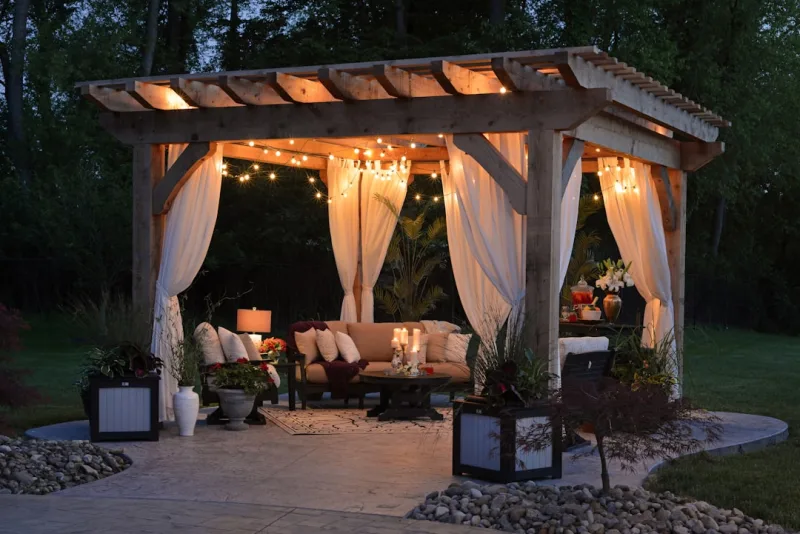
Elegant Patio Inspiration for Cozy Homes: Create Your Perfect Outdoor Retreat
You know that feeling when you step outside and immediately feel like you're on vacation? That's what we're going for here. I've spent years helping homeowners transform their patios from afterthoughts into genuine extensions of their living space — the kind of spot where you actually want to spend time with your morning coffee or host dinner with friends. The secret isn't having a massive budget or even a huge yard. It's about being intentional with every single element.
Here's the thing: a cozy, elegant patio doesn't need to look like a magazine photoshoot. In fact, the best ones feel lived-in and personal. They whisper sophistication rather than shouting it. Whether you've got a tiny balcony or a sprawling backyard, we're going to walk through how to create that perfect blend of comfort and elegance that makes people actually want to be outside.
Honestly, this is one of my favorite projects to tackle because the impact is immediate. You're not just adding square footage to your home — you're adding quality of life. Let's dive in.
What You'll Need
Before we get started, let's talk materials. Don't worry if this list looks long — you don't need everything at once. Build your space gradually, and it'll feel even more personal.
- Outdoor Furniture: Weather-resistant seating set (sofa, chairs, or bistro set) — $400-$1,200
- Outdoor Rug: UV-resistant, weather-safe indoor/outdoor rug — $150-$400
- Lighting: String lights, lanterns, or solar pathway lights — $50-$300
- Planters & Plants: Mix of ceramic or concrete planters with seasonal plants — $100-$250
- Shade Solution: Pergola, shade sail, or umbrella — $200-$800
- Decorative Pillows & Throws: Outdoor-grade textiles — $75-$200
- Side Table: Weather-resistant wood or metal accent table — $80-$200
- Fire Feature: Tabletop fire pit or candles — $50-$300
- Paint or Stain: For existing patio surface refresh — $30-$100
- Mulch or Pea Gravel: For planting beds — $20-$60
Step-by-Step Guide
Step 1: Assess Your Space and Set a Vision
Start by actually sitting in your patio area at different times of day. Where does the sun hit? Where's the shade? Which direction do you face when you're relaxing? This isn't just practical — it's how you figure out what your space actually wants to be. I always grab a cup of coffee and spend a solid 15 minutes just observing. You'll notice things like afternoon glare or that perfect morning light spot near the corner.
Pull some inspiration from HGTV or Better Homes & Gardens & Gardens. Create a little Pinterest board (yes, really!) of patios that make you feel something. Notice the colors, the materials, the vibe. Are you drawn to modern minimalism? Rustic Mediterranean? Tropical lush? Your aesthetic will guide every decision from here.
Step 2: Clean and Prepare Your Patio Surface
This step gets skipped way too often, and it's such a mistake. A clean patio is the foundation of everything. Power wash if you can — it's honestly transformative. If your concrete looks tired or stained, you've got options. Some people grab a concrete cleaner from The The Home Depot and do it by hand. Others invest in staining or painting their patio floor. I'm personally a fan of a subtle stain that brings out character without looking too intentional.
While you're down there, fill any cracks and address any drainage issues. You want water flowing away from your home, not pooling on your patio.
Step 3: Define Zones and Layout Your Furniture
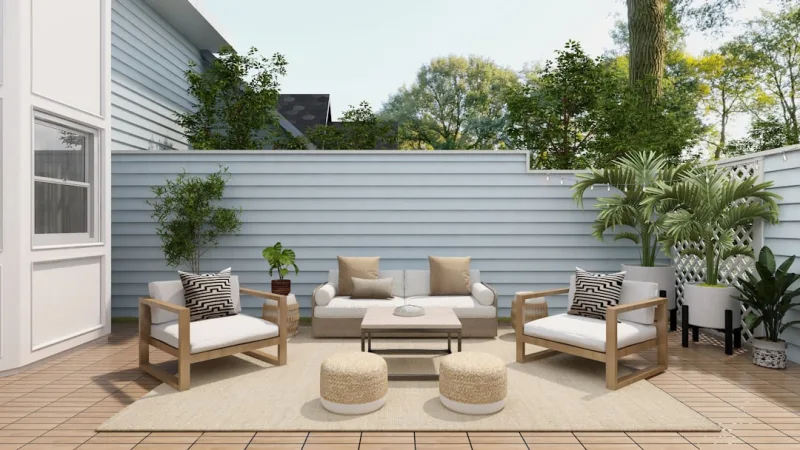
Here's where the magic happens. Think about how you actually use this space. Do you want a lounge area? A dining spot? A reading nook? You don't need massive furniture — sometimes two chairs and a small table create more intimacy than a huge sectional anyway.
Lay things out before you commit. Use painter's tape on your patio to map out furniture placement. Move things around. Live with it for a day. Your furniture should create natural conversation areas and flow with how people actually move through your space.
Step 4: Add Layers of Lighting
This is nonnegotiable for elegance. Overhead lighting alone looks harsh and uninviting — you need layers. String lights overhead create ambiance. A lantern or two on tables adds softness. Solar pathway lights define edges safely. Candles (in weather-resistant holders) add that final touch of coziness.
Plan your lighting to work at different times of day and season. What looks good in summer might need adjustment in winter when the sun angle changes.
Step 5: Create Visual Interest with Plants and Planters
 Budget Apartment Renovation: DIY Hacks That Actually Work
This is where personality shines through. Group planters in odd numbers — it's not a design rule for no reason; it actually looks more intentional and less formal. Mix heights, textures, and colors. Use a combination of tall architectural plants for drama and lower trailing plants for softness.
Visit your local garden center (not big box stores) if you can. The staff can help you choose plants that thrive in your specific light conditions. That's crucial — a plant struggling in wrong conditions will never look elegant.
Step 6: Layer in Textiles and Comfort
An outdoor rug grounds your furniture and defines the space. Pick one that speaks to you — whether that's geometric, botanical, or solid tones. Add throw pillows and an outdoor throw blanket. These aren't luxuries; they're what transform a patio from sterile to "I want to sit here all evening."
Make sure everything is rated for outdoor use. Regular fabric will fall apart, but outdoor-grade textiles are incredibly durable these days.
Step 7: Install Shade and Consider a Statement Piece
Nothing kills patio enjoyment like being too hot or too exposed. A pergola, shade sail, or even a strategic umbrella changes everything. Some people add a fire feature — a tabletop fire pit, chiminea, or even just beautiful lanterns with candles. These create a focal point and give people a reason to gather.
Pro Tips
Color Palette Matters: Stick to 2-3 main colors plus neutrals. I'm obsessed with sage green with cream and warm wood tones right now, but classic gray and white never fails. Your colors set the entire mood.
Invest in Quality Where It Counts: Your seating and your rug are worth the splurge. These are touched constantly and see weather exposure. Cheap versions fall apart. Nicer versions last a decade.
Don't Over-Decorate: This is where people lose me. Empty space is elegant. Breathing room is sophisticated. You don't need something on every surface.
Plan for Maintenance: Whatever you choose needs to withstand your climate. That beautiful open pergola needs periodic staining. Plants need water. Textiles need seasonal care. Know what you're signing up for.
Shop Seasonally: End-of-season sales at The Home Depot are your friend. Grab pillows in August, outdoor furniture in September, and décor items whenever they're marked down.
Cost Breakdown
← Scroll to see full table →
| Item | Budget Range | Mid-Range Investment |
|---|---|---|
| Furniture (seating set) | $400-$1,200 | $700 |
| Outdoor Rug | $150-$400 | $250 |
| Lighting | $50-$300 | $150 |
| Plants & Planters | $100-$250 | $175 |
| Shade Solution | $200-$800 | $400 |
| Textiles (pillows, throws) | $75-$200 | $125 |
| Side Table | $80-$200 | $120 |
| Fire Feature | $50-$300 | $150 |
| Surface Prep & Materials | $50-$160 | $100 |
| TOTAL ESTIMATED COST | $1,155-$3,810 | $2,170 |
Frequently Asked Questions
Q: Do I need to do everything at once?
A: Absolutely not — and honestly, I'd argue against it. Build your space gradually. Start with furniture and lighting, then add plants and textiles over time. Your patio will feel more curated and personal, plus you'll spread costs over several seasons. This also gives you time to figure out what actually works for your lifestyle.