Luxury Bathroom Layout 2026: The Ultimate Design Blueprint
Okay, so here's the thing — bathrooms have completely transformed over the last few years. They're no longer just functional spaces where you brush your teeth and rush out the door. In 2026, the luxury bathroom is basically your personal sanctuary, your spa retreat, your place to actually breathe. I've been designing bathrooms for over a decade, and I can tell you that what people want now is completely different from even three years ago.
The modern luxury bathroom isn't about cramming in every high-end fixture you can afford — that's so 2015. Instead, it's about intentional design, strategic spacing, and creating zones that actually make sense for how you live. We're talking spa-like showers, statement vanities, generous counter space, and layouts that don't feel cramped or cluttered. Honestly, it's refreshing to see people finally prioritizing comfort and flow over just buying expensive stuff.
If you're planning a bathroom renovation or building from scratch, understanding what a luxury bathroom layout should look like in 2026 is crucial. Let me walk you through exactly what works, what costs what, and how to pull this off without losing your mind (or your savings account).
What You'll Need
Before you start demolition or construction, let's talk about the materials and fixtures that define a luxury bathroom layout. These are the essentials you should be thinking about:
- Statement vanity or double vanities — $2,500–$8,000+ (depending on materials and custom work)
- Luxury faucet and fixtures — $800–$3,000 per fixture
- Walk-in shower enclosure with frameless glass — $3,000–$6,500
- Heated towel rack or warmer — $300–$1,200
- Soaking tub or spa tub — $2,000–$7,000
- Premium porcelain or natural stone flooring — $8–$25 per square foot installed
- Wall tiles (accent and field) — $5–$15 per square foot
- Smart lighting system with dimmers — $1,500–$4,000
- Ventilation system (high-end exhaust fan) — $500–$1,500
- Custom storage cabinetry — $2,000–$6,000
- Heated floor mat system — $800–$2,000
- Mirror with built-in lighting or smart features — $1,000–$4,000
- Grout sealing and waterproofing products — $200–$600
For a more budget-conscious approach, check out options at The The Home Depot — they've really expanded their luxury line in recent years and offer solid mid-range alternatives that still look high-end.
Step-by-Step Guide
Step 1: Establish Your Layout Zones
The first thing I tell clients is to think about your bathroom as three distinct zones: the water zone (shower and tub), the grooming zone (vanity and mirrors), and the transition zone (entrance and storage). A luxury bathroom in 2026 doesn't squeeze these together — it gives each zone breathing room.
Start by measuring your space carefully. A truly luxe bathroom should be at least 100 square feet, though 150+ is ideal if you want that spa-resort feel. If you're working with less, that's okay — you just need to be strategic about placement and make every inch count.
Step 2: Position Your Fixtures for Flow
This is where people mess up. Don't just put fixtures where plumbing already exists (unless you're willing to relocate it). Place your main vanity opposite the door so it's the first thing you see — this becomes your visual anchor. Position your tub and shower so they're separated from the vanity zone. Honestly, one of the biggest trends I'm seeing is putting the soaking tub near a window if you have one. Natural light in the bath? Chef's kiss.
Make sure there's at least 36 inches of clear floor space in front of your vanity and 48 inches in front of your toilet. For showers, plan for at least 42 by 60 inches for walk-in showers. These aren't suggestions — they're the difference between a luxury bathroom and a cramped one.
Step 3: Plan Your Water Features
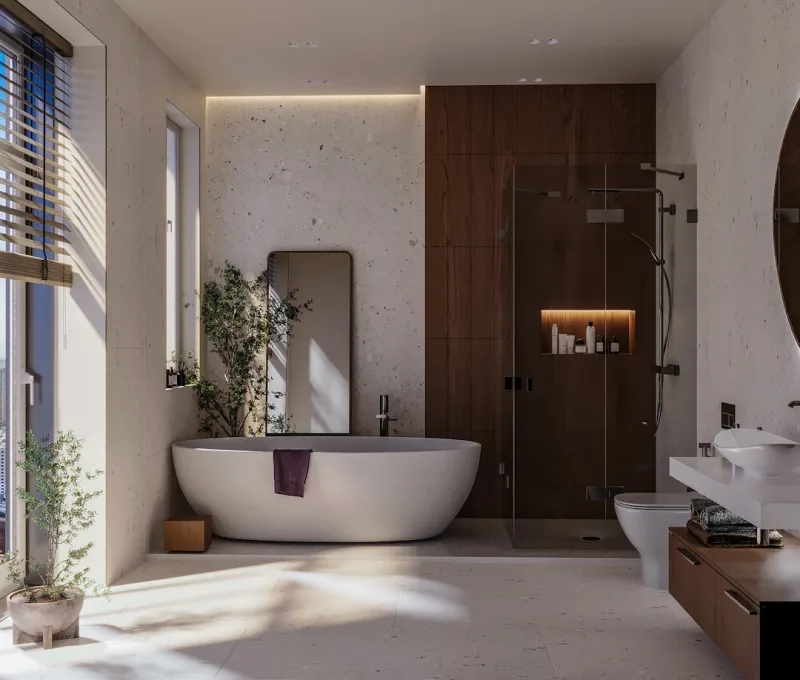
Here's where the luxury happens. Your shower and tub are the showstoppers, so treat them that way. Modern luxury bathrooms in 2026 feature oversized showerheads (think 12–16 inches), body jets, and rainfall spray patterns. A walk-in shower with minimal frameless glass doors and a bench seat is essentially non-negotiable for luxury status.
 Budget Apartment Renovation: DIY Hacks That Actually Work
For the tub — and I cannot stress this enough — size matters. A freestanding soaking tub positioned as a focal point is the move. We're talking 5–6 feet long, deep enough for proper soaking (24 inches minimum). If space is tight, a smaller soak tub is better than a standard bathtub.
Step 4: Design Your Vanity and Storage
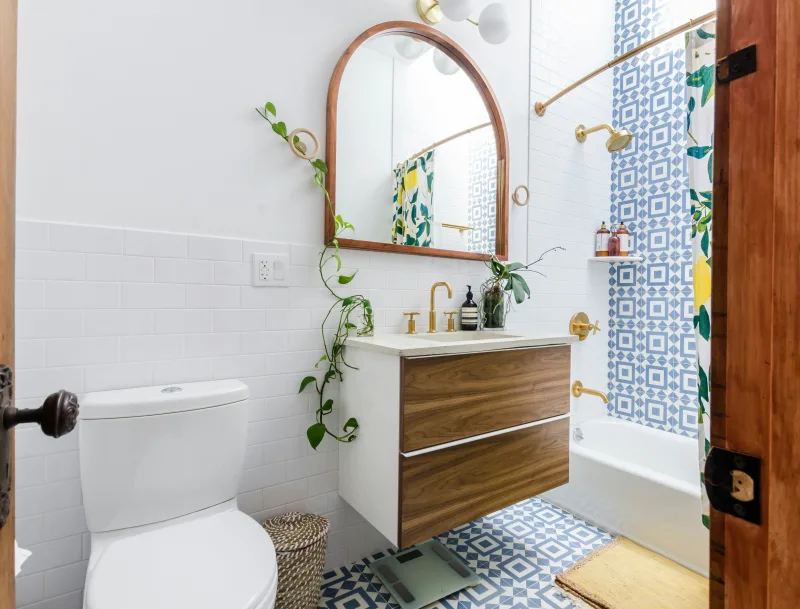
The vanity is your workhorse and your statement piece. Double vanities are trending hard in 2026 — even if you're designing for one person, the space and symmetry feel intentional and luxe. Floating vanities are still popular because they create an open, airy feel and make cleaning easier.
Behind your mirrors, think about built-in lighting, medication cabinets, or even smart mirrors that display weather or your calendar. Below the counters, drawer organizers and pull-out shelving transform everyday function into luxury. Wall-mounted storage floating shelves in matching materials add sophistication without taking up floor space.
Step 5: Install Your Lighting Scheme
Lighting makes or breaks a luxury bathroom. You need multiple layers: ambient lighting (ceiling), task lighting around the mirror, and accent lighting in the shower or around architectural features. Dimmable LED lights are essential — you want to go from bright and functional for morning routines to soft and spa-like for evening relaxation.
Modern smart lighting systems let you adjust color temperature throughout the day, which actually affects your circadian rhythm. It sounds fancy, but it genuinely makes a difference in how the space feels.
Step 6: Select and Install Your Flooring and Wall Materials
Premium flooring is non-negotiable in luxury bathrooms. Large-format porcelain tiles (anything 12 by 24 inches or larger) create a seamless, high-end look. Natural stone like marble, travertine, or limestone adds timeless elegance — just know it requires more maintenance.
For walls, think about textural variety. Consider subway tiles in the shower, fluted or ribbed panels for visual interest, and perhaps a dramatic accent wall in natural stone or large-format tile. Waterproofing is absolutely critical in wet areas — don't skimp on this step or you'll regret it.
Step 7: Add Finishing Touches
Heated floors (especially in colder climates) feel absolutely luxurious. Heated towel racks are both functional and add a spa-resort vibe. Integrated speakers for music or podcasts during your morning routine? That's the stuff that makes a bathroom feel truly high-end.
Hardware and accessories matter more than people think. Everything should coordinate — faucets, towel bars, mirrors, and cabinet pulls should feel intentional, not like you grabbed random items.
Pro Tips
- Ventilation is invisible but critical. Install an exhaust fan with at least 1.2 CFM per square foot of bathroom. Proper ventilation prevents mold, keeps mirrors clear, and extends the life of your finishes.
- Go for simplicity in finishes. A bathroom that looks cluttered or overstuffed doesn't feel luxurious — it feels chaotic. Choose 2–3 main materials and stick with them. Let Better Homes & Gardens & Gardens' design philosophy guide you: restraint is elegant.
- Natural light changes everything. If you can add a window (or even a skylight), do it. The cost is worth it for the spa-like quality of natural light while bathing.
- Invest in water pressure and temperature control. A fancy shower feels cheap if the water pressure is weak. Pressure-balancing valves ensure consistent temperature while you're in the shower — no sudden burns from someone flushing.
- Think about aging-in-place design. Even if you're not thinking about your future mobility, luxury bathrooms with grab bars integrated into the design (ones that don't look institutional), walk-in showers, and non-slip flooring are genuinely easier to use and maintain.
- Build in a window or view from your tub. This isn't always possible, but if you can angle your soaking tub toward a window or even a living wall, it completely transforms the experience.
Cost Breakdown
← Scroll to see full table →
| Element | Budget Range (USD) | Luxury Range (USD) |
|---|---|---|
| Vanity with countertop | $1,500–$3,000 | $4,000–$10,000 |
| Faucets and fixtures | $800–$1,500 | $2,500–$6,000 |
| Shower enclosure | $1,500–$3,000 | $4,000–$8,000 |
| Soaking tub | $1,200–$2,500 | $3,500–$8,000 |
| Flooring installation | $2,000–$4,000 | $5,000–$10,000 |
| Tile/wall installation | $2,000–$3, 📷 Photo by Murad Kerimli on Unsplash |