Designer Bathroom Layout with Smart Home Gadgets: Your Complete Guide to a Modern, Functional Space
There's something absolutely magical about stepping into a beautifully designed bathroom that feels like a luxury spa, right in your own home. I get it—after a long day, the idea of sinking into a perfectly lit bathroom with smart conveniences at your fingertips feels like a dream. But here's the thing: creating a designer bathroom layout with smart home gadgets isn't just for those magazine-worthy spaces in expensive homes. It's totally achievable for you, and honestly, it's one of the most rewarding DIY projects you can tackle. Whether you're working with a small powder room or a sprawling master bath, combining thoughtful design principles with modern technology creates a space that's not only beautiful but incredibly functional. This guide is going to walk you through everything you need to know, from budget-friendly smart gadgets to layout tips that will transform how you experience your bathroom every single day.

In this comprehensive guide, you'll discover exactly how to plan a designer bathroom layout that incorporates smart home technology seamlessly. You'll learn which gadgets actually make a difference in daily life, how to budget for upgrades without breaking the bank, and step-by-step instructions to implement everything yourself. We're covering the best products available right now, expert tips from interior designers, common mistakes to avoid, and real answers to the questions you're probably asking right now. By the end, you'll have a complete roadmap for creating your dream bathroom space.

Understanding Designer Bathroom Layout with Smart Home Gadgets
A designer bathroom layout with smart home gadgets is essentially about creating a space that combines aesthetic appeal with modern technology and functionality. It's not just about having a pretty bathroom—it's about designing a layout that makes sense for how you actually use the space, then enhancing it with technology that genuinely improves your daily routine. Think motion-sensor lighting that turns on automatically when you walk in at 6 AM, or a smart mirror that shows you the weather while you're getting ready. Maybe it's a temperature-controlled shower system or heated floor tiles that activate when you step out of bed on a chilly morning.
Why does this matter? Because the average person spends about 30 minutes daily in their bathroom. That's roughly 182 hours per year in a space that, for most of us, was designed decades ago with basic fixtures and no real thought to how we'd actually want to experience it. When you invest in a thoughtful layout combined with smart technology, you're literally upgrading how you spend nearly 200 hours of your life annually. That's huge.
Common mistakes people make include: cramming too much technology into a small space without considering the basics like ventilation and lighting first, choosing gadgets that look cool but serve no real purpose, not planning the layout before adding smart features, ignoring water-resistant ratings on electronics, failing to install proper electrical outlets before starting, choosing technology without checking compatibility between brands, and forgetting about the actual design aesthetic in favor of gadget overload. The best designer bathrooms blend form and function seamlessly—the technology should feel intuitive, not overwhelming.
Planning Guide for Designer Bathroom Layout with Smart Home Gadgets
Before you buy a single thing, let's talk about planning. A solid plan is the difference between a bathroom you love and one that feels chaotic. Start by measuring your bathroom space accurately—length, width, ceiling height, and the location of existing plumbing and electrical. Take photos from multiple angles. Then, think about your daily routine. Do you shower in the morning? Do you need a vanity with lots of counter space? Are you a long bath soaker? Do you use your bathroom for getting ready or just quick trips? Understanding your actual needs helps you prioritize which smart gadgets will genuinely improve your life.
Next, research your current plumbing and electrical setup. Smart home integration requires reliable WiFi, adequate electrical outlets, and potentially new wiring. If you're working with an older home, this might be the perfect time to upgrade. Consider the lighting—this is crucial for both aesthetics and functionality. Bathrooms need layered lighting: ambient lighting for general illumination, task lighting around mirrors, and accent lighting for ambiance. Smart lighting systems allow you to adjust brightness and color temperature throughout the day.
Think about water efficiency too. Smart showers and faucets can track water usage and help you save both water and money. Finally, consider your design aesthetic. Are you going modern minimalist, spa-like, farmhouse, or transitional? Your design choice influences which smart gadgets will feel natural in your space.
Planning Checklist for Your Designer Bathroom Redesign
- ✓ Measure bathroom dimensions and note plumbing/electrical locations
- ✓ Assess current WiFi coverage and signal strength in bathroom
- ✓ Identify electrical outlets and determine if additional ones are needed
- ✓ List your daily bathroom routines and specific pain points
- ✓ Decide on your design aesthetic and color palette
- ✓ Research smart home brands you want to use (Google, Amazon, Apple, etc.)
- ✓ Create a budget breakdown by category (fixtures, gadgets, labor, etc.)
- ✓ Check water pressure and drainage to ensure smart fixtures will work properly

Budget Breakdown
← Scroll to see full table →
| Price Range | Items | Typical Prices |
|---|---|---|
| Under $50 | Smart LED light bulbs, basic smart plugs, waterproof Bluetooth speakers, smart thermostats (basic), LED strip lights, motion sensor lights, digital shower timer | $15-$45 each |
| $50-$200 | Smart mirrors (budget), smart exhaust fans, WiFi-enabled showerheads, smart humidity sensors, heated towel racks, voice-controlled lighting, basic smart scales | $60-$180 each |
| $200+ | Luxury smart mirrors with integrated lighting, heated floor mats with controls, high-end smart shower systems, touchless faucets, professional installation, integrated smart home hubs, premium ventilation systems | $250-$2,500+ |
Here's the honest truth about budgeting for a designer bathroom with smart gadgets: you don't need to spend thousands to make a real impact. Start with the basics—good lighting, a smart speaker or display for convenience, and one or two gadgets that solve real problems in your daily routine. A smart LED bulb costs as little as $15-$20, while a quality smart mirror might run $150-$300. The beauty of this approach is that you can phase upgrades over time, spreading costs across several months or a year.
Smart thermostats for bathroom heating are one of the best budget investments—often under $100—and they literally save you money on energy bills. Motion-sensor lighting is another smart choice (pun intended) because it works whether you're tech-savvy or not, and it's incredibly energy-efficient. Waterproof Bluetooth speakers are affordable and genuinely enhance your daily experience. If you're making larger renovations anyway, investing in a smart exhaust fan with humidity sensors prevents mold and moisture damage—something that costs way more to fix later.
My advice? Allocate 15-20% of your bathroom budget to smart features. So if you're spending $5,000 on a bathroom refresh, dedicate $750-$1,000 to smart gadgets. This allows you to choose quality products without overextending. Remember, the cheapest gadget isn't always the best deal—look for reviews, warranty information, and compatibility with your other smart home devices.
Step-by-Step Guide
Step 1: Assess Your Current Space and Create a Layout Plan
Start with measurements and a simple sketch. Using graph paper or a free online tool like Floorplanner, map out your bathroom to scale. Mark existing fixtures (toilet, sink, tub/shower, windows, doors), plumbing lines, and electrical outlets. Identify traffic flow—where do you naturally move when getting ready? This is where you'll want good task lighting and accessibility. If you're relocating a vanity or adding fixtures, note whether plumbing changes are feasible. A professional plumber can assess this, but understanding the basics yourself helps you make smarter decisions.
Step 2: Plan Your Lighting Scheme with Smart Technology
Lighting is your foundation. Plan for at least three layers: ambient (overhead or ceiling fixtures), task (around mirrors), and accent (under-cabinet, behind mirrors, or wall sconces). Smart lighting allows you to adjust color temperature throughout the day. Cool white light (5000K) energizes you in the morning; warm white light (2700K) relaxes you at night. Consider a smart dimmer switch that learns your preferences. Brands like Philips Hue and LIFX offer excellent options that work with both Amazon Alexa and Google Home.
Step 3: Evaluate and Upgrade Your Electrical Infrastructure
 Budget Apartment Renovation: DIY Hacks That Actually Work
Smart bathrooms need proper electrical support. You'll want at least 2-3 dedicated circuits for bathroom use. Install GFCI (ground fault circuit interrupter) outlets on all outlets near water sources—this is actually code in most places. Plan outlet locations for smart devices: one near the mirror for smart devices or charging, one near the toilet area, one by the shower if you want waterproof speakers. If WiFi signal is weak, consider installing a mesh WiFi system or a small extender specifically for your bathroom.
Step 4: Choose Your Smart Home Ecosystem
Before buying individual gadgets, decide which ecosystem makes sense for you. Amazon Alexa, Google Home, and Apple HomeKit all have strengths. Most people find Amazon Alexa has the widest gadget compatibility, Google Home integrates beautifully with other Google products, and Apple HomeKit prioritizes privacy. You don't have to pick just one—many gadgets work with multiple platforms—but having a primary ecosystem simplifies voice control and automation. For bathrooms, I recommend a smart display like the Echo Show or Google Nest Hub because you can use it for recipes, music, weather, and bathroom timers.
Step 5: Select Your Core Smart Gadgets and Fixtures
Start with these essentials: smart lighting (bulbs, strips, or overhead fixtures), a smart mirror or simple smart display, a smart exhaust fan with humidity detection, and either a smart shower system or at minimum a smart showerhead. These create the foundation of your smart bathroom. Once these are installed and working well, you can add secondary gadgets like smart scales, heated towel racks, or advanced water systems. The The Home Depot, IKEA, Amazon, and Target all carry excellent options at various price points.
Step 6: Install Fixtures Following Manufacturer Guidelines and Local Codes
If you're comfortable with DIY installation, start with simpler items like light bulbs and smart displays. For anything involving plumbing or major electrical work, hire a licensed professional. Many smart showerheads are DIY-friendly—they simply screw onto existing arms—but complex systems might need professional help. Always follow manufacturer instructions exactly, especially for water-resistant ratings. Better Homes & Gardens and Gardens offers great installation guides for common fixtures if you're learning as you go.
Step 7: Set Up Automation and Routines for Daily Convenience
Once everything is installed, create automation routines. Program your lights to gradually brighten when your alarm goes off at 6:30 AM. Set humidity sensors to trigger the exhaust fan automatically. Create a "morning routine" voice command that turns on lights, plays your favorite music, and adjusts room temperature. A "nighttime" routine might dim lights to 30% and switch to warm color tones. Test everything thoroughly and adjust based on what actually works for your lifestyle. The best smart bathroom is one that works intuitively without requiring you to think about it.

Best Styles and Products
Modern Minimalist Designer Bathrooms
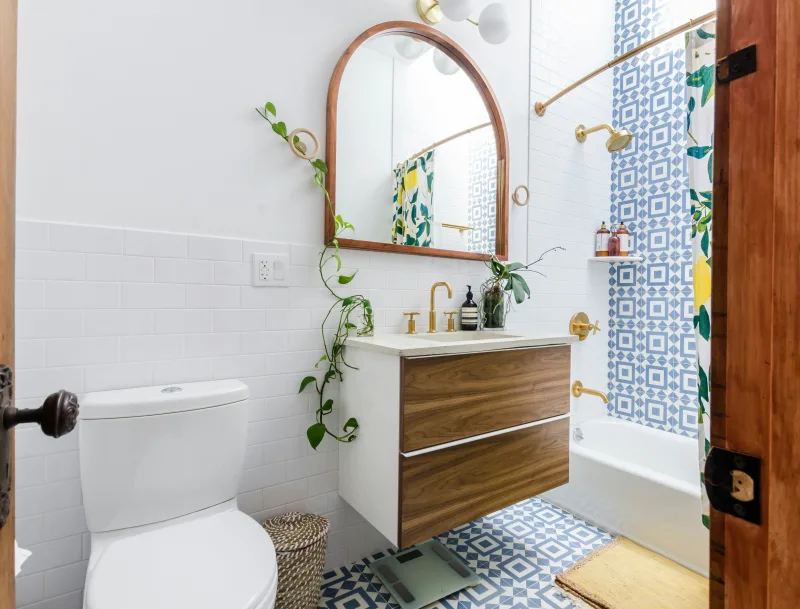
Clean lines, neutral colors, and integrated technology define modern minimalist bathrooms. Think white subway tile, sleek floating vanities, and subtle smart features that don't visually dominate the space. Smart mirrors with thin frames, recessed lighting, and minimalist chrome or matte black fixtures work perfectly here. This style emphasizes function without visual clutter—the technology enhances the space without announcing itself.
Spa-Like Luxury Bathrooms
These bathrooms prioritize relaxation and comfort. Soft lighting, warm neutrals, natural materials like stone and wood, and indulgent gadgets create a resort-like atmosphere. Heated floor tiles, luxury smart shower systems with rainfall showerheads, chromotherapy lighting, and heated towel racks are perfect for this aesthetic. Dim warm lighting controlled by smart systems creates the ambiance you'd find at an actual spa.
Transitional Designer Bathrooms
Transitional style blends traditional and modern elements—think timeless design that won't feel dated in five years. This is perfect for smart home integration because technology upgrades smoothly without clashing with classic fixtures. Incorporate smart gadgets subtly: hidden speakers, understated smart mirrors, and traditional-looking fixtures with smart features underneath.
Farmhouse and Cottage-Style Bathrooms
Farmhouse bathrooms use shiplap, vintage-inspired fixtures, warm wood tones, and cozy details. Smart home integration might seem at odds with this aesthetic, but it works beautifully when done thoughtfully. A smart mirror in a traditional wooden frame, warm-toned lighting with smart controls, and voice assistants in neutral-colored devices blend seamlessly. The key is letting the traditional elements dominate visually while smart features work quietly in the background.
Top 5 Products and Their Prices
1. Amazon Echo Show 8 (3rd Generation) - $129
Perfect for bathroom use, this smart display shows recipes, weather, has built-in Alexa, plays music, and helps with timing. The screen is large enough to see from across the bathroom. Place it on a shelf or mount it on the wall. Waterproof case available separately for extra protection.
2. Philips Hue Smart Light Bulbs (Starter Kit) - $99.99
Available from Amazon and The Home Depot, these RGB bulbs let you customize brightness and color temperature. Control via app, voice command, or wall switch. The starter kit includes a hub, remote, and four bulbs. Perfect for creating different moods and automating your lighting schedule.
3. Kohler Moxie Shower Head with Waterproof Bluetooth Speaker - $89
From The Home Depot and Amazon, this genius showerhead includes a built-in waterproof speaker, ambient lighting, and water flow control. Connect your phone via Bluetooth and enjoy music, podcasts, or audiobooks while showering. Installation is simple—it fits standard shower arms.
4. Broan Smart Exhaust Fan with Humidity Sensor - $175
Available at The Home Depot and Amazon, this smart fan automatically activates when humidity rises, preventing mold and moisture damage. Connect to your smart home system for remote monitoring. Voice control compatible with Alexa and Google Home. Requires standard bathroom exhaust installation.
5. IKEA TVÄRS Smart Mirror with Integrated Lighting - $299
This sleek mirror (available at IKEA and online retailers) has integrated LED lighting with adjustable color temperature and brightness. No complex installation—it simply hangs like a regular mirror. Perfect for task lighting and creating an up