Transform Your Patio Into a Farmhouse Oasis Without Breaking the Bank
You know that feeling when you step outside and think, "Yeah, this needs serious help"? I've been there. Your patio could be absolutely gorgeous — the kind of space where you actually want to spend time on a Saturday morning with coffee in hand — but it doesn't require a massive renovation budget or hiring contractors. Honestly, some of the best farmhouse patios I've seen came together with creative thinking, strategic shopping, and a little elbow grease.
Here's the thing about farmhouse style: it's forgiving. It celebrates imperfection, charm, and that lived-in aesthetic. That means your DIY mistakes? They're basically features. You're not aiming for magazine perfection — you're building a space that feels warm, inviting, and distinctly yours. And the best part? You can absolutely nail this look for under a thousand bucks.
Let me walk you through exactly how I'd approach transforming a tired patio into something that makes your neighbors ask for recommendations. We're talking rustic furniture finds, strategic landscaping, and some seriously smart décor choices that won't drain your wallet.
What You'll Need
Before you start anything, let's talk materials. I'm giving you the real prices here — these are what I'd actually expect to pay in 2024:
- Reclaimed wood boards (for vertical garden or side accents) — $40-80 from local salvage yards or The The Home Depot's reclaimed section
- Metal bistro chairs or farmhouse seating (2-4 pieces) — $60-150 each, check Facebook Marketplace and estate sales
- Outdoor string lights (warm white, preferably Edison bulbs) — $25-50
- Potted plants and greenery — $30-60 total (varies by size)
- Wooden pallet or reclaimed dining table — $40-100 (DIY or thrifted)
- Outdoor cushions (cream, beige, or neutral patterns) — $20-40 per piece
- Galvanized metal planters and buckets — $10-30 each
- Exterior paint or wood stain — $30-45 per can
- Hardware (nails, screws, brackets) — $15-25
- Lanterns or vintage-style lighting — $20-40
- Decorative accents (signs, woven baskets, etc.) — $30-50
Step-by-Step Guide
Step 1: Clean and Prep Your Space
I know this sounds obvious, but seriously — start fresh. Pressure wash that patio if you have access to a machine. Sweep away debris. Remove anything that doesn't spark joy (or at least functionality). This isn't glamorous, but it's absolutely essential. You're creating a blank canvas here, and you'd be shocked how much better your space looks when it's actually clean. Even just this step makes everything you add next feel intentional rather than cluttered.
Step 2: Create Zones With Furniture Arrangement
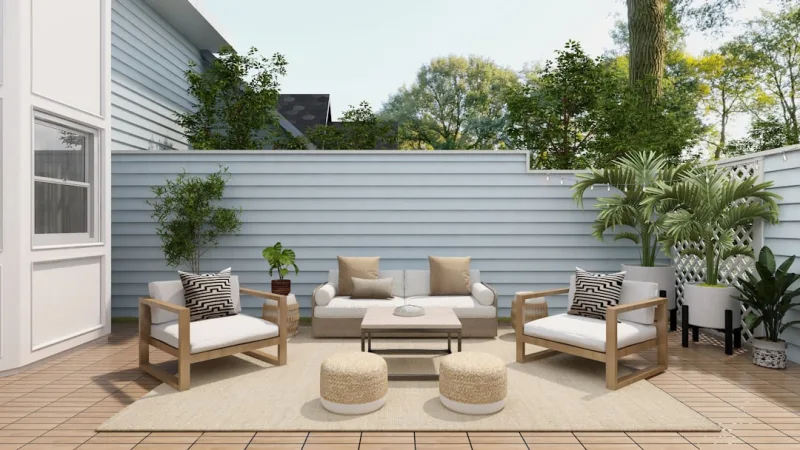
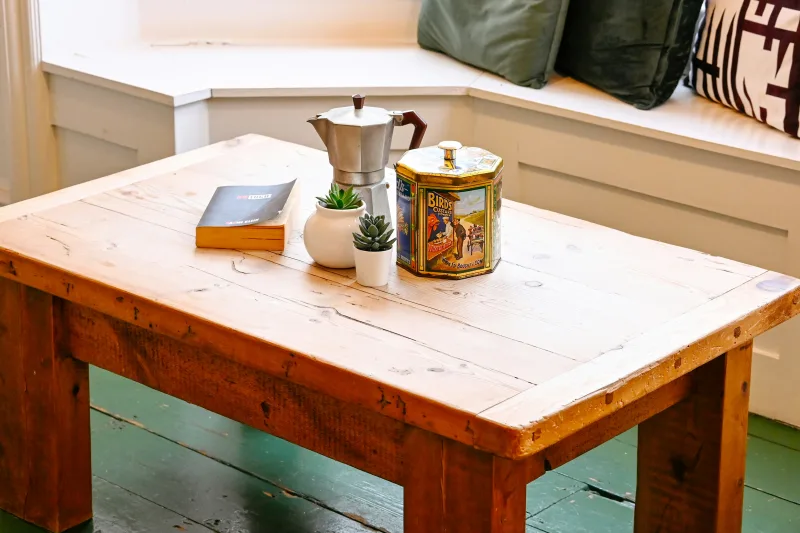
Think about how you'll actually use this space. Are you imagining morning coffee solo? Dinner parties? Playing games? Your furniture arrangement should support that vision. A farmhouse patio thrives on intimate groupings — so cluster seating together rather than spreading it out. Use a small wooden table as a centerpiece, surround it with chairs, and suddenly you've got an inviting hub. Better Homes & Gardens & Gardens has some great inspiration galleries if you need visual references.
Step 3: Add Vertical Elements and Greenery
Here's where farmhouse magic happens. Lean reclaimed wood against a fence or wall and create a vertical garden using galvanized buckets and potted herbs. This adds dimension without eating up floor space. Hang planters from existing structures. Cluster plants in odd numbers (three, five, seven) — it's a design trick that actually works and feels intentional. Mix trailing ivy with sturdy greenery for texture.
Step 4: Install Your Lighting
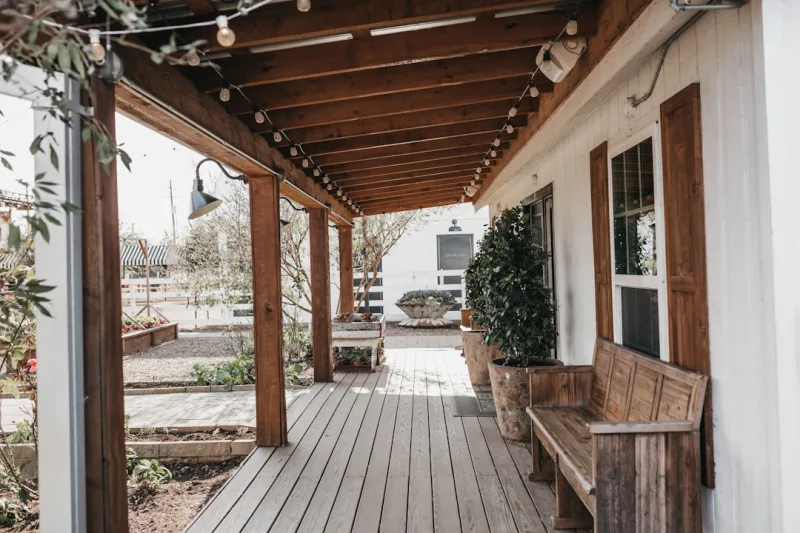
Outdoor string lights transform a patio instantly. String them overhead in a crisscross pattern or drape them along a fence line. Warm white Edison-style bulbs give you that authentic farmhouse vibe — none of that harsh white LED stuff. Pair them with a couple of vintage-style lanterns on tables for layered lighting that works both functionally and aesthetically. When that sun sets and those lights come on? That's when your patio becomes truly special.
Step 5: Incorporate Textiles and Soft Elements
Throw cushions on those chairs. Layer a neutral-toned outdoor rug if you have the budget. Add a lightweight throw blanket draped over a chair back. These soft elements make the space feel less industrial and more like an extension of your home. Look for cream, beige, soft gray, or subtle patterns — nothing too trendy. HGTV's farmhouse features often emphasize this balance between rustic and cozy, and honestly, that's the sweet spot.
Step 6: Style With Decorative Accents
Now comes the fun part — personalizing it. Place a vintage metal sign on the fence. Arrange woven baskets for texture. Set out a few potted plants with trailing vines. A simple wooden crate can become a side table or plant stand. The key is restraint — you're not trying to fill every inch. Negative space actually makes farmhouse designs feel more intentional and less cluttered.
Pro Tips
Shop secondhand first. Seriously, hit up Facebook Marketplace, Craigslist, and local estate sales before heading to The Home Depot. Farmhouse style actually benefits from pieces that have history. That slightly weathered chair? Perfect. That old wooden table with character marks? Chef's kiss.
Paint doesn't have to be perfect. — If you're refreshing wooden furniture or structures, embrace an imperfect finish. Farmhouse thrives on that lived-in aesthetic. Distressed paint isn't a mistake; it's intentional design.
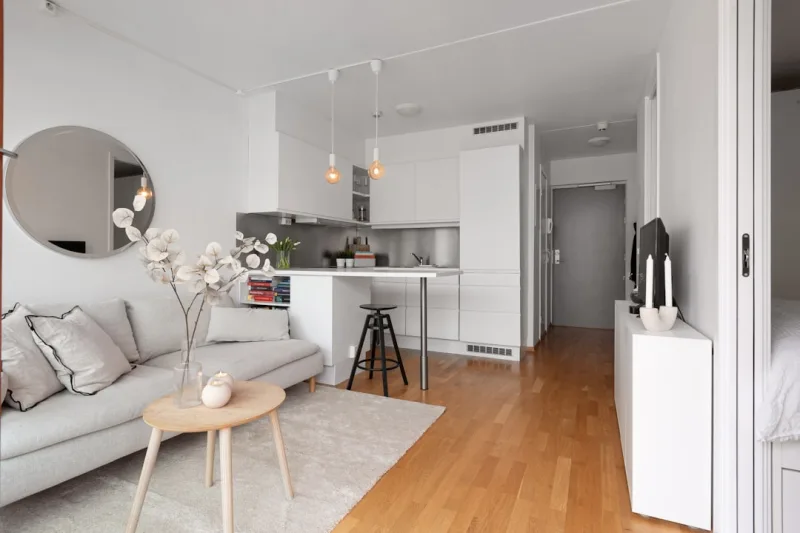
 Budget Apartment Renovation: DIY Hacks That Actually Work
Use what you already have. Got unused planters inside? Move them out. Old mason jars? String lights through them or use them as plant holders. Sometimes your best décor pieces are already in your garage.
Plants don't need to be expensive or exotic. Herbs, simple greenery, trailing ivy — these are cheap and accessible at any nursery. They fill space beautifully and actually serve a purpose. Plus, you can use them in cooking.
Group items in clusters. Rather than spreading décor around, group similar items together. Stack a few woven baskets in one corner. Cluster plants in varying heights. This creates visual interest without looking chaotic.
Cost Breakdown
← Scroll to see full table →
| Item Category | Estimated Cost |
|---|---|
| Seating (2-4 chairs, used/sale) | $100-200 |
| Table (pallet or reclaimed) | $40-100 |
| Plants and Greenery | $40-70 |
| String Lights | $25-50 |
| Planters and Containers | $30-60 |
| Cushions and Textiles | $50-100 |
| Paint/Stain Materials | $30-50 |
| Decorative Accents | $50-80 |
| Total Estimated Budget | $365-710 |
Note: These are realistic estimates for a moderate-sized patio. Your actual costs may vary based on location, existing furniture, and sourcing strategy.
FAQ
Can I really do this without professional help?
Absolutely. There's nothing in this project that requires special skills or licenses. You're basically arranging furniture, hanging lights (with proper outdoor-rated materials), painting, and arranging plants. If you can follow basic instructions and use a drill, you've got this. Honestly, the DIY aspect is half the charm of farmhouse style anyway.
What if my patio is really small?
Go vertical. Use wall space for planters and hanging elements. Stick with smaller furniture pieces. Two comfortable chairs and a small side table might be all you need. Lean into intimate rather than spacious. Some of the coziest farmhouse patios I've seen are tiny — they're just styled really thoughtfully.
How do I make this look cohesive instead of random?
Stick to a color palette of neutrals — creams, whites, soft grays, weathered wood tones, and black metal accents. Keep your décor within these colors and materials. That consistency is what makes it feel intentional rather than chaotic. You don't need trendy colors; you need restraint and repetition of materials.
Wrap Up Your Farmhouse Patio Dream
Transforming your patio into a farmhouse retreat doesn't require a massive investment or professional contractors. It requires intention, creativity, and a willingness to shop smartly. Start with a clean space, add comfortable seating, layer in greenery, and style with warmth and personality. Your patio should feel like an extension of your home — a place where you genuinely want to spend time.
The beauty of this approach is that it's flexible. You can start small, adjust as you go, and build on it over time. That's the real farmhouse way anyway — slow, intentional, authentic.
Ready 📷 Photo by Camylla Battani on Unsplash