Elegant Patio Upgrade for Beginners: Transform Your Outdoor Space Without Breaking a Sweat
Look, I get it. Your patio probably looks like every other concrete slab in the neighborhood right now. Maybe there's a sad lawn chair out there, possibly some weathered cushions that have seen better days. But here's the thing — upgrading your patio doesn't require a construction crew, a design degree, or even that much money. I've seen people transform their outdoor spaces into something genuinely elegant with just a weekend or two of work and a solid game plan.
I'm talking about the kind of upgrade that makes your neighbors ask who you hired. You know, that moment when someone steps onto your patio and actually stops to take it in? That's what we're going for. The best part? Beginners can totally pull this off. You don't need special skills or expensive tools — just a willingness to get your hands a little dirty and some thoughtful choices about what goes where.
Whether you're working with a tiny balcony or a sprawling backyard, the principles of elegant outdoor design are the same. We're focusing on creating a cohesive, inviting space that feels intentional and sophisticated. Let's break down exactly how to do it.
What You'll Need
Before you head to The The Home Depot or your local garden center, let's talk about the materials that'll actually make a difference. I've curated this list based on what beginners can realistically handle and what delivers the most visual impact for your investment.
- Outdoor Pavers or Composite Decking — $300-$600 (depending on size; creates a finished foundation)
- Quality Outdoor Furniture Set (sectional or chairs with table) — $400-$800
- Weather-Resistant Cushions (4-6 pieces) — $150-$250
- Outdoor Lighting (string lights, lanterns, pathway lights) — $100-$200
- Large Outdoor Rug (8x10 or suitable to your space) — $150-$300
- Potted Plants and Planters (various sizes, 5-7 pieces) — $100-$200
- Outdoor Shade Solution (umbrella or shade sail) — $150-$400
- Decorative Elements (lanterns, candles, artwork) — $75-$150
- Basic Tools (level, hammer, shovel if not already owned) — $50-$100
- Paint or Stain for Existing Structures (optional) — $30-$80
Step-by-Step Guide
Step 1: Assess Your Space and Clean It Up
Honestly, this is where most people mess up. They skip right to buying pretty things without actually looking at what they're working with. Spend a solid hour just sitting on your patio. Notice where the sun hits, where shadows fall, how the wind moves through the space. Is it exposed? Sheltered? These observations matter more than you'd think.
Then — and I mean really do this — deep clean your patio. Power wash if you have access to one, sweep away debris, remove anything you don't absolutely need. When you start with a clean slate, everything you add afterward feels more intentional. Plus, you'll actually want to spend time out there.
Step 2: Establish a Foundation with Pavers or Decking
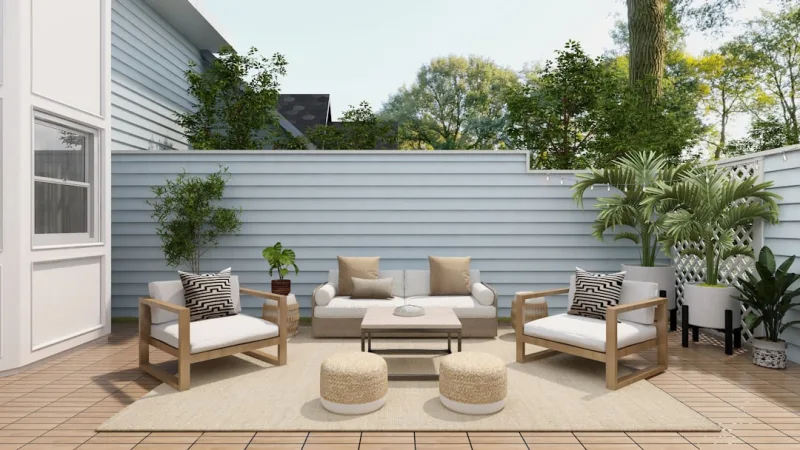
If your patio is just plain concrete, this single step transforms everything. You don't need to replace the entire slab. Instead, lay composite pavers or wood-look pavers over the existing concrete. It's surprisingly manageable for beginners — no special tools required beyond a level and maybe a rubber mallet.
Check out resources on The Home Depot's website for specific installation guides on your chosen material. The key is creating a finished-looking foundation that everything else sits on. This gives you psychological permission to invest in the other elements because suddenly, it looks intentional from the start.
Step 3: Define Your Zones with an Outdoor Rug
Here's a designer trick that nobody talks about enough: rugs don't just belong inside. A large outdoor rug instantly anchors your seating area and makes the space feel more curated. It also softens the hard lines of furniture and pavers.
Choose a rug that's roughly 8x10 feet if space allows, or at least large enough that the front legs of your main furniture pieces rest on it. Neutral tones with subtle patterns work brilliantly — they're forgiving and elegant without being boring. Polypropylene or solution-dyed rugs hold up beautifully to weather and sun exposure.
Step 4: Add Quality Furniture That Actually Works
This is where people often overspend on the wrong things. Instead of buying budget furniture that'll look shabby in a season, invest in one really solid seating set. A sectional, four quality chairs with a table, or even a bench with chairs — whatever matches how you actually use the space.
The furniture should be proportional to your space without overwhelming it. If you have a small patio, two chairs and a side table might be all you need. Better Homes & Gardens & Gardens has excellent resources for space planning if you're unsure about sizing.
Step 5: Layer Your Lighting
 Budget Apartment Renovation: DIY Hacks That Actually Work
Nothing screams "intentional design" like thoughtful lighting. String lights overhead, solar lanterns scattered around, maybe some pathway lighting if you have steps — this combination creates mood and extends usability into evening hours.
The best part? Most of this stuff is ridiculously easy to install. String lights attach to posts or walls with hooks. Solar lanterns just sit there looking beautiful. You're not doing electrical work here, which keeps this project beginner-friendly.
Step 6: Incorporate Plants and Natural Elements
Plants aren't just decoration — they soften the space and make it feel alive. Group potted plants in odd numbers (3, 5, or 7) of varying heights. Mix textures with both leafy plants and flowering specimens. A tall plant in a corner, trailing plants on a shelf, colorful seasonal flowers in front — this creates visual interest.
Don't stress about being a plant expert. Start with hardy, low-maintenance plants like ornamental grasses, lavender, or boxwoods. Check HGTV's gardening section for zone-specific recommendations for your area.
Step 7: Add Finishing Touches and Personal Details
Lanterns, candles, throw pillows, outdoor art — these are the details that transform a functional patio into an elegant retreat. A few well-chosen pieces beat a bunch of random stuff every single time. Think quality over quantity. That beautiful ceramic planter matters more than five plastic ones. One stunning throw pillow in a luxe fabric is better than a dozen cheap ones.
Pro Tips
Choose a Color Palette and Stick With It: Pick 2-3 colors maximum and use them throughout. Cream, navy, and warm brass create instant elegance. This cohesion is what makes spaces feel designed rather than randomly assembled.
Invest in Quality Cushions: Honestly, cushion quality makes or breaks a patio. They're what you actually touch and sit on. Splurge here. Look for solution-dyed fabrics that resist fading and mildew.
Create Shade Smart: A large umbrella or shade sail isn't just functional — it's a design statement. Choose one that complements your color palette. Shade also extends the season by making your patio comfortable on hot days.
Maintain Scale Proportions: Large furniture in a small space feels cramped. Smaller furniture in a massive patio feels scattered. Match your pieces to your actual square footage.
Layer Your Textures: Mix rough (wood, stone) with smooth (metal, ceramic), matte with glossy. This prevents the space from feeling flat or boring.
Cost Breakdown
← Scroll to see full table →
| Item Category | Quantity/Details | Price Range | Priority Level |
|---|---|---|---|
| Foundation (Pavers/Decking) | Varies by space | $300–$600 | High |
| Furniture Set | 1 seating collection | $400–$800 | High |
| Outdoor Rug | 1 large rug (8x10) | $150–$300 | High |
| Cushions | 4–6 pieces | $150–$250 | Medium |
| Lighting | Mixed types | $100–$200 | Medium |
| Shade Solution | Umbrella or sail | $150–$400 | Medium |
| Plants & Planters | 5–7 pieces | $100–$200 | Low |
| Decorative Elements | Lanterns, candles, art | $75–$150 | Low |
| Tools (if needed) | Level, hammer, shovel | $50–$100 | Low |