Look, I get it. You're renting, which means your landlord probably has some pretty strict rules about what you can and can't do to the walls. But here's the thing — that doesn't mean you have to settle for a bland, boring office space that makes you want to work literally anywhere else. I've been there, staring at beige walls and wondering if I could somehow make productivity happen through sheer force of will. Spoiler alert: it doesn't work.
The truth is, creating a designer-quality home office on a renter's budget is totally doable. You just need to get creative with non-permanent solutions, smart furniture choices, and a little bit of strategic styling. I'm talking removable wallpaper, renter-friendly shelving, and statement pieces that pack major design punch without a single nail hole. Your workspace should inspire you — not remind you that you're temporary.
In this guide, I'm walking you through everything you need to transform a basic room into a space that looks like it belongs in an HGTV feature. And the best part? You can take it all with you when you move.
What You'll Need
Before you start shopping, let's talk about what actually matters for a designer office setup. You don't need fancy expensive stuff — you need intentional choices that work hard.
- Removable wallpaper or peel-and-stick wall decals ($25-$60) — Brands like Wallshed or Graham & Brown make gorgeous options
- Floating wall shelves ($40-$120) — Damage-free adhesive shelves or command-style options from The The Home Depot
- A quality desk ($150-$400) — Doesn't need to be expensive, just functional and styled right
- Ergonomic office chair ($100-$300) — Your back will thank you during those eight-hour days
- Desk lamp with style ($30-$80) — Task lighting that actually looks good
- Area rug ($50-$150) — Defines the space and adds texture
- Throw pillows and blankets ($20-$60) — Adds warmth and layers
- Plants and planters ($15-$50) — Living elements make everything better
- Artwork and prints ($20-$100) — Removable wall art or leaning gallery arrangements
- Storage baskets and organizers ($30-$80) — Keeps clutter hidden while looking intentional
- Desk accessories ($25-$60) — Pen holders, desk organizers, decorative trays
- Curtains or panel drapes ($30-$90) — Light control and a polished finish
Step-by-Step Guide
Step 1: Assess Your Space and Create a Mood Board
Seriously, don't skip this. I know it feels like you should just dive in and start buying things, but spending 30 minutes gathering inspiration saves you from terrible impulse purchases. Pull images from Better Homes & Gardens & Gardens, Pinterest, Instagram — wherever speaks to you. Are you going minimalist modern? Warm maximalist? Eclectic creative? Your mood board becomes your north star for every decision moving forward. This is your space, so make it reflect what actually makes you happy.
Step 2: Choose Your Color Palette and Add Removable Wallpaper
Here's where you make a statement without consequences. Pick two to three colors that make you feel energized. Then — and this is key — don't cover your entire room in wallpaper unless you're feeling bold. I like doing one accent wall with removable wallpaper or peel-and-stick options. The Home Depot has a solid selection, and installation is literally just smoothing it down. No landlord drama, no permanent damage. Takes about an hour and transforms the entire feel of your office.
Step 3: Invest in a Desk That Actually Fits Your Aesthetic
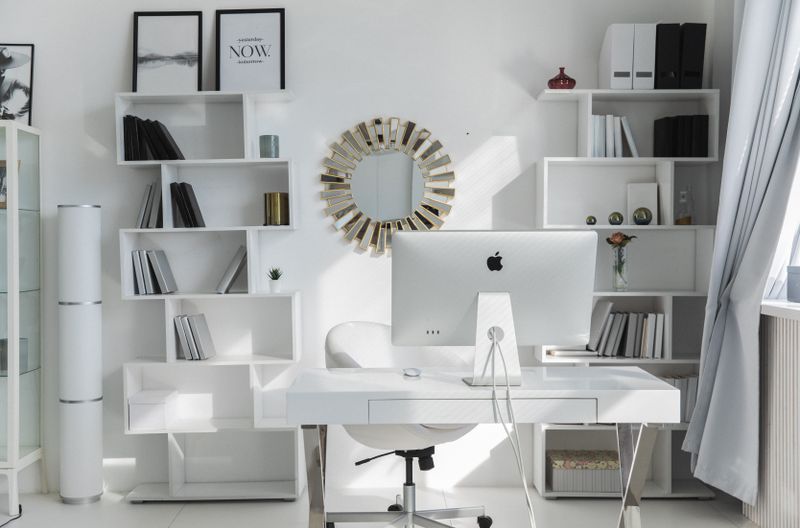
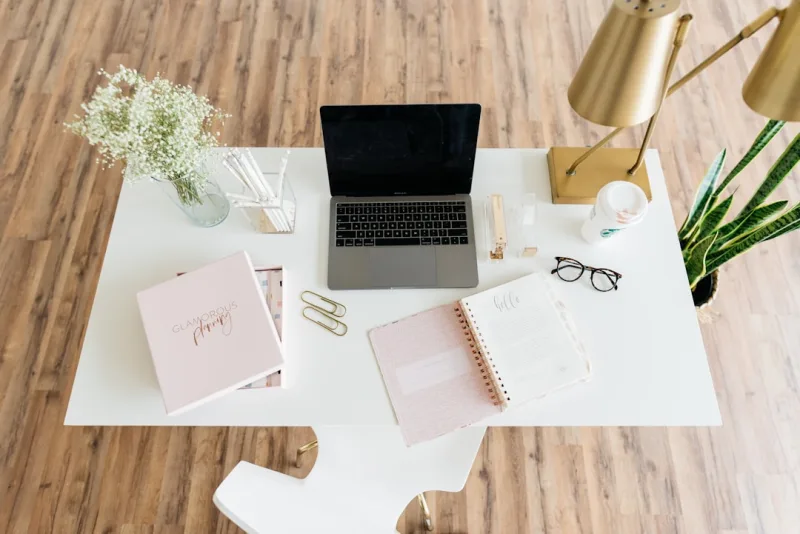
Your desk is the anchor piece, so choose something that aligns with your design vision. It doesn't have to be expensive — it needs to be functional and look the part. A simple mid-century modern desk, a sleek white floating option, or even a styled table can work. The trick is what you put on it and around it. Quality surfaces, minimal clutter, and intentional styling make even a basic desk look expensive.
Step 4: Layer Your Lighting
This is honestly where people mess up. One overhead light is basically the enemy of good design. You need a desk lamp for task work, maybe some ambient lighting with a floor lamp, and if you're feeling fancy, some LED strips behind shelving. Layered lighting makes a space feel sophisticated and actually helps you work better. Get a lamp that matches your aesthetic — it's a piece of decor, not just a tool.
Step 5: Add Vertical Storage With Floating Shelves
Renter-friendly floating shelves are game-changers. Use command-style adhesive shelves or damage-free wall mount options. Style them with a mix of books, plants, and decorative objects. The key is not making them look cluttered — think odd numbers of objects, some breathing room, and intentional spacing. Your shelves should tell a story about who you are.
Step 6: Bring in Texture With an Area Rug
A rug defines your office space, adds warmth, and honestly makes you feel like you're in a real grown-up room. Neutral or subtle patterns work best in smaller spaces. Layer it under your desk and chair for that cozy, designed feel.
Step 7: Personalize With Art and Accessories
This is where your personality lives. Lean artwork against walls instead of hanging it — totally renter-friendly and you can change it whenever you want. Add framed prints, a gallery wall with removable strips, or even a large fabric tapestry. Mix it with personal photos, travel souvenirs, and meaningful objects. Your desk should have a few beautiful accessories — a statement holder, a small plant, something that makes you smile.
Step 8: Create Organized Storage That Looks Good
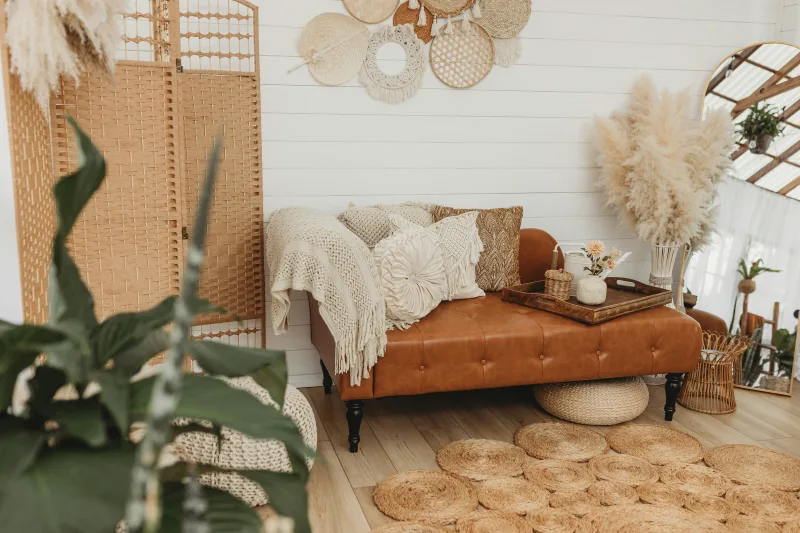 Budget Apartment Renovation: DIY Hacks That Actually Work
Matching baskets under shelves, a desk organizer system, and closed storage for the chaos — this keeps your space looking designer-level polished. Everything should have a home, and that home should be hidden or beautifully arranged.
Pro Tips
Think vertical. When you can't use floor space, go up. Tall shelving, wall-mounted organizers, and overhead storage make small offices feel bigger and more designed.
Use mirrors strategically. A well-placed mirror reflects light and makes your space feel larger. Plus, it just looks fancy.
Invest in your chair. Seriously. You're sitting in it eight hours a day. A cheap, uncomfortable chair will undermine even the most gorgeous aesthetic. Your posture and your design matter.
Keep a color-consistent palette. This makes everything look intentional. Limiting yourself to a few colors creates cohesion that screams "designed" even on a budget.
Don't forget about scent. A quality candle or essential oil diffuser adds an invisible layer of luxury. Your space should smell as good as it looks.
Cable management is design. Hiding cords with clips, channels, or baskets is the difference between "messy" and "curated." Trust me on this one.
Cost Breakdown
← Scroll to see full table →
| Item | Budget Option | Mid-Range Option | Premium Option |
|---|---|---|---|
| Desk | $150 | $300 | $500+ |
| Office Chair | $100 | $250 | $400+ |
| Removable Wallpaper | $25 | $45 | $75 |
| Floating Shelves | $40 | $80 | $150 |
| Lighting | $30 | $70 | $150 |
| Area Rug | $50 | $100 | $200+ |
| Decor & Accessories | $75 | $150 | $300+ |
| Total Estimated Cost | $470 | $995 | $1,775+ |
FAQ
Can I Really Use Removable Wallpaper Without My Landlord Getting Mad?
Yes — but check your lease first. Most landlords are totally fine with removable, peel-and-stick wallpaper because it doesn't damage the walls. If you're uncertain, just ask. Quality removable wallpaper comes off cleanly without leaving residue or marks. I've used it in multiple rentals with zero issues. Just avoid permanent adhesive wallpaper or anything that requires paste.
What's the Cheapest Way to Make an Office Look Designer?
📷 Photo by Alexa Williams on Unsplash