Modern Bathroom Renovation 2026: Transform Your Space This Year
Look, I've been doing bathroom renovations for years now, and I've got to tell you — 2026 is shaping up to be THE year for bathroom overhauls. The trends we're seeing aren't just pretty pictures on HGTV anymore; they're actually practical, sustainable, and honestly? They make your daily routine feel less like a chore and more like a spa experience. Whether you're working with a powder room or a sprawling master bath, the good news is that modern renovation ideas are scalable for every budget.
Here's the thing about bathroom renovations in 2026 — it's not just about slapping on a fresh coat of paint and calling it a day. We're talking smart fixtures, sustainable materials, spa-like finishes, and layouts that actually flow. The minimalist aesthetic paired with warm, natural tones is dominating right now, and it's not going anywhere. From heated floors to smart mirrors with integrated lighting, the technology angle is real, and it actually improves your quality of life. But don't panic if you're not tech-savvy; there are plenty of timeless upgrades that deliver major impact without the gadgetry.
Ready to jump in? I'm going to walk you through everything — materials, costs, step-by-step instructions, and all those pro secrets I've picked up along the way. This isn't your grandfather's bathroom renovation guide.
What You'll Need
Before you start ripping out fixtures, let's talk about what you're actually going to need. I always recommend having your materials ready before demo day — trust me, it saves headaches and keeps your timeline on track.
Materials List with 2026 Price Estimates
- Vanity Cabinet: $400-$1,200 (Quality pieces from The The Home Depot range wildly, but you get what you pay for)
- Vessel Sink or Integrated Basin: $150-$600
- Faucet (single or double handle): $100-$400
- Toilet (standard or smart): $200-$800 (Smart toilets with bidet functionality are becoming standard)
- Tile (for flooring and shower walls): $500-$2,000+ depending on square footage and material choice
- Grout and Sealant: $50-$150
- Shower Door or Glass Enclosure: $300-$1,500
- Fixtures (lights, towel bars, soap dispensers): $200-$600
- Paint (moisture-resistant): $40-$100
- Mirror and Medicine Cabinet: $150-$500
- Heated Towel Rack: $200-$600 (Optional but becoming popular)
- Flooring (luxury vinyl, engineered wood, or tile): $300-$1,000
- Caulk and Waterproofing Materials: $50-$100
- Hardware (cabinet handles, hinges): $100-$300
Step-by-Step Guide
Okay, this is where the magic happens. Follow these steps carefully, and you'll end up with a bathroom that feels brand new. Honestly, most of this work is totally doable as a DIYer, but if you're not confident about plumbing or electrical work — hire a pro. It's worth the peace of mind.
Step 1: Plan Your Layout and Get Permits
Before you touch anything, sketch out your layout. Are you keeping the toilet where it is? Moving the vanity? Installing a larger shower? Better Homes & Gardens & Gardens has some fantastic layout templates online. Check your local building codes — yes, it's boring, but most bathrooms require permits. You don't want to get halfway through a renovation and find out you're breaking code.
Step 2: Turn Off Water and Electricity
Shut off the main water supply to your bathroom at the valve. If you can't find it, shut off the main. For electrical work, flip the breaker and test outlets with a non-contact voltage tester. Safety first, always.
Step 3: Demo Day
Remove everything — vanity, toilet, old tile, fixtures. This is the satisfying part. Wear a dust mask because bathroom demo gets DUSTY. Remove old caulk and grout carefully. If you're keeping the toilet temporarily, turn off the water supply valve behind it, flush, and wrap it in plastic to keep dust out.
Step 4: Address Plumbing and Structural Issues
Now's the time to fix any leaks, rot, or structural problems. Check walls for mold or water damage. If you find issues, address them before moving forward. This is where you might want to call a professional plumber — it's worth the investment to get this right.
Step 5: Install or Repair the Subfloor
Make sure your subfloor is level and solid. If it's soft or uneven, this is your chance to fix it. A level floor is absolutely crucial for tile work and vanity installation. Use self-leveling compound if needed.
Step 6: Install New Flooring
Lay down your new flooring before installing fixtures. Tile is traditional and durable — apply thin-set mortar with a notched trowel, lay your tiles, and grout after 24 hours. Luxury vinyl or engineered wood is easier for DIYers and incredibly water-resistant these days. The trend in 2026 is large-format tiles (12x24 or bigger) in neutral tones — they look sophisticated and minimize grout lines.
Step 7: Prep Walls for Moisture Protection
Apply waterproofing membrane to shower walls and anywhere you'll have water exposure. This step prevents mold and rot down the road. Trust me, spending $50 now saves thousands later.
Step 8: Install Tile or Wall Finishes
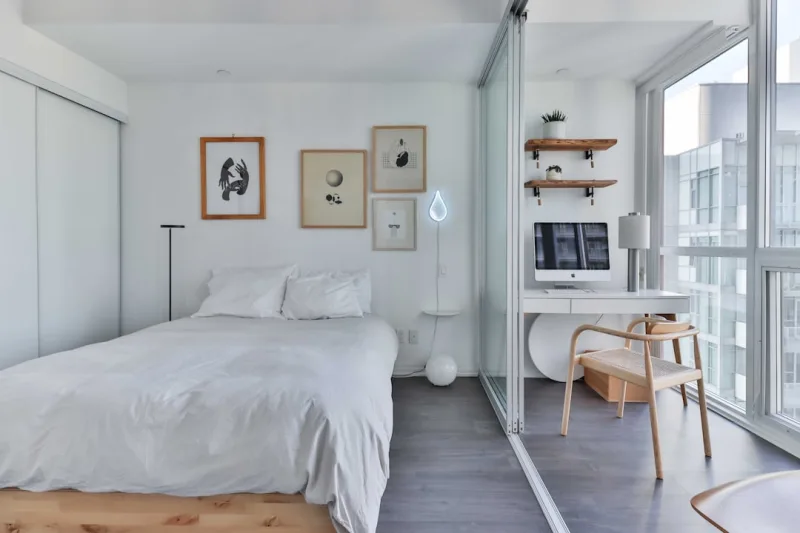
 Budget Apartment Renovation: DIY Hacks That Actually Work
This is where your design comes to life. Modern bathrooms in 2026 favor large tiles, clean grout lines, and often a single accent wall. Consider porcelain tile — it's more durable than ceramic and comes in incredible finishes now (matte, textured, large format). Apply thin-set to the wall with a notched trowel, press tiles firmly, use spacers for even gaps, and grout after 24 hours. Seal grout if needed.
Step 9: Install Plumbing Fixtures
Install your new toilet (follow the manufacturer's instructions), vanity, and faucet. This is where a plumber can save you serious stress if you're not confident. Rough in the drain before installing the vanity. Connect the faucet supply lines, test for leaks, and adjust as needed.
Step 10: Install Shower or Tub
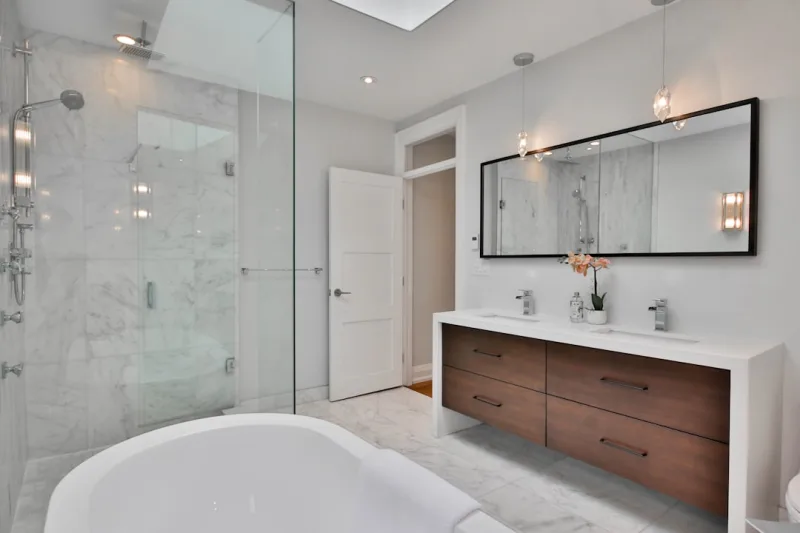
Whether you're going with a freestanding tub, a walk-in shower with frameless glass doors, or a combination — follow the specific installation instructions. Modern 2026 bathrooms favor walk-in showers with large format tile and minimal hardware. Install your shower door or enclosure, caulk all seams, and let everything cure properly.
Step 11: Install Lighting and Electrical Fixtures
This is where you might want an electrician. LED recessed lighting is standard now — install multiple fixtures around the vanity and overhead. Add a heated towel rack outlet, exhaust fan outlet, and any additional outlets for smart mirrors or devices. Proper lighting — think warm white LEDs at 2700K-3000K — completely changes the bathroom experience.
Step 12: Paint and Final Touches
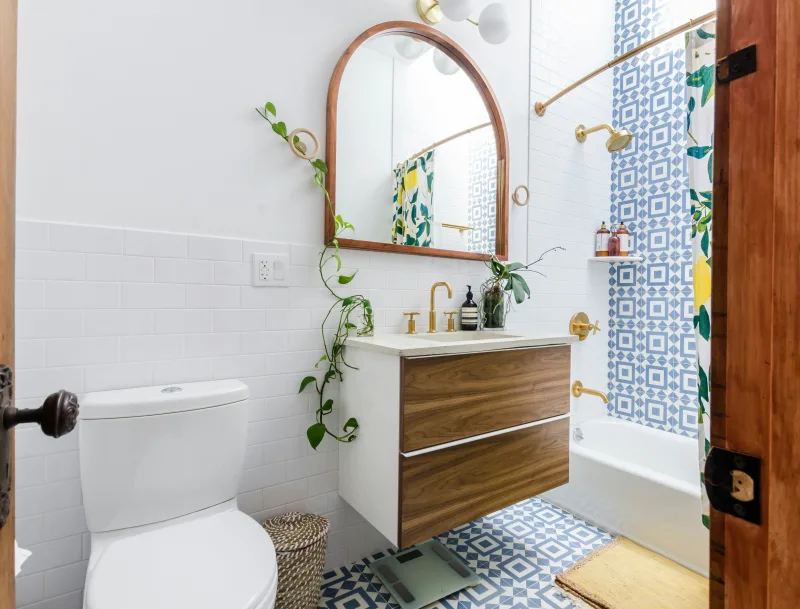
Use moisture-resistant paint in your chosen color. Warm whites, soft grays, and creamy beiges are having a moment. Paint after all wet work is complete and cured. Install mirrors, medicine cabinets, towel bars, and hardware. Add accessories — plants, nice towels, a small shelf — and step back. You did it.
Pro Tips
Ventilation is Non-Negotiable: Upgrade your exhaust fan to one that actually moves air. Look for CFM ratings appropriate to your bathroom size. Proper ventilation prevents mold and extends the life of everything. Install it with ducting that vents outside — not into your attic.
Consider Heated Floors: I know it sounds luxe, but electric floor heating is becoming more affordable. There's literally nothing better than warm feet on a cold morning. It's practical comfort that doesn't feel indulgent.
Go Big on Shower: Modern bathrooms favor larger showers with frameless glass doors. A 5-foot shower is minimum; 6-foot is better. Niche shelving keeps things organized without cluttering the space.
Quality Faucets Matter: Buy mid-range to high-end faucets from trusted brands. Cheap faucets develop leaks and it's frustrating. The Home Depot carries solid options in every price range.
Lighting Layers: Don't rely on one overhead light. Use recessed lights, task lighting around the vanity, and ambient lighting for ambiance. Dimmable LEDs are perfect.
Seal Everything: Use waterproof caulk around tubs, showers, and where walls meet flooring. Silicone caulk is your friend. Re-caulk every few years as part of maintenance.
Cost Breakdown
← Scroll to see full table →
| Category | Low Budget | Mid-Range | High-End |
|---|---|---|---|
| Vanity & Sink | $400 | $800 | $1,500+ |
| Faucet & Fixtures | $200 | $500 | $1,000+ |
| Toilet | $200 |