Look, I've been obsessed with thrifting for home decor for years now, and I'm not exaggerating when I say it's completely changed how I approach decorating. There's something genuinely thrilling about walking into a Goodwill or local thrift shop and stumbling upon a piece that nobody else sees potential in — then taking it home and turning it into something absolutely stunning. Here's the thing: decorating your home doesn't have to drain your bank account. In fact, some of my favorite pieces cost me less than a fancy coffee.
The beauty of thrift store DIY projects is that they force you to be creative. You can't just buy what's trendy because, well, thrift stores don't work that way. Instead, you're learning to see past the worn paint, outdated hardware, and dusty shelves. You're imagining what something could become. That's where the real magic happens — and honestly, the projects you create yourself tell way more interesting stories than anything you'd buy new.
Whether you're a seasoned DIY enthusiast or someone who's never picked up a paintbrush, I'm breaking down exactly how to hunt for treasures, transform them, and create home decor that feels uniquely yours. Let's dive in.
What You'll Need
Before you hit up your local thrift stores, let's talk about what materials you'll actually need on hand. Honestly, you probably have half of this stuff already.
- Acrylic Paint ($3-5 per bottle at The The Home Depot) — I recommend getting a good variety of colors. You'll use this more than you think.
- Paintbrushes & Foam Brushes ($1-3 each) — Different sizes for different projects. Don't cheap out too much here; bad brushes make bad paint jobs.
- Sandpaper Assortment ($4-6 for a pack) — 80-grit, 120-grit, and 220-grit will cover most bases.
- Primer ($8-12 per can) — Essential if you're painting dark items light colors. Trust me on this.
- Wood Stain ($6-10 per can) — Perfect for refreshing wooden thrift finds.
- Polyurethane Sealant ($8-14 per can) — Protects your work and makes it last.
- Decorative Hardware ($2-8 per piece) — Drawer pulls, cabinet handles, or hooks. Check The Home Depot's selection.
- Wood Filler ($5-8) — Fills holes and imperfections before painting.
- Adhesive & Hot Glue Gun ($1-5 for glue sticks, $8-15 for the gun) — For embellishments.
- Measuring Tape & Level ($8-15) — Don't eyeball it; trust me.
- Fabric Paint & Markers ($2-4 each) — For textile projects.
- Thrift Store Finds ($0.50-$10 each) — The whole point of this exercise!
Step-by-Step Guide
Step 1: Scout Your Local Thrift Stores Like a Pro
This is where it all starts. I hit up thrift stores at least twice a month, and I've learned that timing matters. Go early in the week — that's when the best stuff hits the shelves. Look for solid wood pieces, anything with good bones, vintage frames, mirrors, and furniture with interesting shapes. Don't overlook items that look rough right now. Ask yourself: "Can I see this painted?" "Does this frame work with different art?" "Would new hardware make this dresser amazing?" If the answer is yes, it's probably a good candidate.
Step 2: Assess Your Find & Make a Plan
Get it home and really examine it. Check for structural damage, loose joints, or pest issues. You can refinish cosmetic damage, but major structural problems might not be worth it. Now comes my favorite part — the planning phase. Sketch out your vision. What color will it be? What hardware will it have? Do you need to sand it first? I actually keep a Pinterest board specifically for thrift DIY inspiration — it helps me stay organized and avoid decision paralysis.
Step 3: Clean & Prep Like Your Reputation Depends on It
Honestly, this step is boring but absolutely critical. Use soap and water to clean everything thoroughly. Let it dry completely. Then, if you're painting, sand the surface lightly with 120-grit sandpaper. You're not trying to remove the finish entirely — just rough it up so paint adheres properly. Wipe away all the dust with a damp cloth and let it dry.
Step 4: Prime If Necessary
If you're going from dark to light, or if the original finish is glossy, use primer. Seriously. It makes such a difference. Two thin coats beat one thick coat every time. This is when you're building the foundation for a professional-looking result.
Step 5: Paint Your Masterpiece
Apply your acrylic paint in thin, even coats. Better Homes & Gardens & Gardens actually has great guidance on this — multiple thin layers look better than one thick layer. Let each coat dry completely before applying the next. Most projects need two to three coats. Use smooth, deliberate brush strokes and don't overwork the paint.
Step 6: Seal & Protect
Once everything is fully painted and dry (wait 24 hours to be safe), seal it with polyurethane. This protects your work and makes it more durable. Apply it in thin coats with a foam brush for the smoothest finish.
Step 7: Add Hardware & Finishing Touches
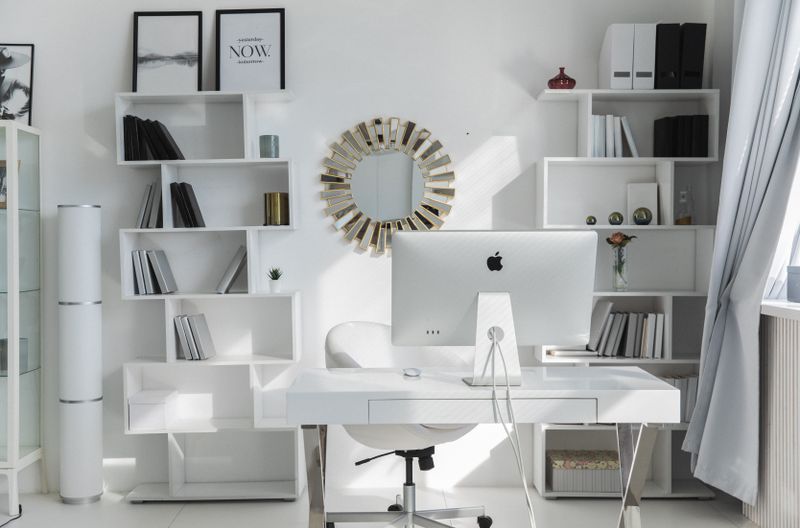
 Minimalist Home Office Decor: Best Amazon Finds 2026
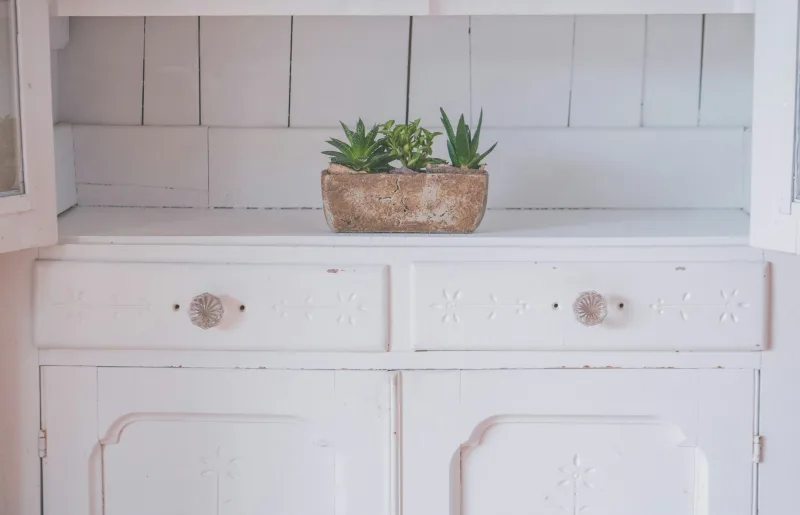
New hardware can completely transform a piece. If your dresser has old, dated knobs, swap them out. Paint frames with leftover paint. Add embellishments with hot glue. This is where your piece goes from "nice" to "actually stunning." Take your time here.
Pro Tips
Invest in good paint. Cheaper paint requires more coats and doesn't cover as nicely. It's worth spending a couple extra dollars per can. Benjamin Moore and Sherwin-Williams make excellent acrylic paints.
Keep a "thrift wish list." Know what you're looking for before you go hunting. Are you after a nightstand? A floor mirror? A bookshelf? Having a specific goal prevents impulse buys of stuff you don't actually need.
Use painter's tape religiously. Clean lines separate amateur from polished. Spend the extra five minutes taping off areas you don't want to paint.
Don't underestimate fabric projects. Thrifted throw pillows can be painted or dyed. I've found some incredible fabrics that just needed a good wash and a new purpose. HGTV has amazing tutorials on fabric transformation.
Mix thrifted with new. You don't need to thrift everything. Combining a refinished thrift piece with a new neutral rug or throw creates balance and prevents that "entire room is thrifted" look.
Take before and after photos. Seriously. These are motivating to look back on, and they're incredibly satisfying to share. Plus, you'll feel proud of your work.
Cost Breakdown
← Scroll to see full table →
| Item | Estimated Cost | Notes |
|---|---|---|
| Thrift Store Find | $2-$8 | Varies widely depending on piece size |
| Primer (if needed) | $8-$12 | One can covers multiple projects |
| Paint (2-3 colors) | $9-$15 | Acrylic paint from The Home Depot |
| Paintbrushes & Supplies | $5-$10 | Reusable for multiple projects |
| Sandpaper & Wood Filler | $8-$12 | Assortment packs are economical |
| Polyurethane Sealant | $10-$14 | One can covers many pieces |
| New Hardware (optional) | $5-$20 | Depends on number of pieces |
| Total Per Project | $47-$91 | Much less for future projects once supplies are stocked |
FAQ
Q: How do I know if a thrift store piece is worth buying?
A: Look for solid construction, no major structural damage, and pieces with good bones. The best finds are items that are structurally sound but cosmetically tired. Avoid anything with water damage, active pest issues, or severe structural problems. If the frame is wobbly or drawers don't slide smoothly and won't after a little TLC, skip it. Trust your gut — if something feels off, it probably is.
Q: Can I paint upholstered furniture from thrift stores?
A: Yes, but fabric paint is different from regular acrylic. You'll need
📷 Photo by Jornada Produtora on Unsplash