Designer Kitchen Layout for Small Spaces: Make Every Inch Count
Okay, so you've got a tiny kitchen. I get it. You're looking at maybe 75 square feet — or honestly, sometimes even less — and wondering how on earth you're supposed to make it actually feel *nice* while still being functional. Here's the thing: small kitchens aren't a curse. They're actually an opportunity to get really intentional with your design choices.
I've worked with countless homeowners who thought their compact kitchens were dead ends, but once we applied some thoughtful layout principles and smart design decisions, they ended up with spaces that were way more stylish and efficient than some sprawling kitchens I've seen. The secret? Understanding how professional designers approach small spaces — and spoiler alert, it's not about stuffing in as much as possible. It's about making what you have feel purposeful and beautiful.
Let me walk you through everything you need to know about creating a designer kitchen layout for small spaces. Whether you're renting and can only do temporary upgrades or you're planning a full renovation, these principles will totally transform how your kitchen looks and works.
What You'll Need
Before you start visualizing your new layout, gather these materials and tools. The good news? Most of this stuff is pretty affordable, especially if you shop smart at places like The The Home Depot.
- Measuring tape — $8-15
- Graph paper or design software (Canva free, or RoomSketcher at $50-100 one-time)
- Light fixtures (under-cabinet LED strips) — $30-80
- Wall shelving units — $40-150 per unit
- Cabinet organizers and pull-out systems — $25-100
- Mirror or reflective backsplash materials — $50-200
- Paint (light colors for expansion effect) — $30-50 per gallon
- Compact appliances (if upgrading) — $300-800 each
- Hardware upgrades (handles, hinges) — $40-120
- Floating island or cart (optional) — $150-500
Step-by-Step Guide
Step 1: Measure Everything (Seriously, Every Single Inch)
I cannot stress this enough — measurements are your foundation. Grab that measuring tape and get precise dimensions of your kitchen. Length, width, height, window placements, door swings, existing appliance sizes. Write it all down. Then sketch it out on graph paper or use something like RoomSketcher to visualize the space to scale. This takes maybe 30 minutes, but it saves you from making expensive mistakes later. Trust me on this one.
Step 2: Identify Your Kitchen Work Triangle
The work triangle — refrigerator, stove, and sink — is where the magic happens. In small spaces, this triangle gets tighter, which is actually brilliant. You want the three main work zones within about 4-9 feet of each other. This reduces wasted movement and makes cooking way more efficient. When you're designing your layout, make sure these three points aren't competing for the same wall space.
Step 3: Go Vertical, Not Horizontal
Here's where small kitchens win. Instead of spreading out, build up. Install open shelving from counter height to ceiling — this is something Better Homes & Gardens & Gardens always recommends for compact spaces. Use the wall real estate above your counters for storage and display. Wall-mounted pot racks, hanging utensil holders, and floating shelves instantly free up cabinet and counter space. Honestly, vertical storage is the game-changer most people overlook.
Step 4: Choose Your Layout Style
For small spaces, you've got a few solid options:
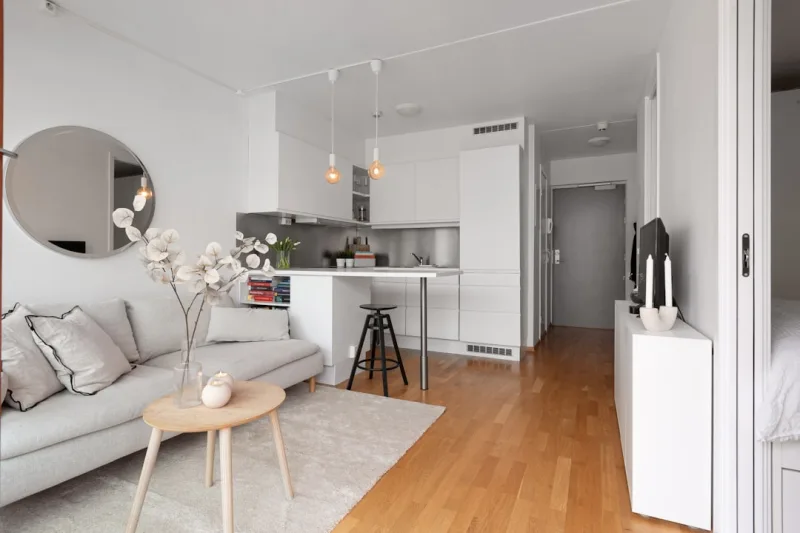
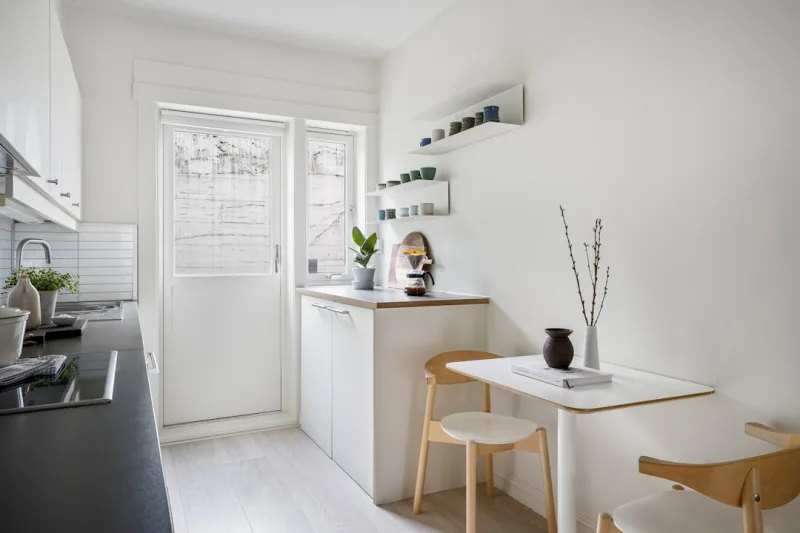
- Galley Layout: Two parallel walls with a walkway between them. Compact and efficient. Great for apartments.
- L-Shaped Layout: Uses two adjacent walls. Creates a corner and feels less cramped than galley.
- Single-Wall Layout: Everything along one wall. Unconventional but works for tiny studios.
- U-Shaped Layout: Uses three walls. Only works if you have the depth for it, but maximizes counter space.
Step 5: Maximize Counter Space
This is crucial. Counter clutter makes small spaces feel impossibly tight. Install a mobile cart or drop-leaf table that can slide away when not in use. Use pull-out cutting boards that live under the counter. Keep only your most-used small appliances out — the rest goes into drawers or cabinets. HGTV designers are always talking about this "clear counter rule," and honestly, it makes a massive visual difference.
Step 6: Lighting Changes Everything
Small kitchens can feel cave-like if you rely on one overhead fixture. Install under-cabinet LED strips (they're cheap and super easy), add a pendant light over any eating space you have, and consider a small track light. Better light makes everything feel bigger and more intentional. Plus, it's one of the most affordable upgrades you can make.
Step 7: Paint and Reflect
Use light, neutral paint colors on walls and ceilings. White, soft gray, pale blue — these expand the feeling of space. Then, add a few reflective surfaces. A mirrored backsplash section (or even just mirrored tiles) bounces light around and makes the kitchen feel larger than it actually is. It's designer 101 for small spaces, and it genuinely works.
Pro Tips
 Budget Apartment Renovation: DIY Hacks That Actually Work
Go for open shelving sparingly: Don't remove all your cabinets. Open shelving looks great but requires you to actually keep things pretty and organized. Mix open and closed storage for the best of both worlds.
Hardware matters more than you think: Good cabinet handles and hinges that close quietly make a small kitchen feel like a luxury space. It's a tiny detail that elevates everything.
Choose slim appliances: If you're upgrading, look for narrower models. A 30-inch range instead of 36 inches can give you precious extra counter space.
Use corner space wisely: Corners in small kitchens are dead zones until you optimize them. Lazy Susans, pull-out corner baskets, and blind corner organizers transform these awkward spots into functional storage.
Think about traffic flow: In a small kitchen, people will walk through it frequently. Make sure your layout doesn't create bottlenecks. The sink shouldn't be on a main pathway, and appliance doors shouldn't swing open into foot traffic.
Cost Breakdown
← Scroll to see full table →
| Item | Low End | Mid Range | High End |
|---|---|---|---|
| Measuring & Planning | $0 | $50 | $150 |
| Paint & Prep | $30 | $75 | $200 |
| Lighting Upgrades | $30 | $120 | $400 |
| Storage Solutions | $50 | $200 | $600 |
| Hardware Updates | $40 | $100 | $300 |
| Mobile Cart/Table | $80 | $250 | $500 |
| Backsplash/Reflective Surfaces | $50 | $150 | $600 |
| Total | $280 | $945 | $2,750 |
FAQ
Q: Can I make a small kitchen feel expensive on a budget?
A: Absolutely. Focus on the things people actually notice: hardware, lighting, and clean organization. You don't need to buy expensive appliances or rip out cabinets. Good hardware, fresh paint, and smart storage make a kitchen look intentional and designer-approved, even on a tight budget.
Q: What's the biggest mistake people make with small kitchen layouts?
A: Trying to cram too much in. People think they need a huge island or tons of counter space, but honestly? A small kitchen with clear counters and good organization beats a cramped kitchen with stuff everywhere. Less is more. Pick your essentials and commit to keeping the space uncluttered.
Q: Should I remove walls to make my kitchen bigger?
A: Not necessarily. Wall removal is expensive and sometimes impossible (load-bearing walls exist for a reason). Before you go that route, try optimizing your current layout first. Nine times out of ten, smart design makes a small kitchen feel significantly larger without touching structural elements.
The Bottom Line
Designing a kitchen for a small space isn't about accepting limitations — it's about getting creative within them. Some of the most beautiful, functional kitchens I've designed were actually the smallest ones because every choice was intentional. You can't waste space on something mediocre when you don't have much to begin with.📷 Photo by Alex Tyson on Unsplash