How to Create a Designer Closet in Your Tiny Space (And Actually Enjoy Getting Dressed)
Look, I get it. Your closet is basically a glorified shoe box with delusions of grandeur. Maybe you're in a studio apartment, or you inherited a master bedroom with a closet that was apparently designed for someone who owned exactly three outfits. Here's the thing — a small closet doesn't have to feel cramped or look amateur. With the right approach, you can absolutely transform that tight space into something that feels intentional, organized, and dare I say... luxurious.
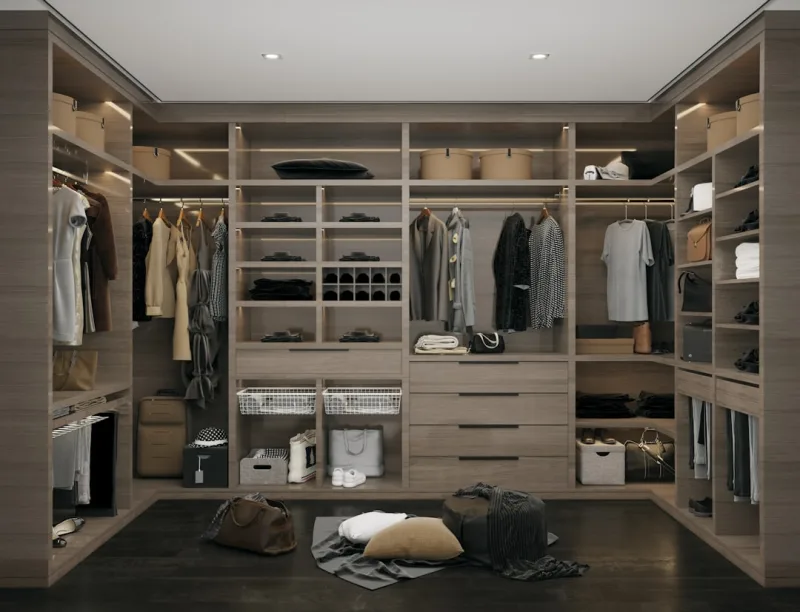
I've helped tons of people tackle this exact problem, and the magic isn't about having more space. It's about working smarter with what you've got. We're talking strategic storage solutions, thoughtful organization, and a designer mindset that makes every square inch count. Honestly, some of my favorite closets have been tiny ones — there's something really satisfying about maximizing a compact space.
In this guide, I'm walking you through everything you need to create a closet that actually feels designer-quality, even if you're working with a footprint smaller than a parking space. We'll cover materials, step-by-step instructions, and real-world tips that'll change how you think about small-space storage.
What You'll Need
Before you start, gather these essentials. Nothing here is complicated, and you can source everything from The The Home Depot, your local hardware store, or online retailers.
- Closet rod extension or double rod system — $25-60 USD
- Shelf dividers (acrylic or wood) — $15-35 USD
- Slim hangers (set of 50) — $20-45 USD
- Over-the-door organizer — $15-30 USD
- Shelf risers or stackable storage cubes — $20-50 USD
- Matching storage boxes (3-4 boxes) — $30-75 USD
- Closet lighting strip (LED) — $25-60 USD
- Contact paper or peel-and-stick wallpaper — $10-25 USD
- Tension rods (2-3) — $15-40 USD
- Label maker — $15-30 USD
Step-by-Step Guide
Step 1: Purge and Plan
I know, I know — nobody wants to hear this. But honestly, you can't create a designer closet if you're holding onto stuff you don't actually wear. Pull everything out. And I mean everything. Try things on if you need to. If it doesn't fit, doesn't make you feel amazing, or you haven't worn it in over a year, it goes. This isn't about being ruthless; it's about being intentional.
Once you've purged, measure your closet space. Width, height, depth — get the exact dimensions. Take photos from different angles. This is your baseline, and it'll inform every decision moving forward.
Step 2: Maximize Your Hanging Space
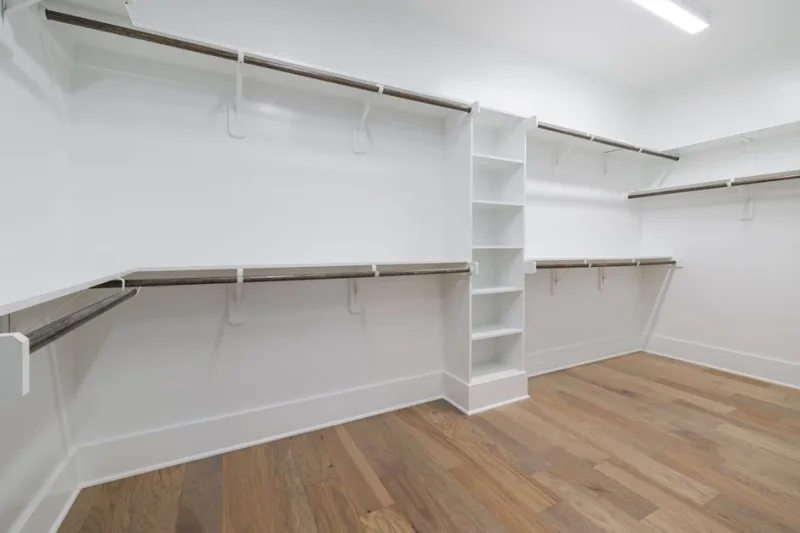
This is where most people leave money on the table. If you've got a single rod, you're only using half your vertical space. Install a double rod system — one at standard height, one above it. The Home Depot has solid options for around $40-50. Suddenly, you've doubled your hanging capacity without expanding the footprint.
Pair this with slim hangers. I'm talking those skinny velvet or plastic ones. They take up maybe a third of the space of chunky wooden hangers, and they grip fabrics better so nothing slides around. You're easily gaining another 15-20% of hanging space just by switching.
Step 3: Utilize Vertical Storage
Small closets reward you for thinking vertically. Install shelving above your hanging rod if you haven't already — even if it's just one shelf, it's prime real estate. This is where folded sweaters, bags, or seasonal items live. Add shelf dividers to prevent that avalanche effect where everything topples over when you grab one thing.
Tension rods are your secret weapon here. Install one or two horizontally across existing shelves to create compartments. Stack storage boxes underneath. Suddenly that space under your hanging clothes becomes functional.
Step 4: Create Smart Storage Solutions
Matching storage boxes are non-negotiable for a designer aesthetic. Everything visible should coordinate. Label them clearly — "Workout," "Accessories," "Out of Season" — whatever makes sense for your lifestyle. Clear storage boxes work too if you want to see what's inside without opening them.
The over-the-door organizer deserves respect here. Mount one on the inside of your closet door for scarves, belts, or jewelry. That's vertical real estate you'd otherwise waste. Same goes with small hooks or adhesive organizers along the back wall for bags or frequently worn cardigans.
Step 5: Add Lighting and Polish
This step separates amateur from designer. A dark closet never feels luxurious, and you'll end up wearing things that don't actually coordinate because you can't see them properly. Install a simple LED light strip along the top or sides. It's inexpensive — usually $25-50 — and transforms the entire vibe.
 Budget Apartment Renovation: DIY Hacks That Actually Work
Consider peel-and-stick wallpaper or contact paper for the back wall. Even a subtle pattern or a calm neutral color makes the space feel intentional. Think of magazines you've seen featuring beautiful closets — they always have intentional finishes, not just raw drywall.
Step 6: Organize with a System
Here's where functionality meets design. Create a system that actually works for how you live. Group items by category: tops together, bottoms together, dresses, outerwear, etc. Within each category, organize by color. It sounds fussy, but it genuinely makes getting dressed easier — and that's the whole point.
Use matching hangers exclusively. Seriously, this one detail completely elevates the visual impact. You'll notice the difference immediately.
Pro Tips
Invest in quality basics: A small closet filled with three pairs of perfectly fitting jeans and ten quality basics looks designer. A bigger closet stuffed with mediocre stuff looks like a closet. Choose quality over quantity, and your space automatically feels more curated.
Embrace underutilized spots: That awkward corner? Tension rod. That ceiling space? Floating shelf. Closets are like tetris — creative solutions work. Check HGTV for more small-space inspiration if you get stuck.
Keep seasonal rotation minimal: Don't store a ton of off-season clothes in there. Rent additional storage if needed, or be ruthless about rotating items. A streamlined closet always feels more designer.
Add one luxury element: Maybe it's nice scent diffuser, a velvet-lined jewelry tray, or a beautiful mirror on the door. One intentional, higher-quality piece elevates the whole space. Think like a designer — it's about intention, not expense.
Document your system: Take photos of your organized closet. Screenshot them on your phone. Honestly, this prevents backsliding and keeps you accountable to the organization system you've created.
Cost Breakdown
← Scroll to see full table →
| Item | Price Range (USD) | Essential? |
|---|---|---|
| Double rod system | $25-60 | Yes |
| Shelf dividers | $15-35 | Highly Recommended |
| Slim hangers (50) | $20-45 | Yes |
| Over-the-door organizer | $15-30 | Optional |
| Shelf risers | $20-50 | Recommended |
| Storage boxes (3-4) | $30-75 | Yes |
| LED lighting strip | $25-60 | Highly Recommended |
| Contact paper | $10-25 | Optional |
| Tension rods (2-3) | $15-40 | Recommended |
| Label maker | $15-30 | Optional |
| TOTAL ESTIMATED | $190-450 | Core: ~$250 |
FAQ
Q: Can I do this in a weekend?
A: Absolutely. The actual installation takes maybe 4-6 hours if you're taking your time. The purging and organizing might take longer depending on how much you have, but you could realistically complete a full closet upgrade in one focused weekend. Honestly, I'd recommend breaking it into two days — Thursday night for purging, Saturday for installation and organizing. Your hands and sanity will thank you.
Q: What if I'm renting and can't install shelves?
A: Great question because tons of people deal with this. Focus on the removable stuff: slim hangers, over-the-door organizers, tension rods, storage boxes, and LED strips (which often have adhesive backs). You can create an incredibly functional and beautiful closet without a single permanent installation. When you move, you take it all with you.
Q: How do I keep it looking designer long-term?
A: The key is maintenance systems. Put things back where they belong immediately — no "I'll reorganize tomorrow." Make seasonal purges a habit (twice a year is solid). And honestly, treat your closet like you'd treat a guest room. Would you toss random stuff in there if someone was about to see it? That
📷 Photo by Ali Moradi on Unsplash