Modern Apartment Layout for Renters: Create Your Dream Space Without Major Changes
Walking into your rental apartment for the first time is such an exciting feeling, but then reality hits—you're staring at an awkward floor plan, limited wall space, and zero permission to make structural changes. I get it, and honestly, you're not alone in feeling a bit overwhelmed. The beautiful thing? You don't need to knock down walls or sign a lease you'll regret to create a stunning, functional space that feels 100% yours. Whether you're dealing with a galley kitchen, a bedroom that doubles as a hallway, or a living room that's oddly shaped, modern design principles can help you work with what you have rather than against it. This guide is all about making your rental feel less like a temporary landing pad and more like the cozy, stylish home you deserve—all without risking your security deposit.

In this article, we're diving deep into everything you need to know about optimizing your apartment layout as a renter. You'll learn practical strategies for maximizing small spaces, furniture arrangement tips that work in any room, budget-friendly styling ideas that renters can actually use, and step-by-step guidance on transforming your space. We're also sharing expert insights, product recommendations from trusted retailers, and real answers to the questions keeping you up at night. By the end, you'll have a complete roadmap for creating a modern apartment that's functional, beautiful, and totally renter-approved.
Understanding Modern Apartment Layout for Renters
Modern apartment layout for renters is all about working strategically within your constraints to create a space that feels open, functional, and stylish. Unlike homeowners who can renovate freely, renters need to be creative—and honestly, that's where the magic happens. Modern rental design focuses on multipurpose furniture, smart storage solutions, and strategic decorating that maximizes visual flow without permanent modifications.
Why does this matter so much? Because your apartment is where you spend roughly a third of your life. It's where you unwind after stressful workdays, host friends for dinner, and wake up on lazy Sunday mornings. A poorly planned layout drains your energy, makes cooking feel like a frustrating game of Tetris, and leaves you feeling like you're living in someone else's space. When your layout works for you instead of against you, everything changes. You move more fluidly through your home, you feel more relaxed, and you actually want to invite people over.
The common mistakes renters make usually fall into a few categories: pushing all furniture against walls (which actually makes rooms feel smaller), ignoring vertical space (hello, 8-foot-high walls!), creating isolated room zones instead of connected spaces, and choosing furniture that doesn't fit the layout. Many renters also skip the planning phase entirely and just arrange things as they arrive, which leads to awkward traffic patterns and wasted square footage. The solution? Intentional planning that respects rental restrictions while maximizing every inch.
Modern apartment layout design for renters embraces the principles of minimalism, multifunctionality, and smart storage. It's about choosing pieces that earn their place in your home, using color and light strategically to enhance perception of space, and creating zones that define purpose without walls. This approach works beautifully whether you're in a cozy studio or a sprawling two-bedroom.
Planning Guide for Modern Apartment Layout for Renters
Before you buy a single piece of furniture or move one item from its current spot, you need a solid plan. This is the step that 90% of renters skip, and it's exactly why they end up frustrated. Planning takes maybe an hour and saves you months of "this doesn't quite work" feelings. Start by measuring your space accurately—every inch matters in apartment design. Use a tape measure and write down room dimensions, ceiling height, window and door locations, outlets, and any architectural quirks. Take photos from different angles too; sometimes the camera catches things your eyes miss.
Next, think about traffic flow. How do people naturally move through each room? Where are the natural pathways? In your living room, does traffic flow toward a hallway or window? In your bedroom, does the door open into the room or against a wall? These patterns should influence furniture placement. You'll also want to identify your functional zones—sleeping, working, eating, relaxing, storing. In a studio or small one-bedroom, these zones might overlap, and that's totally fine. The key is making it clear what activity happens in each area.
Consider lighting too. Where's your natural light coming from? How can you maximize it? Are there dark corners that need task lighting? Do you have enough outlets for modern living? These questions matter more than you might think. Finally, think about your lifestyle. Are you a morning person who makes elaborate breakfasts? A work-from-home professional? Someone who loves entertaining? Your layout should support how you actually live, not how a Pinterest board suggests you should live.
Pre-Planning Checklist for Your Modern Apartment Layout
- Measure all rooms (length, width, ceiling height) and note door/window locations
- Identify natural traffic flow patterns and main pathways through your space
- Map out functional zones (sleeping, working, living, eating, storage)
- Count and locate all electrical outlets and switches
- Assess natural and artificial lighting in each area
- List furniture and items you already own with their dimensions
- Determine must-haves versus nice-to-haves for your space
- Take photos of your current space from multiple angles and lighting conditions
Budget Breakdown
← Scroll to see full table →
| Budget Tier | Items | Approximate Price |
|---|---|---|
| Under $50 | Removable wallpaper, paint samples, mirrors, floating shelves (non-permanent), area rugs, throw pillows, storage bins, curtain rods (adhesive), adhesive hooks | $5-$45 each |
| $50-$200 | Modular shelving units, storage ottomans, desk organizers, floor lamps, smart lighting, bookcase, rolling storage carts, wall-mounted desk, murphy desk, under-bed storage containers | $60-$195 each |
| $200+ | Multifunctional sofa or sectional, platform bed with storage, quality area rug, room divider/partition, complete lighting package, quality desk, entertainment center, modular furniture system | $250-$1500+ |
Smart budgeting for your rental layout means prioritizing what you actually need while being strategic about splurges. That beautiful IKEA sofa for $399 is tempting, but will it work in your next apartment? A smart approach is to invest in quality basics that translate between spaces—like a neutral sectional or a good desk—and save money on trendy pieces you'll want to replace anyway. The The Home Depot has fantastic options for renter-friendly storage solutions, IKEA offers budget-conscious modern pieces that move easily, and Amazon has everything from organizing tools to lighting fixtures.
Here's the money mindset: focus your budget on items that solve problems or improve functionality, then style around them affordably. Need better storage? That's worth the investment. Want a trendy accent wall? That's what removable wallpaper at $25 is for. Setting a realistic budget before you shop prevents impulse purchases and keeps you aligned with your layout plan. Many renters find that investing $500-$1000 in key pieces transforms their space far more than spending $2000 on random items. Quality beats quantity every single time, especially in smaller spaces where each piece is visible.
Step-by-Step Guide
Step 1: Create a Scaled Floor Plan on Paper or Digitally
Using your measurements, sketch your apartment layout on graph paper or use a free app like RoomSketcher or Floorplanner. This takes 15 minutes but saves hours of rearranging furniture later. Draw your walls, mark windows and doors, note outlet locations, and indicate any permanent features. Cut out scaled shapes of your furniture and arrange them on the floor plan to see what works before touching a single piece. This is your testing ground, and changing things on paper is infinitely easier than moving a sofa five times.
Step 2: Declutter and Take Inventory
 94 DIY Home Decor Projects: Ideas for Every Budget
Before you arrange anything, be honest about what you actually own and use. Renters often get stuck with inherited furniture, Amazon purchases we've forgotten about, and things we're "saving for someday." In a modern apartment layout, every item should serve a purpose or bring you genuine joy. Go through each area, make three piles (keep, donate, sell), and be ruthless. This step alone transforms your space because you're not arranging clutter; you're arranging the things you genuinely love. You'll likely realize you have more space than you thought.
Step 3: Define Your Functional Zones Clearly
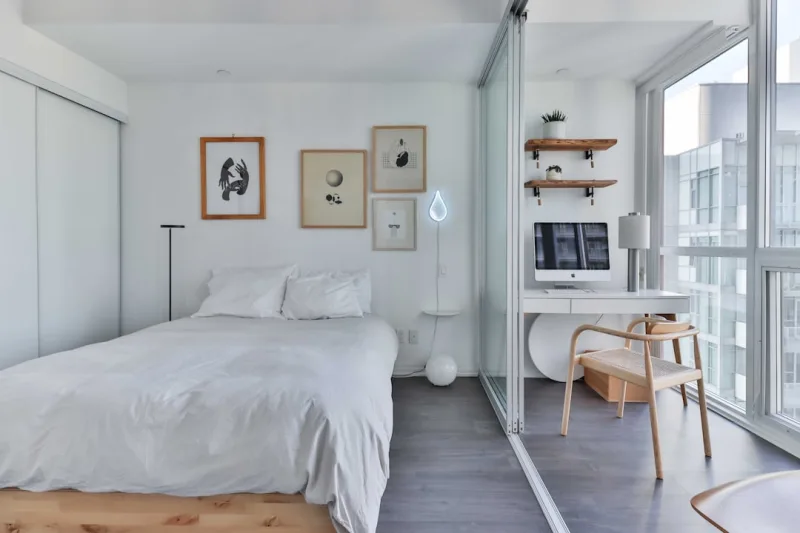
Especially crucial in open-concept apartments, zone definition creates purpose and flow. Use different area rugs, lighting, or subtle color changes to distinguish sleeping space from working space from relaxing space. In your living room, position seating to create a conversation area. In your bedroom, consider a small desk area or reading nook. A zone doesn't need a wall; it just needs visual distinction. This psychological boundary makes small apartments feel larger because each zone has clear purpose.
Step 4: Arrange Furniture for Traffic Flow First, Aesthetics Second
Your best layout respects how people naturally move through your apartment. In the living room, furniture should face toward natural gathering spaces like a TV, window, or artwork—but not block pathways. Your bed should have at least two accessible sides if possible. Your kitchen should maintain workflow between fridge, stove, and sink. Aesthetic arrangement is important, but functional arrangement determines whether you actually enjoy your space daily. You can add pretty things once the bones are right.
Step 5: Maximize Vertical Space Ruthlessly
Apartment walls are free square footage most renters completely ignore. Install floating shelves above your desk, your bed, your sofa. Mount your TV instead of using a stand. Use tall, narrow bookcases instead of wide, squat ones. A tall mirror makes rooms feel bigger. Wall-mounted organizers keep counters and floors clear. The goal is to train your eye to look up—that's where small apartments hide their hidden storage. Vertical arrangements also create better visual flow because your eye naturally travels upward in a room.
Step 6: Invest in Renter-Friendly Storage Solutions
Modern apartment layout requires strategic storage because renters can't just build cabinets. Modular shelving like KALLAX from IKEA works beautifully because you can adjust and move it. Storage ottomans do double duty as seating and hidden organization. Under-bed storage containers maximize your largest piece of furniture. Hanging organizers use closet space efficiently. Rolling carts fit into awkward corners. Wall-mounted pegboards handle kitchen or office organization without permanent installation. Your storage strategy is literally the foundation of a working layout—without it, everything else falls apart.
Step 7: Layer Lighting to Create Ambiance and Functionality
Most apartments come with one terrible overhead light and maybe a floor lamp situation. Modern layout design includes multiple light sources: overhead (when necessary), task lighting (desk or reading areas), accent lighting (shelf, wall, or under-cabinet), and ambient lighting (lamps that create mood). Smart bulbs let you adjust color temperature and brightness. Proper lighting doesn't just make your space look better; it actually affects your mood and productivity. Under-lit apartments feel depressing. Well-lit apartments—even small ones—feel spacious and inviting.
Best Styles and Products
Modern Minimalist
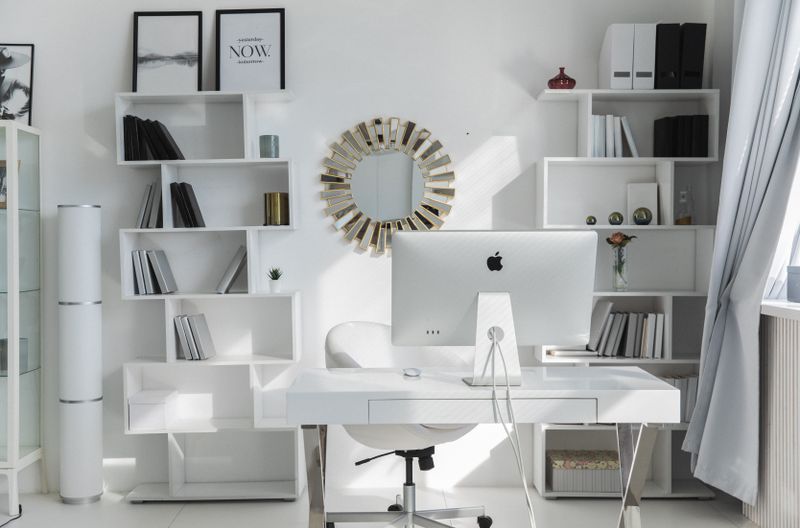
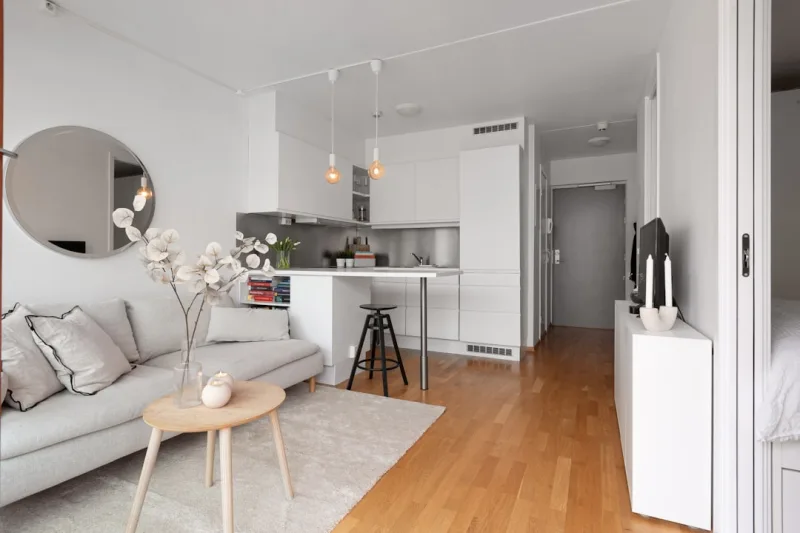
Clean lines, neutral colors, and ruthless editing define this timeless approach. Think white, gray, black, and natural wood. Choose furniture with simple profiles, minimal ornamentation, and dual purposes. This style feels spacious even in small apartments because nothing competes for attention. It's also incredibly renter-friendly because it doesn't require specific wall colors or architectural features. The minimalist approach also makes moving easier—these pieces work in almost any future apartment you inhabit.
Scandinavian Modern
Slightly warmer than pure minimalism, Scandinavian design embraces light wood, soft textures, and a cozy-meets-clean aesthetic. Perfect for renters who want modern without cold. Think light gray walls, natural wood furniture, sheepskin throws, and hygge-inspired layering. This style relies heavily on lighting and textiles to create warmth, making it budget-friendly since you can change textiles easily. The emphasis on natural materials and simple forms means your pieces stay relevant through multiple apartments.
Industrial Eclectic
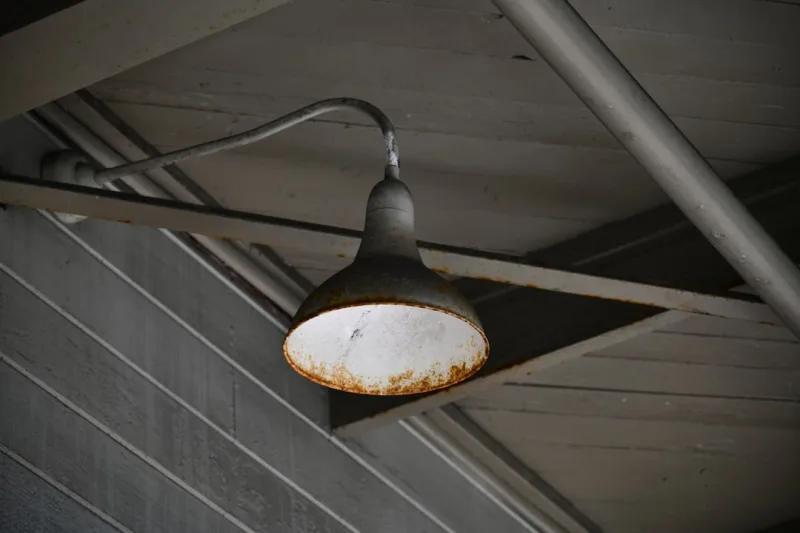
Exposed brick, concrete, metal accents, and curated collections define this style. It's fantastic for renters because it actually celebrates mixing pieces and doesn't require matching furniture sets. A metal shelving unit from The Home Depot, wooden crates as storage, Edison bulb lighting, and vintage finds create the vibe. This style looks intentionally curated rather than scattered, so your renter-friendly choices feel on-purpose rather than temporary.
Contemporary Cozy
Essentially modern design with comfort as the priority. Neutral base with warm wood, plush seating, layered textiles, and personal touches. This is the sweet spot for most renters because it's stylish, functional, and genuinely livable. You're not sacrificing comfort for aesthetics or vice versa. Think modern sofa (IKEA, Article, or West Elm), soft area rug, warm lighting, and personal art and photos that make it yours.
Recommended Products for Modern Apartment Layout
- IKEA KALLAX Shelving Unit - $99-$199 | Modular, affordable, and endlessly adaptable for any space
- Amazon Brightech Smart LED Strip Lights - $25-$40 | Renter-safe, creates ambiance, works on any color
- Target Room Essentials Storage Ottoman - $80-$150 | Doubles as seating and hidden storage
- Better Homes & Gardens and Gardens Rustic Wood Writing Desk - $120-$180 | Works as workspace or vanity, fits small areas
- Amazon Yamazaki Home Steel Frame Shelving - $150-$250 | Industrial modern, completely portable, super sturdy
Expert Tips
Tip 1: Use Area Rugs to Define Zones and Add Warmth A large area rug anchors a living space and makes hardwood apartment floors feel less cold. Layer smaller rugs in bedrooms. Rugs define zones in open-concept apartments without walls. Choose durable, easy-to-clean options from IKEA or Amazon since renters need durability.
Tip 2: Embrace Vertical Arrangements for Visual Height Arrange artwork in vertical galleries rather than horizontal spreads. Use tall narrow bookcases instead of squat wide ones. Mount floating shelves high. This trains the eye upward, making low ceilings feel taller and small apartments feel more spacious. It's a psychological trick that actually works.
Tip 3: Choose