Minimalist Bedroom Transformation 2026: Your Guide to a Serene Sleep Space
You know that feeling when you walk into your bedroom and immediately feel... overwhelmed? Yeah, me too. After years of accumulating stuff—the extra throw pillow from last winter, that chair you swore you'd refinish, the books piled by your nightstand—I finally decided enough was enough. Here's the thing: minimalism isn't about living with nothing. It's about creating intentional space where everything serves a purpose and brings you peace. And honestly, a minimalist bedroom has been a complete game-changer for my sleep quality and daily stress levels.
The minimalist design trend isn't slowing down in 2026—if anything, it's evolving. People are ditching the clutter aesthetic and embracing what I call "functional calm." We're talking clean lines, neutral palettes, and furniture that actually earns its place in your room. The best part? You don't need to demolish your current setup or spend a fortune. I'm going to walk you through exactly how to transform your bedroom into a minimalist sanctuary, step by step.
Whether you're starting from scratch or simply want to declutter what you've already got, this guide will help you design a bedroom that feels like a five-star hotel—minus the price tag. Let's dive in.
What You'll Need
Before you start rearranging, gather these essentials. Some of these you might already have at home, which means your actual costs could be even lower.
- Low-profile bed frame (wood or metal) — $150–$400
- Quality bedding set (neutral colors: white, gray, beige) — $80–$200
- Floating nightstands (or minimal wooden ones) — $40–$120 each
- Storage boxes or under-bed organizers — $20–$60
- Neutral area rug (optional but recommended) — $50–$150
- Simple wall-mounted shelving — $30–$80
- Blackout curtains (light gray or white) — $40–$100
- Minimal lighting solution (wall sconces or simple pendant) — $30–$100
- Paint (if repainting walls) — $25–$50
- Organizers and storage baskets — $40–$100
Check out The The Home Depot for furniture and storage solutions—their selection of minimalist pieces has honestly impressed me this year. They've got everything from bed frames to paint colors, and their prices are competitive.
Step-by-Step Guide
Step 1: Declutter Everything
This is the hardest part, but also the most critical. You need to start by removing everything that doesn't serve a purpose or bring you joy. I'm talking about that exercise equipment you don't use, the decorative items collecting dust, the seven throw pillows you thought you needed. Pull items out of your closet, dresser, and nightstand. Be ruthless—and I mean genuinely ruthless. If you haven't used it in six months and it doesn't make you happy, it has to go.
Create three piles: keep, donate, and sell. You'd be surprised how much money you can make selling items on resale platforms. Use those funds toward your minimalist bedroom budget. It's a win-win situation.
Step 2: Choose Your Color Palette
Minimalism thrives on restraint with color. Pick two or three neutral base colors: think whites, soft grays, warm beiges, or gentle taupes. These colors aren't boring—they're calming. They also make smaller rooms feel larger and create a cohesive aesthetic that won't feel dated next year.
Paint your walls if needed. One accent wall in a slightly deeper tone works beautifully without breaking the minimalist vibe. I personally went with "Alabaster" (essentially white) for walls and "Accessible Beige" for one accent wall, and my bedroom went from chaotic to serene instantly.
Step 3: Invest in a Quality, Low-Profile Bed
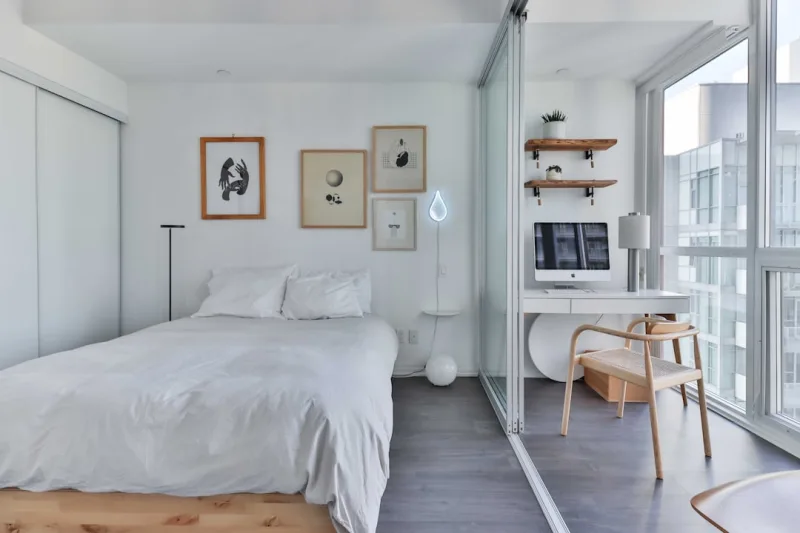
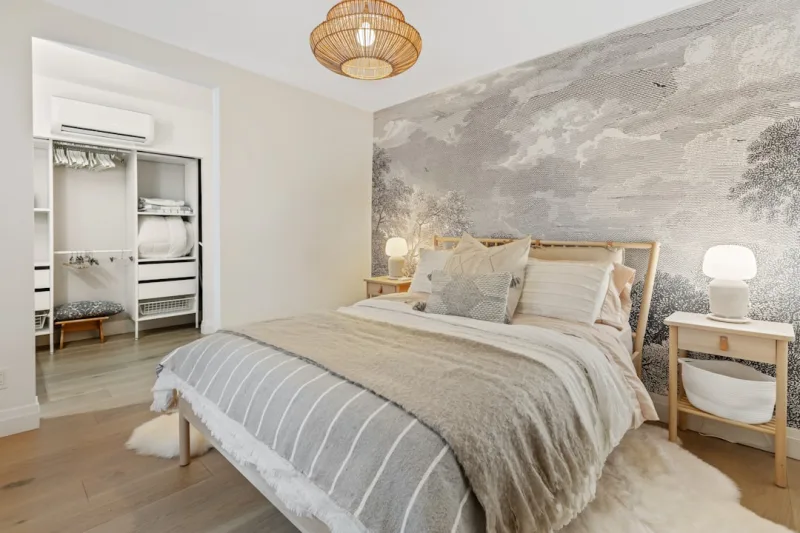
Your bed is the focal point. Go with a simple frame—wood or metal, doesn't matter. What matters is that it sits low and has clean lines. Platform beds are perfect for minimalism because they eliminate the visual clutter of a box spring underneath. Choose quality bedding in your neutral palette: a white duvet, gray pillowcases, maybe a subtle linen throw.
Avoid pattern overload. Solid colors with varied textures (linen, cotton, maybe a chunky knit blanket) are way more interesting than a bunch of mismatched patterns.
Step 4: Add Functional Storage
Here's where minimalism gets practical. You still need to store things—clothes, seasonal items, whatever. The key is hidden storage. Wall-mounted shelves are great for displaying a few curated items, but most storage should be concealed. Under-bed storage containers, a simple dresser in natural wood, and closet organizers keep everything out of sight.
 Budget Apartment Renovation: DIY Hacks That Actually Work
Floating nightstands save floor space and create that airy feeling. Install two matching ones on either side of your bed for symmetry.
Step 5: Strip Down Lighting and Decor
Swap out that ornate overhead light fixture for something minimal—wall sconces are my current obsession, honestly. They provide task lighting without taking up space and look incredibly sophisticated. A simple pendant light or two can work too.
For decor, follow the "less is more" principle. One statement art piece or large mirror on a wall beats a gallery wall of ten smaller frames. A single plant in a ceramic pot on a shelf. A minimal wooden shelf with maybe three carefully chosen books. That's it. Everything should have breathing room.
Step 6: Optimize the Closet and Drawer Space
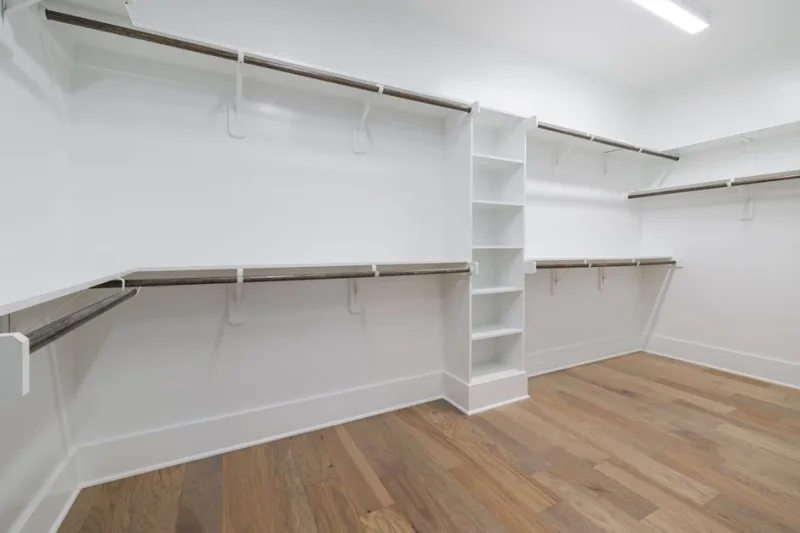
A minimalist bedroom extends to your closet. Organize clothes by color and type. Use matching hangers. Store off-season items in labeled containers. When your closet is organized, it naturally influences you to keep less and be more intentional about what you buy.
Your drawers should be equally organized. Small dividers help—and yes, The Container Store has great options, but honestly, old boxes work just fine too.
Pro Tips
Keep it organized, not sterile: Minimalism sometimes gets a bad rap for feeling cold, but that's a design mistake. Layer textures—linen, wood, metal, maybe a woven basket. This warmth makes the space feel inviting rather than like a hotel lobby.
Use vertical space: Wall-mounted shelves, floating nightstands, and higher curtain rods draw the eye upward, making rooms feel larger and less cluttered. I can't recommend this enough for smaller bedrooms.
Invest in quality basics: A good mattress and high-thread-count sheets aren't extravagant—they're essential. You spend a third of your life in bed. Quality bedding actually pays for itself in better sleep and longevity.
Hide the chaos: Cables, chargers, and clutter should be managed with organizers or hidden behind furniture. Visible mess immediately kills the minimalist vibe, no matter how clean your design is otherwise.
Make one strategic focal point: It might be a beautiful headboard, an accent wall, or a window with natural light. One feature draws attention and creates interest without clutter.
For more inspiration, check out HGTV's minimalist bedroom collections—they've got some stunning real-world examples that might spark ideas for your space.
Cost Breakdown
← Scroll to see full table →
| Item | Budget Option | Mid-Range | Premium Option |
|---|---|---|---|
| Bed Frame | $150 | $300 | $500+ |
| Bedding Set | $80 | $150 | $300+ |
| Nightstands (pair) | $80 | $200 | $400+ |
| Storage Solutions | $60 | $120 | $250+ |
| Lighting | $40 | $100 📷 Photo by Point3D Commercial Imaging Ltd. on Unsplash |