Designer Kitchen Renovation 2026: Your Complete Transformation Guide
Look, I've been doing kitchen renovations for years, and I can tell you that 2026 is shaping up to be an absolutely exciting year for kitchen design. We're seeing this beautiful shift away from the ultra-minimalist trend and moving toward kitchens that actually feel like home — you know, the kind of space where you want to linger over coffee and not just grab-and-go.
The thing about a designer kitchen renovation is that it's not really about following every trend that hits Instagram. It's about understanding what you actually need in your space, then making smart choices that'll feel fresh in five years, not dated in five months. Here's what I'm seeing work best right now, and honestly, if you're planning a kitchen overhaul for 2026, you're timing it perfectly.
Whether you're working with a tight budget or you've got some real wiggle room, this guide will walk you through everything — from the must-have materials to the design decisions that'll actually matter when you're cooking dinner on a Tuesday night.
What You'll Need
Before we dive into the how-to, let's talk about the actual stuff you're going to need. I recommend grabbing a notepad and literally writing down what speaks to you — that way, you're not wandering The The Home Depot like you've lost your mind.
- Cabinetry — Custom or semi-custom ($3,000–$15,000) — This is your biggest investment. Quality matters here.
- Countertops — Quartz, marble, or butcher block ($2,000–$8,000) — Don't cheap out; you'll live with this daily.
- Backsplash tiles — Subway, mosaic, or large format ($500–$2,500) — This is where personality lives.
- Hardware — Cabinet handles and knobs ($200–$800) — The jewelry of your kitchen, basically.
- Flooring — Tile, luxury vinyl, or wood ($2,000–$6,000) — Waterproofing is non-negotiable.
- Lighting fixtures — Pendant lights, under-cabinet, overhead ($800–$3,500) — Seriously don't skimp here.
- Appliances — Range, refrigerator, dishwasher ($3,000–$10,000) — Energy-efficient models pay for themselves.
- Paint and primer — Cabinet and wall paint ($200–$600) — Quality paint makes a real difference.
- Adhesives, grout, sealant ($300–$500) — The unglamorous stuff that keeps everything together.
- Plumbing fixtures — Faucet and sink ($800–$2,500) — Functionality and style matter equally.
Step-by-Step Guide
Step 1: Plan Your Layout and Design Vision
This is where so many people mess up — they jump straight into demolition without really thinking about what they want. Don't be that person. Spend a solid week just sitting in your kitchen, using it normally, and noticing what frustrates you. Is the sink too far from the prep space? Do you need more counter real estate for your coffee obsession?
Visit The Home Depot showrooms, scroll through Better Homes & Gardens & Gardens' kitchen galleries, and honestly, just take photos of kitchens you love. Create a Pinterest board. Talk to your partner about what matters. Once you've got a vision, sketch out your layout — even a rough sketch helps.
Step 2: Set Your Budget Realistically
Here's the thing — kitchen renovations always cost more than you think. Always. I'm not being pessimistic; I'm being real. Add 20% to whatever number you land on. That buffer? You're going to use it when you discover your existing electrical is a nightmare or when you decide the subway tile you picked is actually going to make you crazy for the next decade.
Step 3: Demolition (Call the Pros for This)
Unless you're genuinely experienced with demolition — and I mean truly experienced — hire professionals for this part. They've got the tools, they understand what's structural versus what's not, and they'll dispose of everything properly. A demo crew typically costs $1,500–$3,000 but saves you from expensive mistakes and a whole lot of dust.
Step 4: Address Structural and Electrical Issues
Now that everything's open, this is your chance to fix problems without living with walls closed up. Have an electrician assess your current setup and upgrade if needed — modern kitchens need way more power than older ones. Same with plumbing. This is the unglamorous stuff that determines whether your renovation actually works long-term.
Step 5: Install New Flooring
While the walls are bare and there's no cabinetry in the way, lay your flooring. This makes everything else infinitely easier. Whether you're going with large-format tile, luxury vinyl plank, or hardwood, do this before cabinets go in. Trust me on this.
Step 6: Cabinet Installation
Cabinets are the foundation of your kitchen's look and function. If you're going custom or semi-custom — which I recommend for a genuinely designer feel — the company usually handles installation. Make sure everything is level and functional before moving on. This is where precision matters.
Step 7: Install Countertops
 Budget Apartment Renovation: DIY Hacks That Actually Work
Once cabinets are in, your countertops can be measured and installed. Whether it's quartz, marble, or butcher block, make sure the installation team understands your backsplash height so everything lines up perfectly.
Step 8: Backsplash Installation
This is where your kitchen gets personality. Tile, large-format slabs, or even shiplap — whatever you chose, install it after counters but before any final touches. The grout color matters more than you'd think.
Step 9: Install Plumbing Fixtures and Appliances
Your sink, faucet, and major appliances go in now. Have professionals handle anything electrical or plumbing-related. This isn't a DIY area unless you actually know what you're doing.
Step 10: Lighting and Final Details
Pendant lights, under-cabinet lighting, and overhead fixtures complete the space. Hardware installation, paint touch-ups, and any final styling happens here. This is the fun part where it all comes together.
Pro Tips
Invest in quality hardware: Cabinet hardware is affordable enough to replace later if you change your mind, but quality hardware feels luxurious every single day. Don't buy the cheapest option.
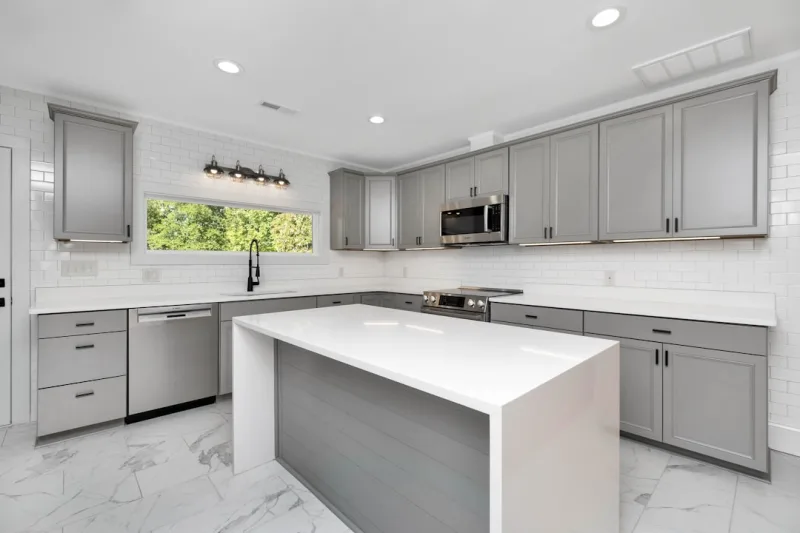
Consider your appliance finish: Stainless steel still dominates, but matte black and integrated refrigerators are huge in 2026. Pick finishes that complement your overall aesthetic and are practical for your lifestyle.
Don't overlook lighting: Most kitchens are terribly under-lit. Layer your lighting — ambient overhead, task lighting under cabinets, and accent lighting with pendants. HGTV consistently shows how lighting transforms spaces, and they're not wrong.
Go deeper with color: Okay, so white kitchens are still classic, but don't be afraid of deeper cabinet colors like forest green, charcoal, or even navy blue. These are having a serious moment, and they feel timeless rather than trendy.
Plan your backsplash carefully: This is where you can go bold with pattern or texture without overwhelming the space. Large-format tiles minimize grout lines and feel super contemporary.
Work with an actual designer if possible: Even a few hours with a professional designer ($150–$300) can save you thousands in mistakes. They'll catch things you won't.
Cost Breakdown
← Scroll to see full table →
| Category | Low Estimate | Mid Estimate | High Estimate |
|---|---|---|---|
| Cabinetry | $3,000 | $8,000 | $15,000 |
| Countertops | $2,000 | $5,000 | $8,000 |
| Flooring | $2,000 | $4,000 | $6,000 |
| Backsplash | $500 | $1,500 | $2,500 |
| Appliances | $3,000 | $6,500 | $10,000 |
| Lighting | $800 | $2,000 | $3,500 |
| Plumbing Fixtures | $800 | $1,500 | $2,500 |
| Hardware & Finishes | $500 | $1,200 | $2,000 |
| Labor & Miscellaneous | $2,000 |