High End Apartment Design on a Budget: Luxury Living Without Breaking the Bank
I remember standing in my tiny apartment, scrolling through Pinterest at midnight, feeling this deep ache in my chest. Every beautiful room I saw seemed to belong to someone else—someone with a bottomless wallet and a designer's phone number on speed dial. The beige walls, the mismatched furniture, the feeling that my space didn't reflect the person I'd become—it all felt suffocating. But here's what I discovered: you don't need a six-figure budget to create a home that feels like a luxury retreat. Over the past three years, I've transformed my apartment using smart shopping, creative thinking, and the kind of intentional design choices that make people gasp when they walk through your door. This isn't about pretending; it's about creating genuine beauty that makes you feel like the best version of yourself every single day. Your apartment deserves to be beautiful, and so do you—regardless of your bank account.

In this guide, you'll discover exactly how to create that high-end apartment aesthetic without spending a fortune. We're talking about strategic shopping techniques, where to invest your money for maximum impact, how to spot quality pieces at budget-friendly prices, and the design principles that separate Instagram-worthy spaces from ordinary ones. You'll learn the exact steps I used to transform my apartment, get a realistic budget breakdown so you know where your money goes, and discover the specific products and styles that deliver luxury vibes without the luxury price tag. Whether you're starting from scratch or refreshing your current space, these actionable strategies will help you create an apartment that feels like home while keeping your wallet happy.
Understanding High End Apartment Design on a Budget
High-end apartment design on a budget is fundamentally about making smart choices that create the illusion and reality of luxury without spending like a billionaire. It's not about being cheap or settling for low quality—it's about understanding design principles, knowing where quality truly matters, and being strategic about your spending. Think of it like building a designer outfit: you invest in a timeless, perfectly-fitting blazer and quality shoes, then mix in affordable trendy pieces that you can swap out seasonally. The same principle applies to your home.
Why does this matter so much? Because your apartment is where you spend roughly one-third of your life. It's where you start your mornings, decompress after stressful days, celebrate wins with friends, and dream about your future. When your space feels beautiful and intentional, it fundamentally changes how you feel about yourself. Studies show that our environment directly impacts our mood, productivity, and even our sense of self-worth. A beautifully designed apartment isn't a luxury—it's an investment in your mental health and daily happiness.
The most common mistakes I see people make are: buying too much too fast without a plan, investing heavily in trendy pieces that'll feel dated in six months, not measuring before purchasing (hello, that gorgeous couch that doesn't fit through the door), treating budget shopping as settling rather than strategizing, ignoring lighting (which can make or break a space), and not considering the bones of their apartment before adding decorative elements. The magic happens when you slow down, think intentionally, and understand that sometimes one perfect item is better than ten mediocre ones.
Planning Guide for High End Apartment Design on a Budget
Before you spend a single dollar, you need a roadmap. I can't stress this enough—planning is what separates people who create beautiful spaces from people who end up with cluttered apartments full of regrettable purchases. Start by taking honest inventory of what you already own. Those pieces you love? Keep them. The stuff that makes you feel "meh"? Those are candidates for reimagining or letting go. Next, identify the room or area that will have the biggest impact on how you feel when you come home. For most people, this is the living room or bedroom. That's where you should direct your energy and budget first.
Consider your lifestyle and the way you actually live. If you have friends over constantly, your living room needs different design choices than if you're a homebody who primarily uses that space to watch movies. If you work from home, your bedroom or office needs to be functional and inspiring, not just pretty for photos. Think about natural light patterns, traffic flow, and the bones of your space. A high-end design approach starts with respecting your apartment's architecture and working with it, not against it. Finally, identify your design style by collecting images of spaces you love. You'll start to see patterns—maybe you're drawn to minimalist Scandinavian design, warm maximalism, modern farmhouse, or eclectic bohemian. This clarity will guide every purchase you make.
Planning Checklist for High End Apartment Design
- ☐ Measure every room (length, width, ceiling height, window placement)
- ☐ Take photos of your current space from multiple angles
- ☐ Identify your design style using Pinterest boards or Instagram inspiration
- ☐ List all furniture pieces you're keeping and their condition
- ☐ Assess lighting in each room (natural and artificial)
- ☐ Determine your total budget and divide it by room or priority
- ☐ Create a mood board with colors, textures, and style references
- ☐ Identify which room will get priority funding for maximum impact

Budget Breakdown
← Scroll to see full table →
| Under $50 | $50-$200 | $200+ |
|---|---|---|
| Paint (one gallon) - $25 | Area rug (5x7) - $80-$150 | Sofa/sectional - $300-$800 |
| Throw pillows - $15-$40 | Floor lamp - $60-$180 | Bed frame - $250-$600 |
| Wall art prints - $10-$40 | Dining table - $100-$200 | Quality mattress - $400-$1200 |
| Plants and planters - $15-$45 | Bookshelf - $80-$180 | Bedroom set - $500-$1500 |
| Mirrors - $20-$45 | Nightstands - $70-$150 | Kitchen island - $300-$900 |
| Curtain rods and panels - $30-$50 | Desk - $90-$200 | Accent chairs - $250-$700 |
| Decorative boxes - $15-$40 | Coffee table - $100-$180 | Sectional sofa - $400-$1200 |
| Candles and decor - $20-$50 | Wall shelving - $60-$150 | Dining set - $500-$1500 |
The key to smart budget allocation is understanding the investment hierarchy. Pieces that directly touch your body—like mattresses, sofas, and chairs—are worth investing in because they affect your comfort and last for years. These should receive 40-50% of your furniture budget. The bones of your design—paint, lighting, and flooring—should get 20-30% because they set the tone for everything else. The remaining 20-30% goes to decorative elements that bring personality and can be swapped out as trends shift or your style evolves.
 94 DIY Home Decor Projects: Ideas for Every Budget
Money-saving tips that actually work: First, paint is magic and costs almost nothing. A fresh coat transforms a space more dramatically than almost any other single investment. Second, IKEA, The The Home Depot, Target, and Amazon are your friends—but you have to know their sweet spots. IKEA excels at affordable furniture and smart storage; The Home Depot at paint, lighting, and hardware; Target at stylish small-scale decor; and Amazon at everything from hardware to unique finds. Third, buy statement pieces new (like a sofa you'll love for years) but trendy accessories secondhand through Facebook Marketplace, Craigslist, or thrift stores. Finally, timing matters—shop end-of-season sales, holiday clearance events, and Black Friday/Cyber Monday. Subscribe to email lists from your favorite stores and follow them on social media where they announce flash sales.
Step-by-Step Guide
Step 1: Define Your Color Palette and Set the Foundation
This is your anchor. Choose two to three neutral base colors and two to three accent colors. Neutrals might be warm white, soft gray, and warm beige. Accents could be sage green, dusty blue, and warm gold. Your neutrals cover walls, larger furniture, and flooring. Your accents appear in smaller pieces like pillows, art, and accessories. This creates visual harmony while keeping your space feeling designed rather than random. Paint is your easiest, most impactful investment. A fresh coat of paint costs $25-40 per gallon and instantly elevates the entire space. Avoid pure white (it reads cold) and pure black (it makes spaces feel smaller). Instead, choose warm whites with slight undertones, soft grays with warmth, or subtle colors like pale sage or warm taupe.
Step 2: Invest in Lighting That Changes Everything
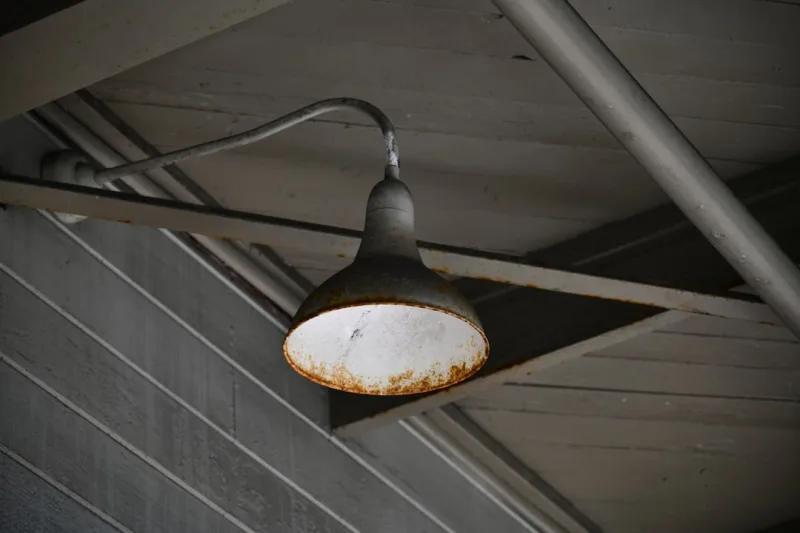
High-end spaces always have excellent lighting—multiple layers of it. Ambient lighting (overhead), task lighting (for reading or working), and accent lighting (to highlight beautiful elements) create depth and atmosphere. Skip the basic builder-grade ceiling fixture. Instead, invest in a beautiful pendant light, flush mount, or chandelier ($60-150) that becomes a design statement. Add a floor lamp in a corner for reading ($50-100), a desk lamp if you work from home ($40-80), and table lamps on nightstands or side tables ($30-60 each). String lights, LED strip lighting under shelving, or smart bulbs that change color add flexibility and Instagram-worthy ambiance. Good lighting makes inexpensive furniture look expensive and makes everything feel more intentional and designed.
Step 3: Choose and Arrange Your Anchor Furniture Pieces
Identify the largest pieces of furniture your space needs—usually a sofa, bed, dining table, or desk. These anchor pieces should be quality (splurge here) and in your neutral base colors. A $400 sofa in gray linen will last longer and look better than a $150 sofa in trendy navy velvet. Measure your space obsessively and consider traffic flow. Furniture should be arranged to invite conversation and movement, not block it. Once you place these anchor pieces, the rest of your design flows from them. If your sofa is positioned against a wall, that wall becomes your focal point where you might hang large art or a mirror. The space you define with furniture creates natural zones within your apartment.
Step 4: Bring in Layered Textures and Soft Furnishings
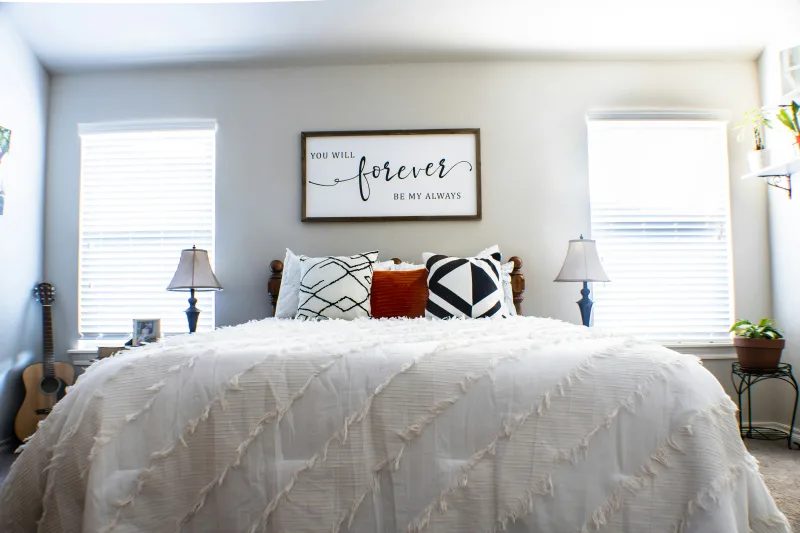
This is where an apartment goes from nice to luxe. Layer textures: if you have a smooth linen sofa, add a chunky knit throw blanket. If you have a solid-colored rug, add pillows in different textures—maybe linen, velvet, and a knit. Varying textures create visual and tactile interest that reads as high-end. A quality area rug ($80-150) grounds your seating area and makes it feel intentional rather than haphazard. Throw pillows ($15-40 each for decent quality) are your secret weapon—they're affordable, replaceable, and can completely change how a space feels. Collect them in your accent colors and mix patterns with solids. A throw blanket draped over a sofa ($30-60) adds coziness and another texture layer.
Step 5: Add Personalized Wall Elements and Art
Your walls tell your story. A single large piece of art ($40-100 from independent artists on Etsy or Amazon) creates more impact than several small pieces. Or create a gallery wall with a mix of prints, personal photos, and frames in coordinating colors. Mirrors ($20-50) are game-changers—they reflect light, make spaces feel larger, and serve a practical purpose. Place one opposite a window to maximize natural light, or behind a sofa to add depth. Floating shelves ($30-80 for a pair) display books, plants, and meaningful objects. Keep styling minimal—three or four intentional items per shelf reads as curated, while a crowded shelf reads as cluttered.
Step 6: Incorporate Plants and Natural Elements
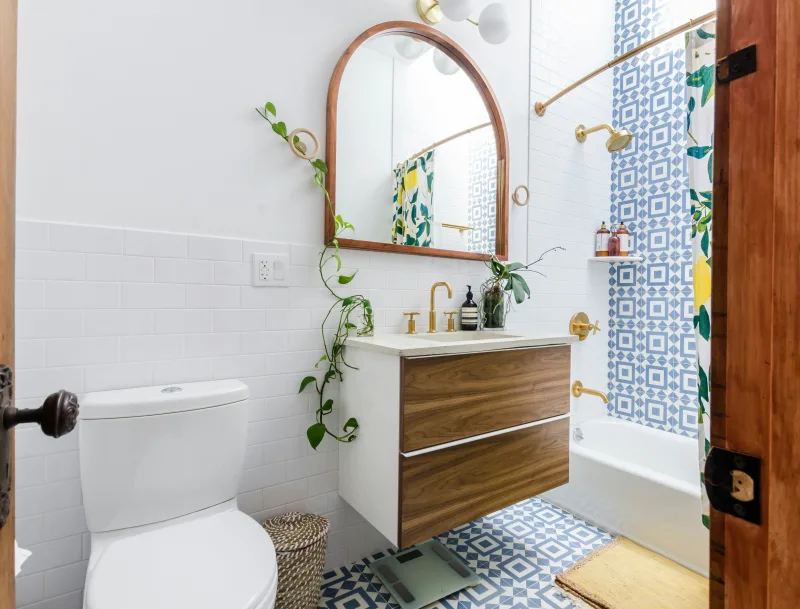
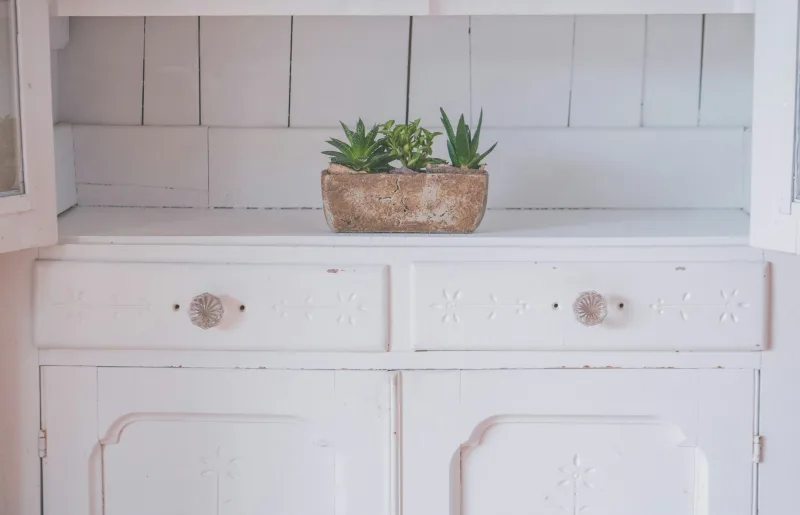
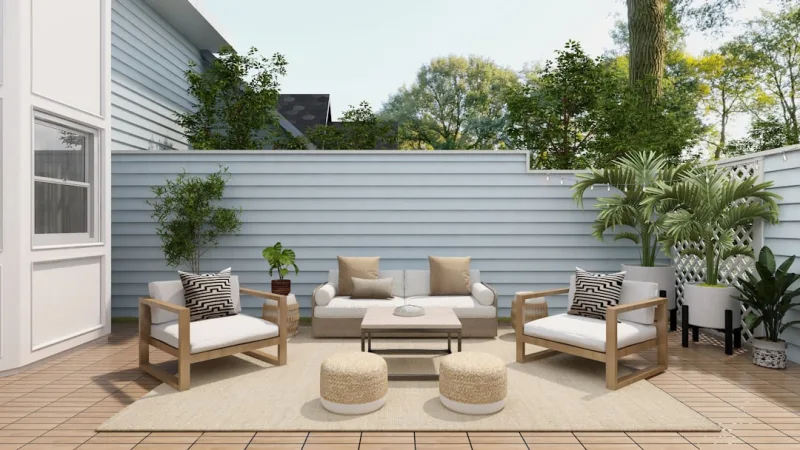
Plants immediately signal "someone who has their life together" lives here. They improve air quality, add life to spaces, and cost very little ($5-25 for most houseplants). Choose plants appropriate for your light conditions—if you have low light, go with pothos, snake plants, or ZZ plants. If you have bright indirect light, try monstera, pilea, or fiddle leaf figs. Place them in coordinating planters ($10-30) rather than plastic nursery pots. A statement plant (like a tall monstera in a large planter) in a corner becomes living decor. Smaller plants on shelves or nightstands add personality without clutter. They're also incredibly forgiving if you tend to be forgetful!
Step 7: Style with Intention and Create Breathing Room
The final step is styling with the restraint that separates designed spaces from cluttered ones. Every item in your apartment should have a reason for being there. Does it serve a function? Does it bring you joy? Does it fit your aesthetic? If the answer is no to all three, it goes. Use the rule of odd numbers when styling shelves or styling tables—three books, three candles, three decorative objects feel more intentional than two or four. Leave negative space (empty space) around your styled vignettes so they breathe. A styled bookshelf shouldn't be packed solid; it should have visible shelf space. This restraint is what makes spaces feel calm, curated, and high-end rather than cluttered and chaotic.
Best Styles and Products
Modern Minimalist
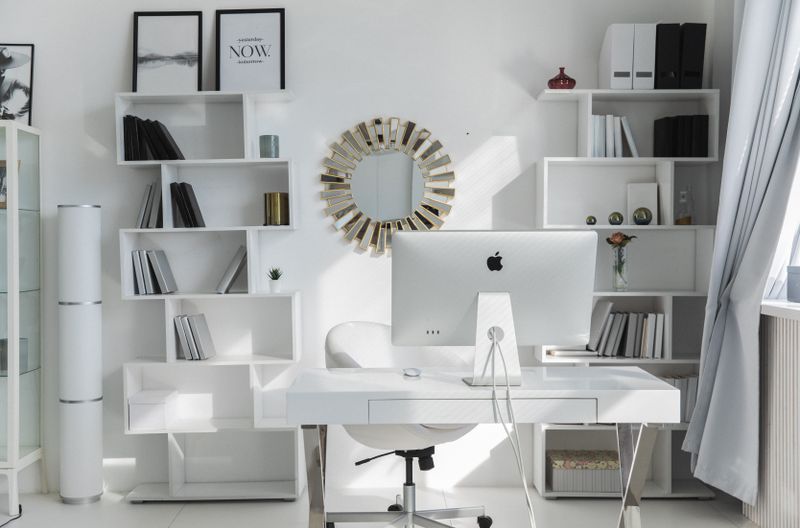
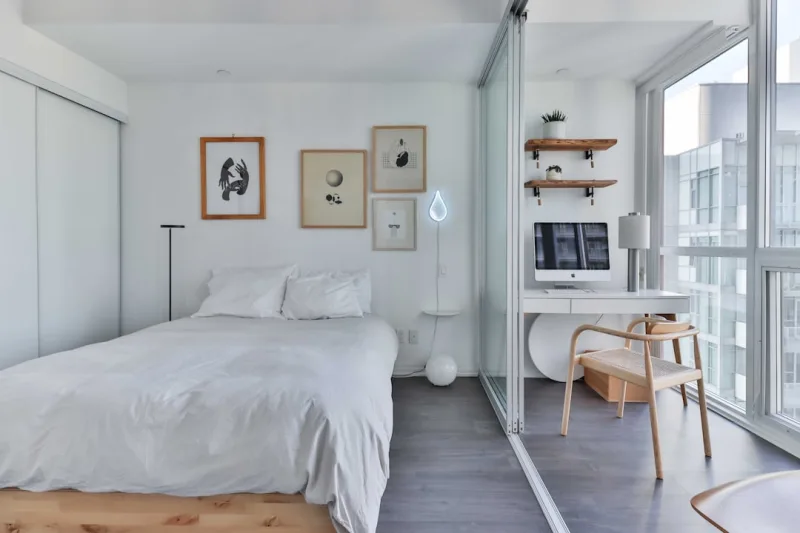
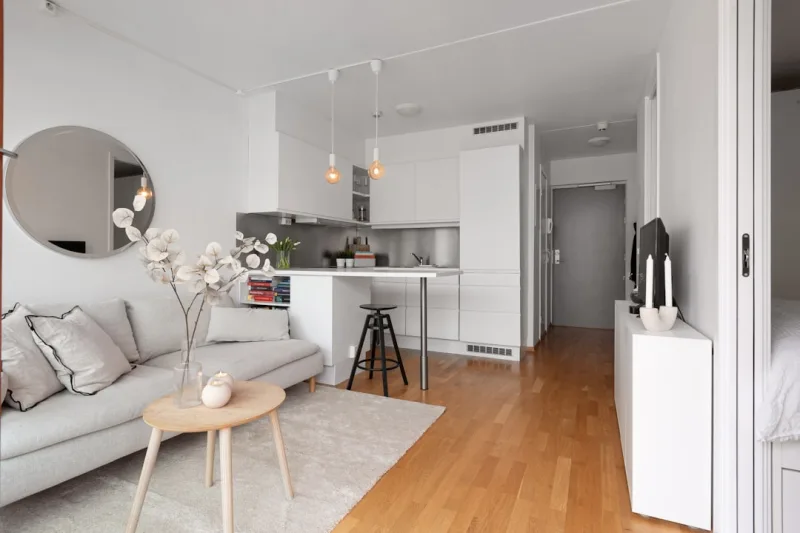
Clean lines, neutral palettes, and functional beauty define this style. It's perfect for small apartments because it creates the illusion of more space. Think sleek furniture with no ornament, white or gray walls, and carefully curated accessories. This style requires restraint—every piece must earn its place. Storage is built-in and hidden, not displayed. This approach feels sophisticated and calming, making it ideal if you work from home or are stressed by visual clutter. The budget advantage? You buy fewer pieces, but they need to be good quality.
Scandinavian Cozy
Warm minimalism with an emphasis on hygge (coziness). Light woods, soft grays, creams, and warm whites create a serene backdrop. Natural textures like wool, linen, and raw wood are essential. This style layers comfort with simplicity—think a chunky knit throw over a simple sofa, sheepskin rugs, and woven baskets. The aesthetic is both sophisticated and approachable, expensive-looking but achievable on any budget because much of it comes from IKEA and The Home Depot products in lighter, natural finishes.