Okay, so here's the thing — fall is my absolute favorite season for decorating. There's something about pulling out those autumn colors and textures that just feels right. The reds, oranges, deep golds... honestly, it's like nature handed us the perfect color palette and said, "Just go wild with it." And the best part? You don't need to spend a fortune at fancy home decor stores to create something truly stunning.
I've been doing DIY fall centerpieces for years now, and I've learned that the most impressive-looking arrangements often come together with stuff you already have around the house — plus maybe a few budget-friendly finds from your local market. Whether you're planning Thanksgiving dinner, hosting a fall dinner party, or just want to make your everyday table feel a little more seasonal, I'm going to walk you through some gorgeous centerpiece ideas that are genuinely doable.
The beauty of fall decorating is that it's incredibly forgiving. You can mix textures, play with heights, and combine unexpected elements — and somehow it all just works. Let's dive into what you'll need and how to create centerpieces that look like you spent hours (even if you didn't).
What You'll Need
Before we get into the actual building process, let me break down the materials. I'm going to give you realistic prices based on what I typically spend, but honestly, these costs can shift depending on where you shop and what you already have on hand.
← Scroll to see full table →
| Material | Approximate Cost | Where to Find |
|---|---|---|
| Fall branches/twigs | $3-8 | Local market or backyard |
| Pumpkins (mini & regular) | $5-12 | Farmers market or The The Home Depot |
| Candles (unscented pillars) | $4-10 | Target, Walmart, or dollar stores |
| Seasonal flowers (mums, dahlias) | $6-15 | Grocery store floral section |
| Container (vase or bowl) | $5-20 | Thrift stores, home goods stores |
| Floral foam or frog | $3-6 | The Home Depot, craft stores |
| Decorative leaves/berries | $4-10 | Craft stores, farmers markets |
| Fillers (moss, wheat, corn husks) | $2-8 | Craft stores or natural suppliers |
Step-by-Step Guide
Step 1: Choose Your Container and Prep It
Start by picking a container that feels right for your table. I tend to go for something with some height — a vase, urn, or even a pretty pitcher works great. Clear glass shows off your layering, which is nice, but honestly, I've done some of my best work with ceramic bowls too. Pro tip: if your container is wider at the top, grab some floral foam or a flower frog to hold everything in place. This is genuinely a game-changer and saves so much frustration.
Fill your container with water if you're using fresh flowers, or keep it dry if you're going the route of faux elements. I usually mix both — real flowers with faux branches — because it gives you the best of everything.
Step 2: Build Your Base Structure
This is where architecture comes in. You want height variation — think about it like a pyramid. Start with your tallest elements in the center. For fall, I love using branches or tall grasses. Strip some leaves off the lower portions (they'll just sit in water anyway and get gross). Position these first, and they become your framework for everything else. According to design principles you'll find on HGTV, having these height variations is what makes arrangements look professional instead of flat.
Don't worry about making it perfect — a little asymmetry actually looks more natural and interesting.
Step 3: Add Your Focal Flowers
Now bring in your statement flowers. Burgundy mums, orange dahlias, or deep red roses — these are your stars. I cut stems at a 45-degree angle for better water absorption (if you're using fresh flowers). Place these focal blooms at varying heights, not all bunched together at the same level. Space them out so each one has room to breathe and show itself off.
 DIY Aesthetic Living Room Makeover Ideas for 2026
Here's a trick I learned: place your largest flowers first and work outward. It prevents you from accidentally covering them up with smaller elements.
Step 4: Layer in Secondary Elements
This is the fun part where you add texture and personality. Tuck in smaller filler flowers, greenery, and interesting foliage. I'm talking hypericum berries, eucalyptus, or those beautiful burgundy leaves you can find at farmers markets. Better Homes & Gardens & Gardens always emphasizes the importance of layering different textures, and they're absolutely right — it's what transforms a simple arrangement into something magazine-worthy.
Don't be shy with the filler. It's supposed to fill gaps and create a lush, full look.
Step 5: Incorporate Seasonal Elements
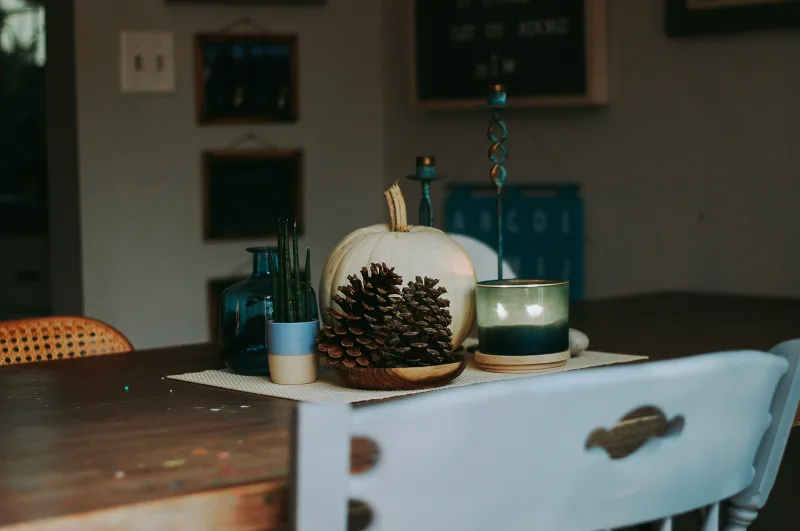
Now add your pumpkins, gourds, and corn husks. I usually tuck mini pumpkins low in the arrangement, nestling them between flowers and greenery. For larger centerpieces, position a bigger pumpkin off to one side for visual interest. Add wheat bundles, dried corn, or cinnamon sticks for texture — and bonus, they smell amazing.
Step 6: Final Touches with Candles and Accessories
Pop some pillar candles in there, or cluster smaller votives around the base. Candles aren't just pretty — they add that warm, cozy fall feeling that's honestly what the season is all about. Add any last-minute details: a ribbon tied around the vase, a scatter of acorns at the base, or anything else that makes it feel like you.
Step 7: Step Back and Adjust
This is crucial and something people skip. Walk away for a minute, look at it from different angles, and see if anything needs tweaking. Does it look balanced? Are there any awkward gaps? Sometimes the smallest adjustment — moving one flower an inch to the left — makes all the difference.
Pro Tips
Harvest from Your Own Yard: Before you buy everything, take a walk around your property. Those branches, dried grasses, and fallen leaves? They're free decorating gold. I've created some of my favorite arrangements mostly from backyard finds. It also gives your centerpiece a more authentic, personal feel.
Shop Mid-Week at Farmers Markets: Go early or later in the week when vendors have fresh stock and usually better prices. Building relationships with vendors pays off — they'll often set aside the best stuff for regular customers.
Mix Real and Faux Strategically: Real flowers die, which is fine, but faux branches can last the whole season. Mixing them means your arrangement looks fresh but also stays beautiful longer. Use real flowers as your focal point and let the faux elements be your supporting cast.
Prep Your Flowers Properly: Remove lower leaves, use sharp scissors to cut stems at angles, and change the water every few days. Fresh flowers can last 1-2 weeks
📷 Photo by Michele Hayes on Unsplash