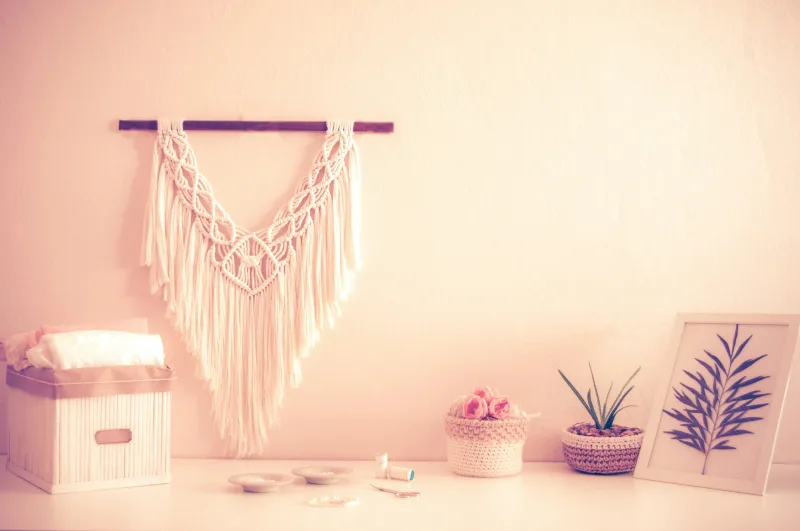
Look, I get it. You're scrolling through Instagram at 11 PM, seeing all these gorgeous macrame wall hangings, and thinking "I could never make that." But here's the thing — you absolutely can. Macrame isn't some mysterious craft reserved for bohemian artisans with years of experience. It's honestly just knots. Really beautiful, really satisfying knots that transform a blank wall into something that makes people actually stop and ask where you bought it.
I started making macrame about five years ago in my tiny apartment, and I was terrified I'd mess it up. Turns out, the "imperfect" look is actually what makes macrame so charming. Those uneven knots? Character. That slightly wonky fringe? Totally intentional, I promise. Whether you're looking to create a small accent piece for above your desk or a massive statement installation behind your bed, macrame is the easiest way to add that cozy, elevated boho vibe everyone's obsessed with right now.
The best part? You don't need fancy tools, a degree in fine arts, or even a ton of time. Most of these projects take a weekend, and the materials cost way less than what you'd drop at a boutique home store. Let me walk you through everything you need to know to create macrame wall hangings that'll have your friends asking for recommendations.
What You'll Need
Before you start, let's talk materials. The good news is that macrame is refreshingly affordable. You can grab everything you need at The The Home Depot, your local craft store, or even online. Here's what I always keep on hand:
- Macrame Cord — 3mm cotton or jute cord is my go-to. Go with cotton if you want something soft and durable. Plan on $8-$15 per 100-yard ball depending on quality
- Wooden Dowel or Driftwood — For hanging the macrame from. A basic wooden dowel runs $3-$8, but if you want something special, driftwood is $10-$20
- Scissors or Craft Knife — Any sharp scissors work, but I'm obsessed with my rotary cutter for clean edges. $5-$15
- Measuring Tape — Essential. Standard tape measure, $3-$6
- T-pins or Macrame Board — Keeps your work stable. I use a cork board with pins ($15-$20) but honestly, a pillow works in a pinch
- Wall Hanging Hardware — Depends on your wall type. Command strips ($5-$10) if you're renting, or traditional wall anchors and hooks ($3-$8)
- Comb or Brush — For fluffing the fringe at the end. Just use whatever you have; this step is optional but makes a huge difference
Total material cost for one decent-sized wall hanging? Usually between $20-$35. That's honestly cheaper than ordering takeout, and it lasts forever.
Step-by-Step Guide
Step 1: Choose Your Design and Cut Your Cord
Start simple. I'm talking basic knots — square knots, half hitches, spiral knots. These three alone can create literally dozens of design variations. Before you cut anything, sketch out roughly what you want your finished piece to look like. Height, width, how much fringe. Don't stress about perfection; a rough sketch is all you need.
Now for cutting. This is where people get nervous, but it's actually straightforward. If you want a finished piece about 24 inches tall with fringe, you'll want your cord lengths to be around 5-6 times that measurement. So cut your strands accordingly. I usually prepare 8-12 strands depending on how full I want the piece. Pro tip: cut them slightly longer than you think you need — you can always trim, but you can't add back.
Step 2: Mount Your Cord and Create the Lark's Head Knot
This is your foundation, and it's easier than it sounds. Fold your first cord in half and loop it around your wooden dowel. Pull the ends through the loop — that's a lark's head knot, and you've officially started macrame. Repeat this with all your cut strands along the dowel, spacing them evenly. Your dowel should look like it's got a bunch of folded ropes hanging from it.
The spacing here matters more than you'd think. Too tight and it looks cramped; too loose and you get gaps. I usually aim for about a quarter-inch between each fold. It's not exact science, so don't lose sleep over it.
Step 3: Create Your Pattern with Square Knots
Square knots are the MVP of macrame. They're the knot you'll use probably 80% of the time. Take two outer strands and tie them around the two middle strands — right strand goes over left, left strand goes over right. Do it twice in the same direction, and boom, you've got a square knot. The middle strands are just carriers; they're not doing anything except existing.
Create rows of square knots, spacing them out vertically as you go down. This is where your design really starts coming together. Want alternating rows? No problem. Want diagonal patterns? Just start your knots offset from the row above. The possibilities are genuinely endless here.
Step 4: Add Variation with Other Knot Types
Once you've got square knots down, layer in spiral knots (same as square knots but you only do the first half repeatedly) and half hitches (these create nice diagonal lines). Mixing knot styles is what separates "okay" macrame from "wow, where'd you buy that?" macrame. You don't need to be fancy about it — just alternate sections of different knots as you work down.
Step 5: Finish the Fringe
This is the detail that honestly makes the whole thing. Once you've reached your desired length, decide if you want even fringe or a tapered look. Even fringe means trimming all the strands to the same length — I usually go 4-6 inches depending on the overall size. Tapered means gradually making the lengths shorter toward the outside strands, creating a pointed effect.
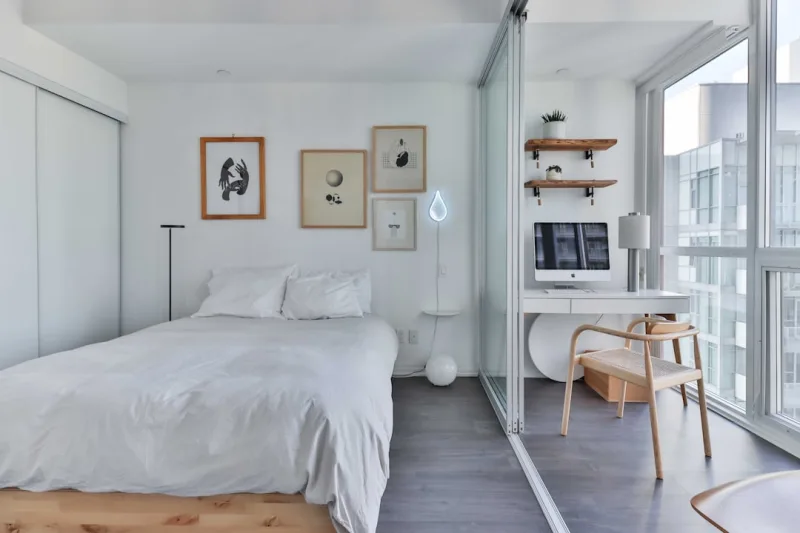 DIY Aesthetic Living Room Makeover Ideas for 2026
Use sharp scissors for clean cuts. Then — and this is the magic step — brush out the fringe gently with a regular hair comb or brush. This fluffs everything out and gives it that polished, professional finish.
Pro Tips
Here's what I've learned after making about 50 of these things:
Use painter's tape to mark your measurements. Stick it on your dowel to indicate where each knot row should land. It keeps everything aligned and prevents the wonky lean that happens when you're not paying attention.
Work in natural light whenever possible. I can't stress this enough. Macrame knots are tiny, and squinting under lamp light for three hours gives me a headache. Do this near a window if you can.
Invest in a macrame board or cork mat. You could absolutely use a throw pillow, but having something stable really does make a difference. Check HGTV's crafting section for recommendations if you want inspiration before buying.
Don't rush the fringe step. Honestly, this is where 90% of the magic happens. Spend a few extra minutes fluffing and combing. It transforms the entire look.
Keep your cord tension consistent. Loose knots look sloppy; too tight and your piece gets bunched up weirdly. It's a feel thing that comes naturally after your first project.
Test your wall hardware before committing. Nothing worse than finishing something beautiful and having it crash down. If you're renting, Better Homes & Gardens & Gardens has a great guide on non-damaging hanging options.
Cost Breakdown
← Scroll to see full table →
| Item | Quantity | Price Per Unit | Total Cost |
|---|---|---|---|
| Macrame Cord (3mm cotton) | 1 ball (100 yards) | $12.00 | $12.00 |
| Wooden Dowel (0.5" diameter, 24") | 1 | $5.00 | $5.00 |
| Scissors/Craft Knife | 1 (if needed) | $8.00 | $8.00 |
| Measuring Tape | 1 (if needed) | $4.00 | $4.00 |
| Wall Mounting Hardware | 1 set | $6.00 | $6.00 |
| Cork Board/Macrame Board (optional) | 1 (if needed) | $18.00 | $18.00 |
| Total (First Project) | $53.00 | ||
| Total (Subsequent Projects) | $17.00 | ||
See? Totally doable. And honestly, if you already have basic tools at home, you're looking at just the cord and dowel for future projects — basically fifteen bucks.
Frequently Asked Questions
What type of cord is best for beginners?
Cotton cord, hands down. It's forgiving, easy to work with, doesn't shed, and comes in nice colors. Jute is pretty but kind of scratchy and sheds everywhere. Synthetic cord looks cheap and doesn't knot as cleanly. Stick with cotton 3mm as your starter cord.
How long does it take to make one macrame wall hanging?
Realistically, 4-6 hours your first time, including the learning curve. After you've done a couple,