Designer Bedroom Layout with DIY Hacks: Create That $10K Look on a Budget
Look, I get it. You're scrolling through Better Homes & Gardens & Gardens or HGTV and seeing these absolutely stunning bedroom layouts that make you wonder if you need to hire an actual interior designer. But here's the thing — you don't. With some strategic planning, a handful of DIY tricks, and maybe a weekend or two of work, you can totally nail that designer bedroom vibe without emptying your wallet.
The secret isn't some magical design formula that only professionals know. It's about understanding spatial flow, investing in a few key pieces, and then getting creative with affordable DIY solutions that look like they cost way more than they actually did. I've been doing this for years, and honestly, some of my favorite bedroom transformations started with basically nothing except a vision and a trip to The The Home Depot.
So let's dive in and create a bedroom that doesn't just look good — it actually functions beautifully and feels like a luxury retreat.
What You'll Need
Before we get started, here's what you'll be working with. Some of these items you might already have, which is perfect — just adapt as needed.
- Paint and primer — $25-$40 (Sherwin-Williams or Benjamin Moore)
- Floating shelves (3-4) — $35-$60
- Wood stain or whitewash — $15-$25
- LED strip lighting — $20-$35
- Wallpaper or peel-and-stick accent wall — $30-$80
- Picture rails and hanging hardware — $25-$50
- Fabric for DIY headboard — $40-$70
- Wood or cardboard for headboard frame — $20-$40
- Basic tools (drill, level, stud finder) — $50-$150 if you need to buy
- Trim and molding supplies — $40-$80
- Paint rollers, brushes, drop cloths — $15-$25
Step-by-Step Guide
Step 1: Plan Your Layout Like a Pro
This is where most people skip ahead, and then they end up with a bed jammed in a corner and nowhere to actually walk. Don't do that. Grab some graph paper or use an online room planner — honestly, there are free ones that work great — and sketch out your bedroom to scale. Figure out where the natural light is coming from, where outlets are located, and what the traffic flow actually looks like.
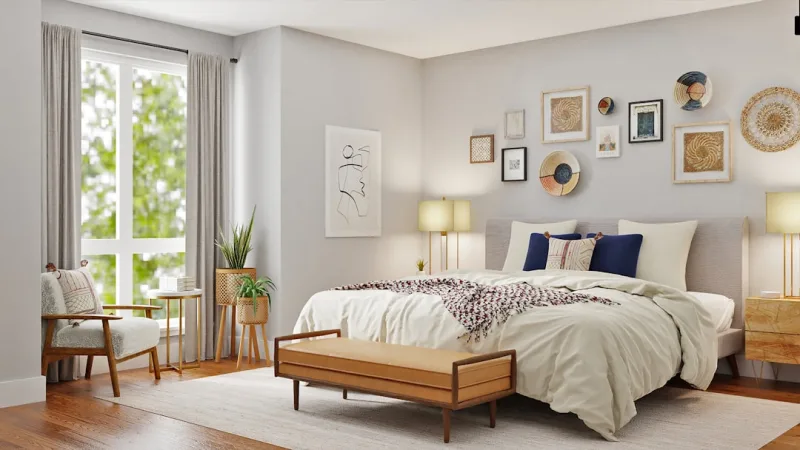
Position your bed as a focal point. Usually, this means placing it on the wall opposite the entry door, but every room is different. The key is making sure there's enough clearance on all sides — aim for at least 18 inches if you can swing it. Then arrange your secondary furniture around that anchor point. This isn't just about fitting things in; it's about creating intentional negative space that makes the room feel bigger and more intentional.
Step 2: Create a Designer-Looking Feature Wall
Here's where the magic happens. A feature wall instantly makes a bedroom feel expensive and thoughtfully designed. You've got options: paint, wallpaper, or even peel-and-stick removable wallpaper if you're renting. My go-to moves are either a rich, moody color behind the bed or a subtle textured wallpaper that catches the light.
Paint is the most budget-friendly and forgiving option. Pick a color that's deeper or more saturated than your other walls — think forest green, warm charcoal, or even a dusty blue. Apply primer first, then two coats of quality paint. The difference between cheap and quality paint is literally night and day, so don't cheap out here. The Home Depot has solid options at every price point.
Step 3: Build a DIY Upholstered Headboard
This is the project that looks like it cost a fortune but actually costs maybe $100. Build a simple frame out of 2x4s cut to your bed width — seriously, YouTube has a million tutorials if you're nervous. Attach plywood backing, then wrap it in batting and fabric. I usually choose something textured like linen or a subtle patterned fabric. Secure everything with a staple gun, and boom — you've got a custom headboard that looks like it came straight out of a design magazine.
Mount it directly to the wall behind your bed at the appropriate height. It instantly anchors the whole room and creates visual interest that you literally cannot achieve without it.
Step 4: Install Floating Shelves for Style and Function
Floating shelves serve dual purposes in a designer bedroom layout: they're storage that doesn't take up floor space, and they're display real estate. Install two shelves on either side of your bed or floating above a nightstand for that curated gallery effect. Use a stud finder (seriously, get one if you don't have one) and proper wall anchors. Better Homes & Gardens has some solid styling guides for making shelves look intentional rather than random.
Style them with a mix of books, plants, and personal items. The rule is usually thirds — combine tall, medium, and short items, and leave some breathing room. It should feel collected, not cluttered.
Step 5: Add Dimension with Paint Trim and Molding
 Budget Apartment Renovation: DIY Hacks That Actually Work
This is a small move that reads as incredibly expensive. Install simple crown molding around the ceiling or add wainscoting to one wall. If that's too ambitious, even just painting the ceiling trim a coordinating color or adding a painted stripe down one wall creates architectural interest that screams designer. You can use painter's tape to get clean lines, and honestly, it's totally forgiving if you mess up slightly.
Step 6: Layer Your Lighting Like a Designer
Proper lighting is what separates a nice room from a designer room. You need ambient lighting (overhead), task lighting (beside the bed), and accent lighting (this is where LED strips come in). Install soft-white LED strips behind your floating shelves or along the headboard base for that subtle luxury glow. Add matching nightstands with coordinating lamps, and suddenly everything feels intentional and elevated.
Step 7: Window Treatments That Actually Frame the View
Hang your curtain rod high — like, closer to the ceiling than you think — and let the panels be full-length. This simple trick makes your ceiling feel higher and your room feel more sophisticated. Choose fabric that complements your feature wall but doesn't compete with it.
Pro Tips
Invest in quality basics: The bed frame, mattress, and bedding are where you should spend real money. Everything else can be DIY or budget-friendly. A quality base makes every design choice around it look better.
Use mirrors strategically: Place a large mirror opposite your window to bounce natural light around. It's an instant spaciousness hack that requires zero DIY skills.
Keep your color palette tight: Stick to three main colors max. This is what makes rooms feel designed rather than haphazard. Pick a neutral base, a feature color, and one accent color. Done.
Hardware matters more than you think: Upgrade your drawer pulls, light switch plates, and door hardware to match your design aesthetic. It costs maybe fifty bucks total and completely changes the vibe.
Repurpose and upcycle: That old dresser? Refinish it. Thrift store nightstands? Paint them. Some of my favorite pieces are ones I gave new life to. It's sustainable and gives your room authentic character.
Cost Breakdown
← Scroll to see full table →
| Item | Low End | Mid Range | High End |
|---|---|---|---|
| Paint & Primer | $25 | $40 | $60 |
| Floating Shelves | $35 | $75 | $150 |
| LED Lighting | $20 | $35 | $75 |
| Headboard Materials | $60 | $100 | $200 |
| Wallpaper/Accent | $30 | $60 | $120 |
| Trim & Molding | $40 | $80 | $150 |
| Hardware & Tools | $40 | $75 | $150 |
| TOTAL | $250 | $465 | $905 |
Frequently Asked Questions
Q: Do I Really Need to Paint the Entire Room?
Honestly? No. A fresh coat of paint on your feature wall alone will transform things. If you're in a rental or just not feeling it, a peel-and-stick wallpaper or even a large fabric tapestry behind the bed achieves a similar effect. The goal is creating focal points, not necessarily painting everything.
Q: What If My Bedroom is Really Small?
Small bedrooms are actually where these design tricks shine the brightest. Go vertical with your storage — floating shelves and wall-mounted storage feel less cluttered than nightstands. Choose a light feature wall color rather than dark (or go dramatic with one small wall). Use mirrors generously, and keep your furniture to the essentials. A small bedroom designed intentionally looks way better than a large one that's just... filled with stuff.