Designer Balcony Layout 2026: Create Your Perfect Outdoor Sanctuary
Okay, let's be real — your balcony has been underutilized for way too long. I see it all the time. People treat their outdoor spaces like afterthoughts, cramming in a couple of plastic chairs and calling it done. But here's the thing: your balcony is basically an extension of your home, and 2026 is all about designing it like you actually mean it. We're talking cohesive layouts, functional zones, and pieces that make you want to spend every evening out there instead of scrolling on your couch.
I've been obsessed with the shift toward "outdoor living rooms" lately — and honestly, it's not just a trend. It's how people are genuinely living now. Whether you've got a tiny urban balcony or a sprawling suburban space, the designer approach to balcony layouts is completely doable on a real budget. We're mixing textures, playing with layering, and creating actual destinations that feel intentional.
So I'm walking you through exactly how to nail the designer balcony look in 2026 without needing a massive renovation budget or hiring an expensive decorator. Let's build something beautiful together.
What You'll Need
Before we get into the fun design stuff, let's talk materials. You'll want quality pieces that actually work together, not just a random collection of outdoor furniture.
- Outdoor Seating: Comfortable lounge chairs or sectional ($400-$1,200 from The The Home Depot)
- Coffee Table: Weather-resistant wood or metal table ($150-$400)
- Outdoor Rug: Durable, fade-resistant rug in neutral tones ($100-$300)
- Planters & Greenery: Mix of ceramic and concrete planters with plants ($150-$350)
- Lighting Fixtures: String lights, lanterns, or solar-powered options ($75-$250)
- Storage Bench: Functional seating with hidden storage ($200-$500)
- Shade Solution: Umbrella, pergola, or shade sail ($100-$800)
- Accent Pillows & Throws: Weather-resistant textiles ($80-$200)
- Wall-Mounted Shelving: For plants and decor ($50-$150)
- Decorative Accessories: Lanterns, artwork, outdoor speakers ($100-$250)
Step-by-Step Guide
Step 1: Assess Your Space and Define Zones
First things first — measure your balcony and figure out what you're actually working with. Seriously, grab a tape measure. The biggest mistake I see is people buying furniture without knowing their actual dimensions, then wondering why their sectional doesn't fit. Once you've got those numbers, think about how you want to use the space. Are you a lounger? A host who entertains? Someone who wants a little reading nook? A green thumb? Most likely it's a combination, so you're creating zones.
I typically divide balconies into three areas: a seating zone, a plant zone, and a transitional accent space. Even on a tiny balcony, this works. Your seating doesn't have to be huge — sometimes a loveseat and a chair are perfect.
Step 2: Choose Your Color Palette and Foundation
This is where the "designer" part really kicks in. Forget bright primary colors and mismatched patterns — 2026 is all about sophisticated neutrals with intentional pops of accent color. I'm talking warm grays, warm whites, soft taupes, and maybe one jewel tone like emerald or terracotta as an accent.
Start with your outdoor rug. This is your foundation. A good quality rug grounds the space and makes it feel intentional. Pick one from Better Homes & Gardens & Gardens or similar retailers that fits your seating area without overwhelming it. Typically, your front legs of furniture should sit on the rug — that's the design rule.
Step 3: Layer Your Seating
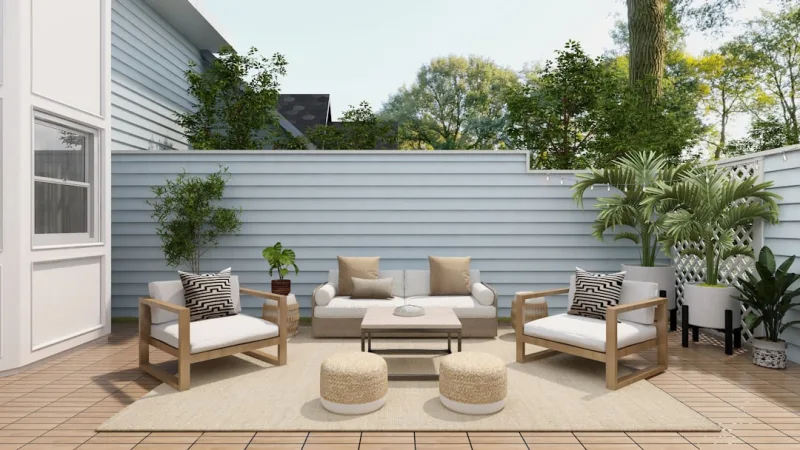
Here's where comfort meets style. Choose one statement piece — maybe a really good outdoor sofa or sectional in a neutral tone. Then layer around it. Add a complementary chair in a slightly different texture. Throw in a storage bench that does double duty as extra seating. The key is variation without chaos. Stick to two or three coordinating colors and you'll look intentional, not random.
Pro mix: a gray sectional with one cream linen chair and a low-profile storage bench in warm wood tones. It's classic, cohesive, and actually functional.
Step 4: Add Vertical Interest With Plants and Shelving
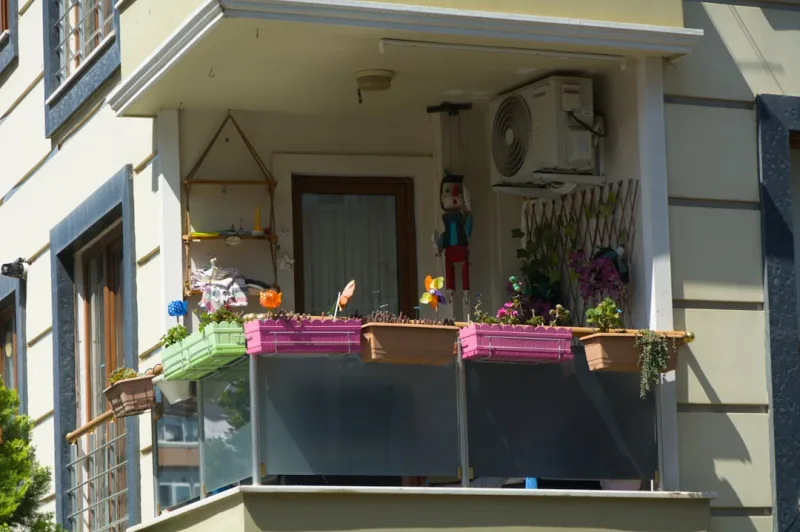
Don't let your balcony feel flat. Vertical layers make spaces feel bigger and more curated. Invest in some wall-mounted shelving — even one or two shelves do the trick. Use them for small potted plants, rolled-up throw blankets, or decorative pieces. Then add a mix of floor planters in varying heights. A tall architectural plant in the corner, medium-sized planters around your seating, and trailing plants on shelves create real depth.
 Budget Apartment Renovation: DIY Hacks That Actually Work
You don't need to be a gardener. Honestly, I gravitate toward hardy plants like pothos, snake plants, or ferns that don't demand constant attention. They look amazing and forgive you when life gets busy.
Step 5: Install Ambient Lighting
This is the move that transforms your balcony from "nice during the day" to "I want to be out here all evening." String lights are the obvious choice, but get creative. Solar lanterns hung at different heights, a sleek outdoor chandelier, or even uplighting on your plants creates atmosphere. Check out HGTV's outdoor lighting guides — they've got serious inspiration.
The lighting should be warm-toned and dimmable if possible. You want to feel cozy, not like you're in a parking lot.
Step 6: Create Shade and Comfort
Shade isn't just practical — it changes how usable your space is. A retractable umbrella, pergola, or even shade sail can expand your balcony's functionality by hours. If your balcony gets intense afternoon sun, this matters. Pair your shade solution with weather-resistant outdoor pillows in coordinating colors and textures. Layer them generously — that's how designers make spaces feel inviting.
Step 7: Style With Accessories and Final Touches
Now for the fun part. Add throw blankets in complementary colors, decorative outdoor pillows with subtle patterns, and stylish functional pieces like a small side table for drinks. I love adding a tall planter as a sculptural element, a decorative mirror to reflect light, and maybe some outdoor wall art. These finishing touches are what make the difference between "decorated" and "designed."
Pro Tips
Invest in Quality Rugs: A good outdoor rug is worth the money. It defines your space, adds comfort underfoot, and makes everything feel intentional. Look for solution-dyed olefin rugs — they're fade-resistant and handle weather like champions.
Mix Textures Intentionally: Smooth wood + soft pillows + rough ceramic + metal accents = interesting. Flat + flat + flat = boring. Vary your materials and you'll automatically look more designed.
Go Vertical: Especially if you're working with a smaller space. Shelving, wall-mounted planters, and tall accent pieces make balconies feel larger and less cluttered. The Home Depot has some really solid options that hold up outdoors.
Don't Underestimate Storage: A beautiful storage bench or low cabinet keeps cushions, gardening supplies, and seasonal items hidden while looking like furniture. This single piece changes everything about how organized your space feels.
Layer Your Lighting: One light source is never enough. Combine ambient (string lights), task (a reading light), and accent lighting (plants or architectural features) for actual depth.
Cost Breakdown
← Scroll to see full table →
| Item | Low Budget | Mid Budget | Investment Budget |
|---|---|---|---|
| Outdoor Seating | $400 | $800 | $1,200 |
| Coffee Table | $150 | $250 | $400 |
| Outdoor Rug | $100 | $200 | $300 |
| Planters & Plants | $150 | $250 | $350 |
| Lighting | $75 | $150 | $250 |
| Storage Bench | $200 | $350 | $500 |
| Shade Solution | $100 | $400 | $800 |
| Textiles & Accessories | $80 | $150 | $250 |
| Total Estimated Cost | $1,255 | $2,550 | $4,250 |